How to Make Tap Water Safe for a Humidifier
Learn practical, step-by-step methods to make tap water safe for humidifiers, including boiling, distillation, RO/DI filtration, and daily maintenance to prevent mineral buildup and microbial growth.


By safely conditioning tap water for your humidifier, you prevent mineral buildup, microbial growth, and musty odors. This quick guide covers practical methods—boiling, distillation, RO/DI filtration, or using distilled water—and shows how to implement a simple daily routine to keep humidity healthy and equipment long-lasting whether you rent or own, these steps are affordable and easy to adopt.
Why water safety matters for humidifiers
The air you breathe indoors is shaped not only by humidity levels but also by the quality of the water fed into your humidifier. According to HumidifierBasics, the water you use can directly affect indoor air quality as well as equipment longevity. When you pump tap water straight into a humidifier, minerals like calcium and magnesium can circulate as fine dust, known as white dust, and scale can form inside the reservoir and heater plates. In ultrasonic and evaporative models, mineral buildup reduces efficiency and can shorten the unit’s life. Bacteria and mold can flourish in damp reservoirs if water is left standing for long periods. For homeowners and renters, the goal is simple: reduce minerals, limit microbial growth, and clean the device regularly.
In practice, water safety means selecting a water source that minimizes minerals and contaminants while still being practical for daily life. Read labels, know your local water hardness, and align your choice with your humidifier type. This section will outline reliable options and the trade-offs you should consider, so you can maintain consistent humidity without compromising air quality.
Safe water options for humidifiers
Your safest bet is distilled water, which is free of minerals and impurities that cause buildup. Distilled water is widely available and works across all humidifier types. If you don’t have ready access to distilled water, reverse osmosis (RO) or deionized (DI) filtered water from a home system or bottled source is a solid alternative, especially for ultrasonic units where mineral dust can be problematic. Boiling tap water can sanitize it and remove some pathogens, but minerals remain and may rebound as it cools. A high-quality pre-filter can reduce sediment and some contaminants, but it won’t remove dissolved minerals. When choosing a method, balance cost, convenience, and the specific needs of your humidifier. Different models tolerate mineral content differently, so consult your user manual before trying any water treatment. The right choice keeps the reservoir cleaner longer and reduces white dust while preserving humidity accuracy.
If you must use tap water, consider a two-step approach: first treat the water to lower mineral content (via RO/DI or distilled water when possible), then use a dedicated humidifier cleaning schedule to mitigate any residual minerals. Finally, remember that not all humidifiers are created equal—ultrasonic and cool-mist units are more sensitive to mineral buildup than evaporative designs, so your water strategy should reflect the device you own.
How to sanitize and prevent mineral buildup
Mineral deposits are not just cosmetic; they can interfere with function and airflow. Start by rinsing and drying the reservoir between uses to minimize bacterial growth. If mineral buildup appears, use a vinegar solution (one part white vinegar to one part water) to gently loosen deposits, then rinse thoroughly and allow the unit to dry completely before refilling. Always follow the manufacturer’s cleaning recommendations, and avoid mixing harsh chemicals unless explicitly advised. For tougher scale, a mild citric acid solution can be effective while remaining safe for most plastics.
Sanitizing should be performed regularly, especially during seasons of heavy use. Avoid using hot water inside the reservoir, which can warp plastics and release odors. Keep your humidifier in a clean space away from direct sunlight and moisture-laden surfaces to prevent mold growth on surrounding areas. Regular maintenance, including gasket inspection and reservoir drying, helps extend the appliance’s life and preserves air quality in your home.
Daily use and maintenance routine
A predictable routine makes safe water practices second nature. Start each day by refilling your humidifier with treated water (distilled, RO/DI, or boiled water that has cooled) and disposing of the old reservoir water. After each use, empty and dry the reservoir completely, wipe its interior with a clean cloth, and store the unit in a dry place. Once per week, perform a deeper clean using a mild soap solution, rinse thoroughly, and dry before reassembling. If you notice white dust on furniture or a musty smell, it’s a sign minerals or microbial activity; reassess your water source and cleaning schedule. In high-use homes, consider keeping a spare, treated water supply to avoid refilling with tap water that hasn’t been treated.
Keep a simple log of when you clean, what method you used, and any changes in performance. This log helps you catch patterns—such as mineral buildup after a change in water source—and adjust your routine accordingly. Consistency is the key to maintaining comfortable humidity without introducing air quality concerns into living spaces.
Authority sources
There are well-established guidelines about humidifier use and water quality from leading health and environmental agencies. For practical, science-backed information on humidity, cleaning, and safe water use, consult trusted sources from government and university domains. These references help homeowners and renters make informed decisions about water treatment, equipment care, and indoor air quality, aligning with best practices for healthy homes.
- EPA – Humidifiers and Humidity: https://www.epa.gov/indoor-air-quality-iaq/humidifiers-and-humidity
- CDC – Healthy Water, Hygiene and Environmental Health: https://www.cdc.gov/healthywater/hygiene/environmental-health.html
- MedlinePlus – Humidifiers and Cleaning Instructions: https://medlineplus.gov/ency/patientinstructions/000923.htm
Tools & Materials
- Distilled water(Mineral-free water; ideal for all humidifiers.)
- RO/DI filtered water(If you have an RO/DI unit, use its filtered water.)
- Humidifier-safe water storage jug(Keep treated water clean and covered.)
- Clean, soft cloths for wiping reservoirs(Daily wipe-down after use.)
- White vinegar(For mineral deposit removal (1:1 with water). Do not mix with bleach.)
- Mild dish soap(For regular cleaning.)
- Soft-bristled brush or toothbrush(For hard-to-reach deposits.)
- Manufacturer-recommended cleaning solution(Use only if advised.)
Steps
Estimated time: 60-90 minutes
- 1
Assess your water source
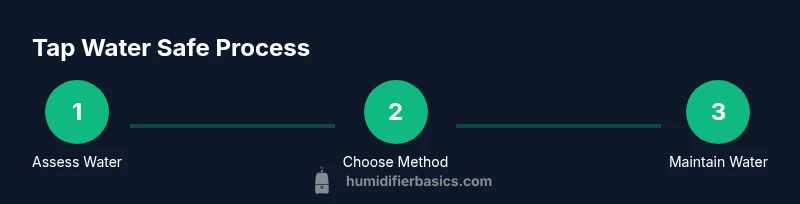
Start by checking whether your local tap water is hard or soft. If you have access to your city’s water quality report, review mineral content and contaminant data. This helps you decide whether to rely on distilled, RO/DI, or boiled water. Quick check: if your tap water leaves white dust on surfaces, mineral content is high and you should prioritize mineral-reducing options.
Tip: Check local water hardness online or request a copy of your town’s water report. - 2
Choose your safe water method
Choose a method that matches your humidifier type and daily-use needs. Distilled water is universal and convenient; RO/DI filtration reduces minerals but can be pricier over time. Boiling and distilling at home is an option if you don’t have access to bottled water. Consider the frequency of use and the cost of ongoing water purchases when deciding.
Tip: If you use an ultrasonic humidifier, mineral-free water is especially important. - 3
Prepare water using chosen method
If boiling, bring water to a rolling boil for 5 minutes, then cool completely before pouring into the reservoir. If distilling, collect distilled water and store it in a clean, sealed container. If using RO/DI, use the filtered water directly. For all methods, use a clean container to avoid introducing contaminants.
Tip: Label stored water with date of treatment and purchase to track freshness. - 4
Fill humidifier with treated water
Pour the prepared water into the reservoir using a clean measuring cup or pitcher. Do not overfill. Secure the reservoir lid and ensure any seals or gaskets are properly seated to prevent leaks. This preserves optimal humidity delivery and avoids spills.
Tip: Keep the reservoir clean and dry around the seals to prevent mold growth. - 5
Run and monitor the device
Turn on the humidifier and observe for even mist distribution, unusual smells, or excessive condensation. If you notice mineral dust on surfaces, revisit your water choice or cleaning interval. Regular monitoring helps you catch issues early and maintain air quality.
Tip: Place the unit on a stable, non-porous surface away from walls and electronics. - 6
Clean the humidifier after use
After each use, drain water, rinse the reservoir, and wipe with a clean cloth. Perform a deeper clean weekly with mild soap and warm water, followed by a thorough rinse until no soap residue remains. Dry completely before storing or reusing.
Tip: Never mix cleaning solutions; rinse thoroughly to avoid residue. - 7
Refresh water daily
Replace reservoir water daily or every 24 hours to prevent bacterial growth. Keep an eye on the water level and avoid leaving stale water overnight in hot rooms. Fresh water minimizes microbial activity and odor.
Tip: Set a daily reminder to replace water if you forget. - 8
Schedule regular deep cleaning
Every week, perform a deeper clean across all removable parts, including filters (if you have cartridge filters) and gaskets. Inspect for signs of wear and replace parts as recommended by the manufacturer. Regular deep cleaning protects performance and air quality.
Tip: Record cleaning dates to build a maintenance history.
FAQ
Is it safe to use tap water in a humidifier if I clean it regularly?
Regular cleaning helps reduce risk, but minerals and potential microbes can still remain. Distilled or RO/DI water is safer for frequent use, especially in ultrasonic humidifiers. Always follow the manufacturer’s guidelines.
Regular cleaning helps, but minerals and microbes can remain. Distilled or RO/DI water is safer for frequent use.
Can I use boiled tap water in my humidifier?
Boiling tap water sanitizes it, but minerals stay behind. Boiled water is safer than plain tap water but not as effective as distilled or RO/DI water for preventing mineral buildup.
Boiled water is safer than plain tap water, but minerals remain; distilled or RO/DI water is better for preventing buildup.
How often should I clean my humidifier?
Clean your humidifier at least weekly and after extended use in hot dry periods. Wipe reservoirs daily and perform a deeper weekly clean to remove mineral deposits and prevent microbial growth.
Clean at least weekly and after heavy use; daily wipe-down helps keep it safe.
What are signs that I should stop using tap water in my humidifier?
If you notice persistent white dust, unusual smells, cloudy reservoirs, or frequent clogging, switch to distilled or RO/DI water and reassess your cleaning routine.
If you see white dust or smell something off, switch to distilled water and review cleaning.
Are there safety risks with using chemical cleaners in humidifiers?
Only use cleaners recommended by the manufacturer. Many products can leave residues that become airborne and irritate lungs. Rinse thoroughly and air-dry before reusing.
Only use manufacturer-approved cleaners and rinse well before using again.
Watch Video
The Essentials
- Choose a water method that minimizes minerals.
- Sanitize and clean regularly to prevent microbes.
- Match water choice to your humidifier type.
- Follow the manufacturer’s cleaning guidelines.