Cool Mist Humidifier Safety and Pneumonia Guidance
Learn how to safely use cool mist humidifiers to support respiratory comfort and manage pneumonia risk at home. Practical setup, maintenance, and safety tips.


Using a cool mist humidifier properly can support breath comfort while helping reduce pneumonia risk. To minimize concern, run the unit in target rooms at moderate humidity, use distilled water, and clean regularly. According to HumidifierBasics, proper placement and routine maintenance are essential for safe, sleep-friendly air.
What the phrase "cool mist humidifier pneumonia" means for your home
The term may trigger questions about safety and health, especially for households with children, seniors, or people recovering from respiratory illness. A cool mist humidifier releases water vapor without heating the water, which can feel safer for some users compared with warm-mist models. However, any humidifier can influence indoor air quality. The key is to manage humidity levels, water quality, and routine cleaning to reduce risks like mold or bacteria growth that could irritate the lungs or worsen pneumonia symptoms. According to HumidifierBasics, understanding how the device interacts with your space helps you reap comfort benefits without compromising safety.
How a cool mist humidifier works in real-world spaces
A typical cool mist humidifier uses ultrasonic vibration or an impeller wheel to create a fine mist. The mist disperses into the room, raising humidity levels when you run the device. In practice, placement matters: keep the unit on a stable surface, away from walls, furniture, and bedding to prevent damp spots. Most models add adjustable output and a built-in humidistat that helps you track humidity. The result is a more comfortable environment for people with dry air-related irritation, plus a potential reduction in coughing caused by throat dryness. For households worried about pneumonia risk, consistent monitoring and avoidance of over-humidification are essential.
Understanding humidity targets and pneumonia risk
Humidity levels above 60% can promote mold and dust mite growth, which may aggravate respiratory conditions. A safe, commonly recommended range is roughly 30-50% depending on climate and season. Keeping humidity within this band helps soothe irritated airways without fostering microbial growth. If someone in the home has pneumonia or a compromised immune system, aim for the lower end of the range and use a hygrometer to verify levels. HumidifierBasics emphasizes that consistent monitoring is more important than the device’s fancy features alone.
Safety basics: placement, operation, and guardrails
Always position a humidifier on a hard, flat surface at least a few inches above the floor. Avoid placing it directly on carpet, near windows, or behind furniture. Use distilled water to minimize mineral buildup, and empty and dry the reservoir if you won’t be using the device for extended periods. Regular cleaning reduces the risk of mold, bacteria, and biofilm. If you notice a musty odor, replace water more frequently and clean with a gentle solution recommended by the manufacturer. These steps are especially important in spaces used by vulnerable individuals.
Choosing a model with safety-first features
Look for humidifiers with a labeled humidistat, automatic shut-off when the tank is empty, and easy-to-clean components. Ultrasonic and impeller designs are common; both require regular maintenance to prevent mineral dust in the air. Several models offer antimicrobial additives or built-in filters, but you should verify their actual effectiveness and compatibility with your water supply. When pneumonia risk is a concern, prioritize simplicity and reliability over flashy extras. HumidifierBasics suggests reading independent reviews and selecting a device with straightforward cleaning steps.
Daily use: what to do and what to avoid
When you start a session, verify humidity readings and adjust output to avoid sudden spikes. Use distilled water for every fill to limit mineral residues that can irritate lungs when dispersed. Empty the tank, rinse, and dry after each use to prevent bacterial growth. Do not run a humidifier in unoccupied spaces for long periods if you cannot actively monitor humidity; this reduces chances of over-humidification and mold formation. Regular inspection of seals, cords, and pads helps catch wear early.
Weekly and monthly maintenance routines
Deep clean your humidifier weekly using a manufacturer-approved cleaning method, typically involving a mild vinegar solution or a dedicated descaler. Rinse thoroughly to remove any residue before the next use. Wipe the exterior and the base with a damp cloth, paying close attention to the water tank cap and nozzle. Replace any filters or pads as recommended and keep spare parts on hand for quick swaps. Consistent maintenance reduces the likelihood of contaminants entering the air you breathe.
Water quality considerations: tap water vs distilled water
Tap water can introduce minerals and impurities that create white dust and aerosolized residues. Distilled or demineralized water minimizes mineral deposits and is easier to keep clean. If distilled water isn’t available, use the lowest-mineral water you can find and run the humidifier with the clean-out cycle recommended by the manufacturer. For households with pneumonia concerns, prioritizing water quality helps maintain air purity and minimizes throat and sinus irritation.
Special considerations for vulnerable household members
Infants, elderly adults, and people with compromised immunity may be more sensitive to airborne irritants. In these cases, keep humidity at the lower end of the recommended range and ensure excellent air exchange and ventilation. If anyone develops persistent coughing, wheezing, or shortness of breath, discontinue use and consult a healthcare provider. HumidifierBasics emphasizes that safety is about balancing comfort with microbiological risk, not simply chasing higher humidity.
Tools & Materials
- Cool mist humidifier(Choose an ultrasonic or impeller design with a clear mist outlet and stable base)
- Distilled water(Minimizes mineral dust and scale buildup)
- Soft microfiber cloth(For daily exterior wipe-down and reservoir cleaning)
- Small cleaning brush(Help reach corners of the reservoir and nozzle)
- White vinegar (5%) or manufacturer-approved cleaner(Used for descaling during routine maintenance)
- Measuring cup(Helpful for accurate water filling)
- Digital hygrometer or a room humidity sensor(Keeps track of target humidity range)
Steps
Estimated time: 1-2 hours
- 1
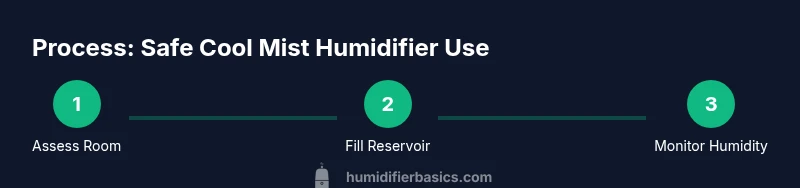
Assess room needs and set target humidity
Identify the space to humidify and confirm you will target a humidity range around 30-50%. Use a hygrometer to verify levels regularly.
Tip: Start with a lower humidity and adjust gradually to avoid over-humidification. - 2
Choose and prepare a safe model
Select a unit with a built-in humidistat and auto shut-off. Read the manual to understand cleaning intervals and parts that contact water.
Tip: Verify the device’s safety features before first use. - 3
Fill reservoir with distilled water
Power off, remove the tank, and fill with distilled water only. Avoid tap water to minimize mineral dust in the air.
Tip: Do not overfill; use the markings to keep within safe levels. - 4
Place and power on the unit
Set the humidifier on a stable surface at least 1 meter (3 feet) from the bed and walls. Plug in and turn it on.
Tip: Keep the outlet clear of dust and obstructions. - 5
Set humidity target and monitor
Use the built-in humidistat or a separate hygrometer to maintain 30-50% humidity. Check every few hours during initial use.
Tip: Avoid reaching the upper end of the range for long periods. - 6
Run and observe for changes
Operate for 4-6 hours at a time, then pause to assess room moisture and air comfort. Re-calibrate as needed.
Tip: If you see condensation on windows, lower output. - 7
Daily cleaning routine
Empty the tank, rinse, and wipe dry after each use. Use a gentle cleaner or vinegar solution weekly.
Tip: Never mix cleaners; follow the manufacturer’s recommended method. - 8
Weekly deep clean
Disassemble components that contact water and soak as directed. Rinse thoroughly before reassembly.
Tip: Pay attention to hard-to-reach corners where biofilm can hide. - 9
Water quality choice
Prefer distilled water, especially in rooms where pneumonia risk is higher. If using tap water, use a descaling cycle if available.
Tip: Keep a spare bottle of distilled water on hand. - 10
Address vulnerable individuals
In homes with young children or elderly residents, monitor humidity closely and avoid over use.
Tip: Consult a clinician if coughing or breathing worsens with humidity changes.
FAQ
Can a cool mist humidifier cause pneumonia?
A properly used cool mist humidifier does not cause pneumonia. Problems arise from stagnant water, mold, or mineral dust emitted into the air. Keep the device clean, run within safe humidity levels, and use distilled water to minimize risk.
No, a clean humidifier used within safe humidity levels does not cause pneumonia. Avoid mold and mineral dust by cleaning regularly and using distilled water.
What humidity level is safe for a home with pneumonia risk?
Aim for a humidity range around 30-50%. This balance helps comfort without encouraging mold growth. Use a hygrometer and adjust as needed, especially in seasons with high humidity.
Target about 30 to 50% humidity and check with a hygrometer to avoid over humidity.
Should I always use distilled water in a humidifier?
Distilled water minimizes mineral dust and residue that can irritate airways. If distilled water isn’t available, use the lowest-mineral water you can find and clean more frequently.
Yes, distilled water helps keep air cleaner; if not available, clean more often and monitor mineral buildup.
How often should I clean a humidifier?
Clean the reservoir weekly with a mild cleaner or vinegar solution, and rinse thoroughly. Do a daily quick wipe-down and dry after use to prevent microbial growth.
Clean weekly and wipe daily to keep the unit safe.
Can humidifiers spread mold or bacteria?
If not cleaned properly, humidifiers can harbor mold or bacteria that may be dispersed into the air. Regular maintenance and avoiding standing water are essential.
Yes, improper cleaning can spread mold or bacteria; regular cleaning is key.
Is a warm-mist humidifier better for pneumonia?
Warm-mist humidifiers heat water to create steam, which some find soothing. However, they pose burn risks and don’t inherently improve pneumonia outcomes. The choice depends on safety needs and cleaning ease.
Warm-mist isn’t necessarily better for pneumonia; safety and cleaning matter more.
Watch Video
The Essentials
- Set humidity to 30-50% for safe comfort
- Distilled water minimizes mineral dust
- Regular cleaning prevents mold and bacteria
- Choose a humidifier with safety features
- Monitor symptoms and consult a clinician if needed