Why Is My Humidifier Spitting Water? A Practical Troubleshooting Guide
Learn why your humidifier is spitting water and how to fix it fast. This step-by-step guide covers common causes, safety tips, and maintenance to prevent mineral buildup and leaks.


Most likely, moisture is escaping through the mist path due to mineral buildup, overfilling, or a damaged seal. Quick fix: power off and unplug, empty the reservoir, inspect for cracks or leaks, and clean the tank with distilled water and a vinegar solution. Refill with distilled water and run on a low setting. If the problem persists, consider replacing worn parts.
Root Causes of Spitting Water
Spitting water from a humidifier is not normal mist; it’s moisture leaking from the unit or blasting droplets into the air. The most common culprits are mineral buildup from hard water, an overfilled reservoir, or a clogged diffuser that sends droplets rather than fine mist. Ultrasonic models are particularly prone to scale forming on the diaphragm, which can cause larger droplets to spray out. According to HumidifierBasics, mineral buildup and improper water quality are frequent drivers of this issue. In many homes, the fix is simple maintenance: drain, clean, and refill with properly treated water. If you notice damp spots on the base or nearby surfaces, stop using the device and inspect it carefully before continuing.
Practical Quick Checks You Can Do Safely
Before diving into repairs, perform a few safe checks. Confirm the water level remains within the recommended range and that the lid and tank are properly sealed. Switch to distilled water to rule out minerals that contribute to spitting. Do a thorough tank clean using a mild vinegar solution and rinse until no vinegar scent remains. If your model uses a wick or filter, inspect for wear or warping and replace if needed. Wipe the base and nozzle area with a damp cloth to remove mineral residue. If you see a continuous spray rather than a fine mist after cleaning, there may be a blockage or overflow path that needs attention. The goal is to restore a clean, unobstructed flow of mist.
Diagnostic Tips and Flow for Isolating Causes
Adopt a symptom-to-diagnosis approach. Note whether the issue occurs at startup, during extended use, or only when the mist setting is high. A cracked tank or loose seals typically causes visible leaks; mineral buildup points to scale in the diffuser or nozzle. Start with the simplest fix: drain the tank, wash all removable parts, and rinse thoroughly. Refill with distilled water and run on a low setting for a short test. If the spray becomes uniform and droplets disappear, the issue was likely mineral-related. If not, proceed to inspect seals, gaskets, the float valve, and the diffuser for damage.
Maintenance for Prevention: Keep It Clean and Dry
Prevention is the best fix. Establish a regular cleaning schedule—at minimum, a rinse and wipe-down weekly, with a complete tank clean every 1–2 weeks when using tap water. Use distilled or demineralized water to minimize mineral buildup that drives spitting. Inspect and replace filters or wicks as recommended by the manufacturer. Always dry the base after cleaning and store the unit in a dry, ventilated area to prevent mold growth. Small habits now save bigger repairs later.
Choosing Settings and Placement to Minimize Spitting
Placement matters. Place the unit on a flat, stable surface away from walls and furniture to ensure proper airflow. Avoid placing it on soft surfaces where spills can accumulate; keep it on a hard, water-resistant surface. Use the lowest effective mist setting and moderate humidity to reduce the chances of overflow or splatter. If you live in a very hard-water area, consider a purification step before filling the tank. Regular maintenance and mindful use are your best defenses against recurring spitting.
Quick Recap: Do This Next Time You See Spitting
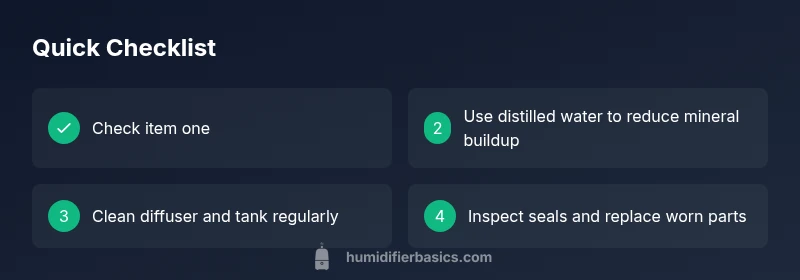
- Use distilled water to reduce mineral buildup. - Clean the tank, diffuser, and nozzle regularly. - Check for cracks, leaks, or worn seals. - Replace filters or wicks as needed. - Run tests on low settings after every maintenance cycle.
Steps
Estimated time: 20-40 minutes
- 1
Power off and unplug
Unplug the humidifier and remove the power source to eliminate any shock risk. This is your first safety step before inspection. Check that the unit is cool before handling any internal components.
Tip: Safety first: never inspect an energized appliance. - 2
Check water level and fill line
Remove the tank and inspect the fill line to ensure you’re not overfilling. If you see overflow into the mist path, drain the reservoir and reset to the correct level. Re-seat the tank firmly.
Tip: Use the manufacturer’s fill marks as a guide. - 3
Clean the tank and diffuser
Prepare a 1:1 solution of distilled water and white vinegar. Soak removable parts, then scrub gently with a soft brush to remove mineral deposits. Rinse thoroughly until no vinegar smell remains.
Tip: Avoid harsh cleaners that can damage gaskets. - 4
Inspect seals, gaskets, and tank integrity
Look for cracks, warped lids, or loose seals. If you find damage, replace the affected parts or consult a service professional. Ensure all clamps and seals are dry before reassembly.
Tip: A tiny crack can cause significant leaks over time. - 5
Refill with distilled water and test
Reassemble the unit with distilled water. Turn on the unit at a low setting and observe for 10–15 minutes. If the mist stream stabilizes, you’ve addressed the issue; otherwise escalate to component replacement.
Tip: Record any abnormal behavior to guide future maintenance.
Diagnosis: Humidifier spits water during operation
Possible Causes
- highMineral buildup from hard water affecting diffuser/diaphragm
- highOverfilling the reservoir or misaligned fill line causing overflow
- mediumCracked tank or loose seals allowing water to reach the mist path
- mediumClogged wick or filter causing improper diffusion and spray
- lowFaulty float valve or incorrect cap alignment causing overflow
Fixes
- easyDrain, clean with a 1:1 distilled water and white vinegar solution, rinse thoroughly, and refill with distilled water
- mediumInspect seals, gaskets, and tank for cracks; replace damaged parts as needed
- easyClean or replace wick/filter and ensure proper orientation
- mediumVerify the fill line and replace the unit if overflow recurs
- hardConsult the manufacturer manual or service center for persistent overflow
FAQ
Why is my ultrasonic humidifier spitting water?
Ultrasonic humidifiers can spit water when mineral buildup occurs on the diaphragm or diffuser, or when a model is overfilled. Using distilled water and cleaning the tank regularly reduces this issue. If spitting continues after maintenance, there may be a part failure that needs replacement.
Ultrasonic models spit water mainly due to mineral buildup or overfilling. Clean, switch to distilled water, and replace worn parts if needed.
Can mineral buildup cause spitting water?
Yes. Mineral deposits from hard water can clog the diffuser and cause larger droplets to spray out. Regular cleaning and using distilled water dramatically lowers the risk.
Minerals can clog the diffuser and cause spitting. Clean and switch to distilled water to reduce it.
Is it dangerous to keep using a humidifier that spits water?
Continued spitting can indicate leaks that might damage surfaces or promote mold growth. Stop using the device until you identify and fix the cause, especially if you see cracks or leaks.
If it’s leaking, stop using it until you fix the cause to avoid damage or mold.
Should I use distilled water instead of tap water?
Yes. Distilled water reduces mineral buildup, which is a common cause of spitting. It’s a simple, effective preventative step.
Distilled water helps prevent mineral buildup and spitting.
How often should I clean my humidifier to prevent spitting?
Clean the tank and parts at least once a week when using tap water, and perform a full clean every 1–2 weeks. More frequent cleaning is advised in hard-water areas.
Clean weekly with tap water; deeper cleans every one to two weeks.
What if I still see water spitting after maintenance?
If spitting persists, inspect for cracks, replace worn gaskets or the diffuser, and check the float valve alignment. If needed, contact the manufacturer or a service technician.
If it keeps spitting after cleaning, replace worn parts or seek professional help.
Watch Video
The Essentials
- Use distilled water to minimize mineral spitting
- Regular cleaning prevents mineral buildup
- Inspect seals and tank for damage promptly
- Run tests on low settings after maintenance