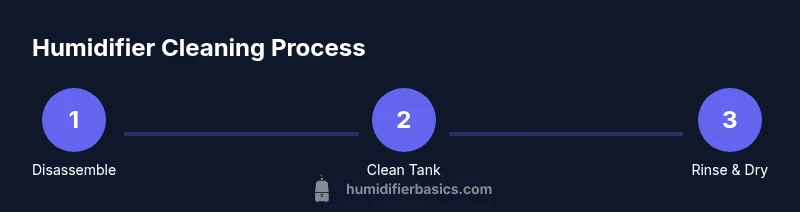
How to Clean a Humidifier: Safe Cleaning Guide
Learn exactly what to clean humidifier with, how to disinfect safely, and a practical routine to keep your unit and indoor air clean and healthy.


By the end of this guide you will know exactly what to clean humidifier with, plus a safe maintenance routine you can rely on every week. You’ll identify approved cleaners for different humidifier types, understand what to avoid to protect components, and follow a practical, repeatable step-by-step plan that keeps mineral buildup and mold at bay while preserving air quality.
Why cleaning your humidifier matters
Regular cleaning is essential for maintaining air quality and extending the life of your device. Built-up mineral deposits, mold, and bacteria can hide in standing water and humidifier chambers. If not addressed, these contaminants may aerosolize with your mist, potentially irritating eyes and airways, especially for people with allergies or asthma. The HumidifierBasics team notes that a simple, consistent cleaning routine helps prevent clogs, reduces mineral residue, and keeps the output odor-free. By understanding the common failure points—tanks, bases, and mist outlets—you can design a safer, more efficient maintenance plan. This guide uses practical, evidence-based steps and widely recommended cleaners to help homeowners and renters keep their humidifiers running cleanly and safely. Whether you own a compact ultrasonic unit or a larger evaporative model, the core routine is the same: empty water, clean surfaces, rinse, and dry completely before reuse. Also, consider water quality: using distilled water can reduce mineral buildup and prolong filter life in some devices. The goal is to minimize contaminants while preserving humidification benefits for your living space.
What to clean humidifier with
Choosing the right cleaners matters to prevent damage and ensure thorough disinfection. The safest and most widely recommended agents are:
- White vinegar: a natural descale and disinfectant. Use undiluted vinegar to wipe down surfaces or a 1:1 mix with water for tank interiors.
- Mild dish soap: for everyday cleaning of removable parts, followed by a thorough rinse.
- Hydrogen peroxide (3%): effective for sanitizing internal surfaces when used with ample rinsing.
- Soft brush or microfiber cloth: to reach tight corners without scratching.
- Distilled water for the final rinse: minimizes mineral residue after cleaning.
Common things to avoid: bleach can corrode certain seals and may release harmful fumes if misused; avoid essential oils in most units unless the manufacturer explicitly permits them—oils can degrade gaskets and clog components. If your model’s manual recommends alternative cleaners, defer to those instructions. Citric acid is another, milder descale option for mineral buildup, but test on a small area first. The overall goal is to leave all surfaces clean, rinsed, and dry before reassembly.
Cleaning schedule by humidifier type
Different humidifiers have different vulnerabilities. Ultrasonic models tend to produce a cooler mist and can disperse mineral dust if the tank isn't cleaned; evaporative units rely on a wick or filter that can harbor residue. Steam humidifiers heat water, which reduces microbial growth but requires care around hot surfaces. In all cases, a weekly cleaning routine is sufficient for typical home use, with extra cleanings if you notice musty odors, visible buildup, or cloudy mist. For mineral-rich water, increase to every 5-7 days. Always unplug the device before cleaning, and detach the water tank to access all surfaces. If your humidifier has a filter, replace it according to the manufacturer’s schedule, usually every few months, and rinse the filter housing during cleaning. Keep a small chart or reminder so you don’t skip the routine.
Between deep cleans: quick maintenance and drying
Between thorough cleanings, perform a quick rinse after each use and empty the tank completely. Wipe the base with a damp cloth, never submerge the base or electrical components, and ensure every part is completely dry before reassembly. Using distilled water for daily operation helps reduce mineral deposits and the need for deep descales. If you travel with the unit, dry and store it in a dry place to prevent mold. These small daily habits dramatically reduce mold risk and make the deep clean easier when scheduled.
Authority sources and further reading
For safety guidance and best practices, refer to these authoritative sources:
- EPA: Humidifiers in the Indoor Air - https://www.epa.gov/indoor-air-quality-iaq/humidifiers
- Mayo Clinic: Humidifier safety and cleaning tips - https://www.mayoclinic.org
- CDC: Healthy Homes and Indoor Air Quality - https://www.cdc.gov
Note: Always consult your device’s manual for model-specific instructions. These sources provide general safety guidelines and cleaning principles applicable to most household humidifiers.
Common mistakes to avoid during cleaning
- Do not operate a humidifier while it is disassembled or while cleaning; unplug before touching any internal components.
- Never mix cleaning agents inside the unit in a way the manufacturer does not specify. For example, avoid combining vinegar with bleach.
- Do not skip rinsing; residual cleaner can aerosolize or irritate lungs.
- Avoid using essential oils inside units not designed for them; oils can damage seals and seals reduce device life.
- Do not store water in the tank for long periods between uses without cleaning; stale water creates a breeding ground for bacteria.
Quick note on mold signs and when to replace parts
If you notice persistent musty odors, visible mold, or cloudy mist that doesn’t disappear after cleaning, inspect for cracks, replace filters, and consider servicing or replacing the humidifier. Addressing signs early reduces the risk of exposure to mold and mineral dust.
Tools & Materials
- White vinegar (household, 5–8% acidity)(Use full-strength for descaling; 1:1 with water for tank interiors if recommended.)
- 3% hydrogen peroxide(For disinfection; rinse thoroughly after use.)
- Mild dish soap(For surface cleaning; avoid harsh detergents.)
- Soft brush or old toothbrush(To reach corners without scratching surfaces.)
- Microfiber cloth(Drying and polishing surfaces.)
- Distilled water(Use for final rinse to minimize mineral deposits.)
- Empty clean container or basin for soaking(To soak removable parts.)
- Gloves (optional)(Protect hands from cleaners.)
Steps
Estimated time: 20-30 minutes
- 1
Power off and unplug the humidifier
Power off the unit and unplug from the wall. This prevents electrical shock and stops any water flow while you work. If your humidifier has a built-in switch, turn it off first.
Tip: Check the power cord for damage before starting. - 2
Disassemble and empty the reservoir
Remove the water tank and any removable parts, then pour out any remaining water. Rinse these parts under running water before cleaning. Keep small parts organized to avoid misplacement.
Tip: Place parts in labeled containers to prevent mix-ups during reassembly. - 3
Choose your cleaning solution
Decide whether to use a vinegar solution or hydrogen peroxide. Do not mix cleaners inside the unit, and never combine cleaners with bleach. Prepare the chosen solution according to your plan and keep cleaners away from the electricity.
Tip: Label bottles and keep cleaning supplies separate from drinking water supplies. - 4
Clean removable parts
Soak removable parts in your chosen cleaner. Scrub gently with a soft brush to remove mineral deposits. Rinse thoroughly until no cleaner residue remains.
Tip: Pay attention to the tank cap and any seals where buildup hides. - 5
Clean the tank interior and base surfaces
Wipe interior surfaces with the cleaner, then rinse. Avoid submerging the base or any electrical components. Wipe around mist outlets to remove any residue.
Tip: Use distilled water for the final rinse if available to minimize minerals. - 6
Rinse, sanitize, and dry completely
Rinse all parts again with clean water. Optional: sanitize interior with a hydrogen peroxide solution, then rinse. Dry all parts completely before reassembly to prevent mold growth.
Tip: Air dry is best; if you use a towel, ensure no fibers remain. - 7
Reassemble and test
Reassemble the humidifier and fill with clean water. Run a short test cycle to ensure there are no leaks and that you do not smell cleaners in the mist.
Tip: If you detect an odd odor, repeat the cleaning steps.
FAQ
How often should I clean my humidifier?
Most homes should clean weekly during regular use. Increase frequency if you have hard water, notice mineral buildup, or see odors.
Clean your humidifier at least weekly, and more often if you notice buildup or odors.
Can I use bleach to clean a humidifier?
Bleach is generally not recommended for most humidifiers because it can damage parts and release fumes. Use vinegar or hydrogen peroxide with thorough rinsing instead.
Bleach is usually not recommended; use vinegar or hydrogen peroxide.
Is distilled water necessary for cleaning?
Distilled water reduces mineral deposits and helps keep units cleaner longer. You can use tap water if you clean more often, but distilled water is preferable when available.
Distilled water helps prevent mineral buildup.
What if I see mold inside the tank?
If you see mold, stop using the unit and perform a deep clean with vinegar or hydrogen peroxide. Replace parts if growth persists or if the reservoir is cracked.
If you see mold, clean thoroughly and replace parts if needed.
Can essential oils be used in humidifiers?
Most humidifiers are not designed for essential oils and can damage seals. Use a separate diffuser if you need aroma.
Avoid oils in most humidifiers.
How do I sanitize after a mold issue?
Sanitize with hydrogen peroxide or a manufacturer-approved sanitizer after cleaning, then rinse and dry completely before use.
Sanitize with a safe sanitizer and dry thoroughly.
Watch Video
The Essentials
- Establish a consistent weekly cleaning routine.
- Choose safe cleaners and rinse thoroughly.
- Dry all parts completely before reassembling.
- Water quality affects mineral buildup; use distilled water when possible.
- Follow the manufacturer guidelines for your model.