Can You Use Tap Water in a Humidifier? A Practical Guide
Learn whether tap water is safe for humidifiers, how minerals affect performance, and practical maintenance tips from HumidifierBasics. Get clear, actionable steps to minimize mineral buildup and protect indoor air quality.


Using tap water in a humidifier is generally acceptable, but it can introduce minerals and impurities into the air and onto surfaces. For best performance and easier maintenance, consider distilled or demineralized water and follow the manufacturer’s cleaning schedule. This HumidifierBasics guide explains how to minimize mineral buildup and protect indoor air quality.
Understanding the Core Question: can you use tap water in a humidifier
The question many homeowners ask is can you use tap water in a humidifier. In practical terms, tap water works, but it carries minerals and occasional impurities. According to HumidifierBasics, the answer depends on your device, your water source, and your willingness to maintain it. If you opt for tap water, expect more frequent cleaning and more mineral deposits on filters or outlets. This guide explains why mineral content matters, how to assess your water, and how to protect your indoor air quality without sacrificing comfort. The goal is to help you balance convenience with long-term appliance health and clean, safe humidity for your family.
Water quality basics: minerals and contaminants in tap water
Tap water varies by location, often containing minerals such as calcium and magnesium, plus trace contaminants. Hard water accelerates mineral buildup inside the humidifier, which can reduce efficiency and shorten component life. The presence of organic matter, while typically low in treated supply, can also promote biofilm formation if the unit is not cleaned regularly. HumidifierBasics emphasizes the importance of water quality because it affects output clarity, surface deposits, and the need for descaling. If you rely on tap water, plan a regular cleaning schedule and watch for white dust on furniture or a musty odor, both signs of mineral or biological buildup.
The impact of minerals on humidifier components and air quality
Minerals in tap water can accumulate on heating elements, filters, and wicks, reducing airflow and humidification efficiency. When mineral deposits form, you may notice reduced mist, white dust on nearby surfaces, or unusual odors. These deposits can also harbor biofilm if cleaning is skipped, potentially impacting air quality and respiratory comfort. The HumidifierBasics approach emphasizes pairing water quality with a disciplined cleaning routine to maintain output quality and extend the device’s life.
Distilled water vs tap water: Pros and cons
Distilled or demineralized water minimizes mineral buildup, helps protect heating elements, and reduces fine mineral dust in the room. The main advantage is lower maintenance and more consistent output. The trade-off is cost and the need to refill with higher-quality water. Tap water is cheaper and convenient but increases mineral buildup and cleaning frequency. For many homes, a mixed approach works: use distilled water during heavy use periods and tap water when you’re away or running the unit temporarily. HumidifierBasics recommends prioritizing distilled water whenever feasible to optimize performance and air quality.
When tap water might be acceptable: short-term use and caveats
In short-term scenarios—temporary use during a power outage, travel, or when distilled water isn’t readily available—tap water can be a practical option. If you choose tap water, be prepared for more frequent descaling and filter maintenance. Always monitor the unit for mineral residues and surfaces, and clean thoroughly at least weekly during extended use. The key is awareness: know your water hardness and adjust your maintenance cadence accordingly.
Maintenance routines to minimize mineral buildup
Regular maintenance is your first defense against mineral buildup. Schedule weekly wipe-downs, empty the reservoir, and rinse with clean water. If you have hard water, descale monthly with a vinegar solution (1 part white vinegar to 1 part water) for 20–30 minutes, then rinse thoroughly. Dry all components before reassembly to prevent mold growth. Keeping a maintenance log helps ensure you don’t miss crucial cleanings. HumidifierBasics emphasizes consistency over intensity.
Cleaning and descaling: a practical routine
A practical descaling routine involves disassembly, soaking removable parts in a vinegar solution, and brushing away mineral deposits. After soaking, rinse with clean water until the smell of vinegar is gone. Dry all parts completely before reassembling. For ultrasonic humidifiers, mineral deposits can be more visible; wipe the interior surfaces with a soft cloth and perform a descaling cycle as recommended by the manufacturer. Always unplug the unit before cleaning and avoid harsh chemicals that could degrade plastics.
Humidifier types and how water choice matters
Not all humidifiers are affected equally by water quality. Ultrasonic models aerosolize minerals more readily, which can distribute dust if mineral content is high. Evaporative models filter minerals through a wick, but deposits can still accumulate. Warm-mist units boil water, which can mitigate some mineral concerns but increases energy use and safety considerations. Understanding your model helps tailor water choices and maintenance. HumidifierBasics notes that water type and model design interact to determine maintenance needs.
Health and safety considerations for households
Using tap water raises concerns about mineral dust and potential microbial growth if the device isn’t cleaned regularly. Regular cleaning reduces the risk of mold and biofilm, which can affect air quality and respiratory comfort. People with allergies or asthma may notice symptoms worsen if deposits accumulate. Ensuring proper ventilation and following your device’s guidelines helps maintain a healthy indoor environment. HumidifierBasics stresses that ongoing maintenance is essential for safety and comfort.
Common myths and misconceptions about tap water use
Myth: Tap water is always unsafe for humidifiers. Reality: It’s often acceptable with a good cleaning routine, but mineral buildup increases maintenance. Myth: Distilled water guarantees perfect air quality. Reality: It reduces mineral buildup but won’t replace cleaning and odor control. Myth: All humidifiers are the same. Reality: Design and type affect how water quality impacts performance. HumidifierBasics encourages basing decisions on your specific device and local water conditions.
Quick-start: a practical, 1-week plan
Day 1–2: Assess water source and prepare cleaning supplies. Day 3–4: Run the humidifier with distilled water if possible; otherwise, monitor mineral buildup. Day 5–7: Clean and descale as needed, adjust maintenance frequency based on observed mineral deposits and room humidity. Keep notes on output quality and any white dust.
Tools & Materials
- Distilled water or demineralized water(Preferred for daily use to minimize mineral deposits)
- Tap water (backup)(If used, plan for more frequent cleaning and descaling)
- Humidifier cleaning brush(Soft-bristled brush for interior surfaces)
- White vinegar (5%)(For descaling mineral deposits in a pinch)
- Microfiber cloth(For wiping and drying components)
- Nitrile gloves(Protect hands during cleaning)
Steps
Estimated time: 60-90 minutes
- 1
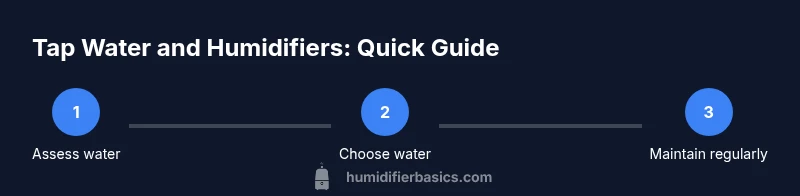
Assess water source
Check whether your local water is hard or soft and determine if you will rely on distilled water or tap water. This initial assessment guides your maintenance cadence and water choice. Keep a small log of water type you use and any observed deposits.
Tip: Document water hardness if available and note changes in deposit formation. - 2
Fill with appropriate water
Fill the humidifier reservoir with distilled water when possible. If you must use tap water, ensure the reservoir is clean first and deposit-free before refilling. Avoid mixing water sources within the same cycle to reduce contamination risk.
Tip: Use a dedicated container for water to prevent cross-contamination. - 3
Run the humidifier and monitor output
Operate the unit at a comfortable ambient humidity level (often 30–50%). Observe mist clarity and any white dust on nearby surfaces. If you notice unusual deposits, switch to distilled water and begin a cleaning cycle.
Tip: Keep an eye on surface moisture to prevent mold growth. - 4
Schedule regular cleaning
Establish a weekly cleaning schedule, more frequent if you use tap water regularly or have hard water. Empty, rinse, and dry the tank before refilling.
Tip: Set a calendar reminder to maintain consistency. - 5
Descale as needed
If you see mineral buildup, descale using a 1:1 vinegar-to-water solution for 20–30 minutes, then rinse thoroughly until no vinegar scent remains.
Tip: Do not mix vinegar with bleach or other cleaners. - 6
Document maintenance cadence
Keep a simple log of when you cleaned, descaled, and what water type you used. This helps spot trends and plan future maintenance.
Tip: A simple checklist keeps you on track.
FAQ
Is it safe to use tap water in a humidifier?
Yes, tap water can be used in many humidifiers, but mineral buildup and occasional contaminants may increase maintenance needs. Regular cleaning helps prevent issues.
Yes, you can use tap water, but be prepared for more frequent cleaning to manage minerals.
Will using tap water void my humidifier warranty?
Some manufacturers require distilled water or specify water quality in their warranty terms. Check your user manual or manufacturer’s website.
Check the manual because some warranties require specific water types.
How often should I clean a humidifier using tap water?
Clean at least weekly, with more frequent cleaning if you notice mineral buildup or if you use hard water.
Clean regularly, at least once a week, especially if you use tap water.
What are the benefits of distilled water?
Distilled water minimizes mineral deposits, helps protect heating elements, and reduces fine dust in the room.
Distilled water reduces mineral buildup and dust in the room.
Can minerals affect indoor air quality?
Yes, mineral buildup can influence air quality by creating mineral dust or promoting biofilm if not cleaned.
Mineral buildup can affect air quality if not cleaned regularly.
Are there filters to reduce mineral output?
Some models have demineralization cartridges or filters. Verify with your model’s features and replacements.
Check if your model supports mineral-reducing cartridges.
Watch Video
The Essentials
- Use distilled water when possible to minimize mineral buildup
- Clean regularly to maintain air quality and device life
- Tap water is acceptable short-term but requires more maintenance
- Follow manufacturer guidelines for water types and cleaning intervals
- HumidifierBasics recommends a proactive maintenance plan for durable performance