Will a Humidifier Help with Dry Nose? A Practical Troubleshooting Guide
Explore how a humidifier can ease a dry nose, with practical troubleshooting, safe usage tips, and maintenance to prevent irritation and congestion.


Yes—humidifiers can help a dry nose by restoring moisture to dry indoor air, especially in heated homes. Aim for indoor humidity around 40–50%. The quickest relief comes from using clean distilled water, keeping the unit clean, and avoiding over-humidification, which can trigger mold or dust issues.
Will a Humidifier Help with Dry Nose? How Humidification Works
If your nose is chronically dry, a humidifier can be part of the solution. The question will humidifier help with dry nose? In many homes, especially in winter, indoor air becomes dry due to heating and low outdoor humidity. A humidifier adds moisture to the air, which can soothe irritated nasal passages, reduce dryness, and improve comfort while sleeping. According to HumidifierBasics, maintaining the right humidity level is critical: aim for about 40-50% RH (relative humidity). Too little moisture won’t help; too much can create damp surfaces and promote mold or dust issues. When used correctly, a humidifier can relieve dryness, crusty nasal membranes, and minor congestion, helping you breathe easier at night and during the day. Ultrasonic and evaporative units differ in how they deliver moisture; both require clean water and regular maintenance to minimize mineral deposits and potential bacteria. The practical takeaway is simple: pair humidification with good hydration, saline nasal sprays, and proper room airflow to maximize relief while avoiding safety pitfalls. HumidifierBasics recommends using a hygrometer to monitor RH and cleaning the unit on a regular schedule to minimize risks.
This block is intended to educate readers on the basic mechanism, emphasizing the 40-50% humidity target and the importance of hygiene to prevent mineral dust, mold, and bacteria from negating relief.
Steps
Estimated time: 60-75 minutes
- 1
Check room humidity with a hygrometer
Place a calibrated hygrometer in the sleeping area and main living spaces. Record readings for 24 hours to determine average RH. If readings are consistently below 40%, plan to increase moisture output gradually.
Tip: Place the hygrometer away from direct vents and near the area where you spend the most time. - 2
Choose the right humidifier type
For nasal comfort, a cool-mist or ultrasonic model is typically safer and effective. Ensure the unit is appropriate for your room size and features an easy cleaning routine.
Tip: Avoid heat-based humidifiers in bedrooms to reduce burn risk near children. - 3
Use distilled water and prepare the unit
Fill with distilled or demineralized water to minimize mineral dust. Remove the reservoir lid and dry any visible buildup before reassembling. Run the unit on a low-to-medium setting initially.
Tip: Always empty, rinse, and dry the tank when not in use for extended periods. - 4
Set a safe humidity target and duration
Aim for 40–50% RH during waking hours and maintain at night. Use a humidistat if available or a hygrometer to track changes. Do not exceed 60% RH to avoid mold.
Tip: If you notice condensation on windows, reduce output or increase ventilation. - 5
Place the unit correctly
Position the humidifier on a stable surface, 3 feet from walls and away from direct drafts or bedding. Ensure air can circulate freely and there is no blocked airflow.
Tip: Elevate the unit if possible to disperse mist more evenly. - 6
Monitor relief and adjust
Check nasal comfort after 24 hours. If dryness persists, adjust RH within the safe range or consider a second unit for larger spaces. If symptoms worsen, seek professional guidance.
Tip: Keep a simple symptom log to track improvements and triggers.
Diagnosis: Nose remains dry or symptoms worsen after using a humidifier
Possible Causes
- highHumidity never reaches or remains in the 40–50% target range
- mediumMineral dust or mold from a dirty humidifier due to tap water or infrequent cleaning
- lowToo-large room or inadequate unit for the space, causing ineffective relief
- lowWater source impurities causing irritants in the air (e.g., hard water minerals)
Fixes
- easyMeasure humidity with a hygrometer and adjust settings to reach 40–50% RH
- easyClean and sanitize the humidifier per manufacturer instructions; switch to distilled water
- easyEmpty and dry the reservoir daily; replace filters as recommended
- mediumMove the unit to improve airflow or consider a larger unit for bigger rooms
- mediumIf persistent symptoms occur, stop use and consult a healthcare professional for underlying causes
FAQ
Can a humidifier cure a dry nose completely?
A humidifier can significantly reduce dryness but may not cure the underlying cause. If dryness persists despite proper humidity, consult a clinician to explore allergies, infections, or medications.
A humidifier helps a lot, but if dryness continues, see a clinician to check other causes.
What humidity level should I aim for with a humidifier?
Aim for about 40-50% RH. Avoid going above 60% to prevent mold and dust mites in your environment.
Keep humidity around 40 to 50 percent for nasal comfort and safety.
Warm-mist or cool-mist humidifier for a dry nose?
Cool-mist and ultrasonic humidifiers are generally safer for bedrooms and provide effective moisture without the burn risk of warm-mist models.
Cool-mist units are typically safer for home use and work well for nasal dryness.
Can humidifiers cause mold or allergies?
Yes, if not cleaned regularly or if humidity is too high. Regular cleaning and proper humidity control mitigate the risk.
If you keep it clean and humidity in check, mold and allergy risks stay low.
How often should I clean a humidifier?
Rinse daily and perform a deeper clean weekly. Replace filters per the manufacturer’s schedule.
Rinse daily, clean weekly, and replace filters as directed.
Is it safe to use essential oils with a humidifier?
Only if your unit is designed for essential oils. Many units are not oil-safe and oils can irritate airways or damage the device.
Only use essential oils if your humidifier is built for them.
Watch Video
The Essentials
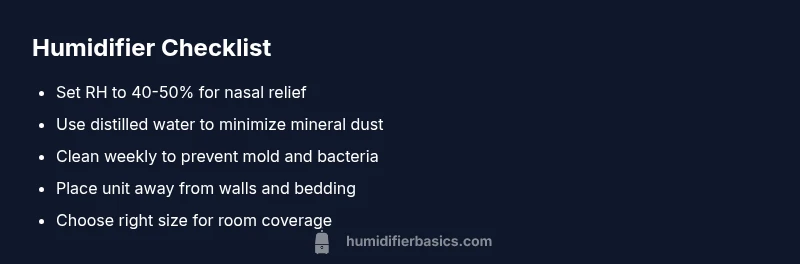
- Maintain RH at 40-50% for nasal relief.
- Use distilled water and clean the unit regularly.
- Avoid over-humidification to prevent mold growth.
- Choose the right humidifier size for your room.
- Monitor symptoms and adjust, seeking help if needed.