Dry Cough Humidifier: A Practical Bedroom Guide
Discover how a dry cough humidifier can ease throat irritation and congestion. Learn how to choose, set up, clean, and use safely in bedrooms for lasting relief.


Goal: Use a dry cough humidifier safely to soothe irritated airways. This quick answer outlines how to choose the right device, set optimal humidity, perform simple cleaning, and monitor for signs of over-humidification or mold. It also flags when humidification may not help and points to additional relief strategies for persistent coughs.
What a dry cough humidifier does for you
According to HumidifierBasics, using a dry cough humidifier can provide relief by adding moisture to dry indoor air, which helps soothe irritated airways and reduce throat itchiness. When humidity stays within a safe range, you may notice less coughing fits, reduced nasal congestion, and easier breathing, especially in bedrooms at night. In practice, people often report milder throat irritation and a gentler start to their morning coughing spells when moisture is steady and particles are kept clean. The effectiveness depends on consistent use, proper placement, and a routine that prevents mineral dust and mold colonies from forming. If you live in a dry climate, a bedroom humidifier can be a practical companion for seasonal dryness, but it should never replace medical advice for persistent or feverish symptoms.
The HumidifierBasics team emphasizes that humidifier use works best when paired with other healthy habits, such as staying hydrated and controlling indoor irritants like dust and smoke. Regular, simple maintenance is the key to sustained relief, and users should start with modest expectations—humidifiers are a comfort aid, not a cure for underlying illnesses.
Humidity targets for symptom relief
Maintaining the right humidity level is essential for cough relief. In many homes, a target range around moderate humidity helps soothe irritated airways without promoting dampness. The HumidifierBasics analysis highlights the importance of monitoring air moisture rather than guessing; a hygrometer in the living space or bedroom makes it easy to track changes. Too little humidity can keep mucous membranes dry and irritated; too much can encourage condensation and mold growth. Prioritize gradual adjustments and verify with your own comfort cues—nose and throat feel normal at the chosen range, and furniture stays dry. If you notice damp walls, condensation on windows, or a musty smell, reduce humidity and improve ventilation. Keep in mind that humidity alone won’t cure infection—focus on a holistic approach that includes rest, fluids, and medical guidance when needed.
Choosing the right humidifier for a bedroom
Bedrooms benefit from quiet, low-disruption devices. Ultrasonic humidifiers create a fine cool mist that’s popular in bedrooms for minimal noise, but they can release mineral dust if you use hard tap water. Evaporative models use a wick filter and tend to self-regulate to some extent, which can be comforting for sensitive sleepers. Warm-mist units heat water to release moisture, but they pose burn risks in households with children or pets. Consider room size, noise tolerance, maintenance willingness, and whether you’ll need a built-in humidistat. For a dry cough, prioritize models with reliable humidity control, a straightforward cleaning routine, and compatibility with distilled water to minimize mineral dust.
Water quality and cleaning routines to avoid mold
Water quality matters as much as the device type. Distilled water reduces mineral residue, which can otherwise disperse fine particles into the air. Empty and rinse the tank daily if you’re running the unit consistently, and perform a deeper clean weekly with a mild vinegar solution or a dedicated cleaner. Dry all components completely before the next use to prevent bacterial growth. Mold is a common risk in humid environments, especially if the unit sits on carpet or near porous surfaces. A simple habit—emptying, drying, and refilling with fresh water—goes a long way toward safer, cleaner moisture delivery.
Placement, use, and monitoring for safety
Position the humidifier on a stable, water-resistant surface away from direct air drafts and walls to avoid damp spots. Use a hygrometer or built-in sensor to keep the room within the target range, typically 30-50% humidity for comfort and cough relief. Run the unit for set periods rather than continuously, especially if the room tends to over-humidify. Always use clean water, never ceiling-mounted or enclosed spaces, and supervise children or pets around the device. If you notice condensation on windows or a musty odor, turn down the humidity or relocate the unit.
Troubleshooting common issues
If you see white mineral dust, switch to distilled water and clean the tank more frequently. If the mist output seems weak, clean the filter or replace it if you have an evaporative model. A persistent cough that doesn’t improve after several days or fever, chest pain, or shortness of breath requires medical attention. If the unit emits a burning smell, unplug it immediately and inspect for damage or leaks. Regular maintenance minimizes unexpected issues and keeps your cough relief routine effective.
When humidifiers can help vs when to see a clinician
Humidifiers can support relief from dry air, reducing throat irritation and nasal dryness, but they are not a substitute for medical treatment when symptoms worsen or persist. If a cough lasts more than a few weeks, if you have a fever, chest pain, wheezing, or coughing up blood, consult a clinician promptly. Special considerations apply to people with asthma, allergies, or pets; a clinician can tailor humidity targets and treatment strategies to your personal health profile.
Quick-start checklist for immediate relief
- Determine room humidity with a hygrometer. - Confirm the device is suitable for bedroom use and quiet. - Fill with distilled water and place on a stable surface. - Set the humidistat to a safe range (30-50%). - Run for 2-4 hours at a time and monitor comfort. - Clean weekly and refill with fresh water. - Keep doors and windows reasonably open to prevent excess moisture. - If symptoms persist, seek medical advice.
Authority sources and further reading
- Centers for Disease Control and Prevention (cdc.gov) guidance on indoor air quality and humidity.
- Environmental Protection Agency (epa.gov) moisture control and mold prevention resources.
- National Institutes of Health (nih.gov) cough management and respiratory health basics.
Note: Always cross-check humidity guidelines with your healthcare provider and local climate considerations.
Tools & Materials
- Humidifier (ultrasonic or evaporative)(Choose a model appropriate for your bedroom size; consider noise level and ease of cleaning.)
- Hygrometer or built-in humidity sensor(Essential to track indoor humidity in real time.)
- Distilled water(Reduces mineral dust and residue in the air.)
- Soft cloth and mild cleaner(For regular cleaning of surfaces and the water tank.)
- Vinegar or dedicated humidifier cleaner(Helpful for mineral buildup or stubborn deposits.)
- Replacement filters (if applicable)(Some evaporative models require periodic filter changes.)
- Towel or mat(Place under the unit to catch spills.)
Steps
Estimated time: 30-45 minutes
- 1
Assess your space
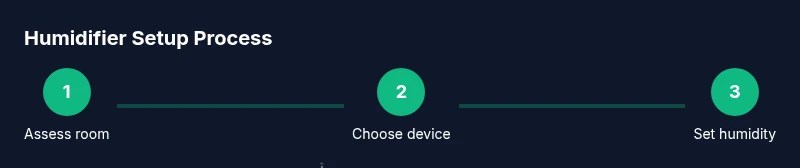
Place a hygrometer in the bedroom and note the current humidity and air quality. This baseline informs your target range and whether a humidifier will help. Check for drafts, moisture leaks, and the room size to determine the appropriate device type.
Tip: Use a windowless corner away from direct air flow to avoid biased readings. - 2
Choose the right humidifier type
Based on room size and noise tolerance, select ultrasonic for quiet operation or evaporative if you prefer a self-regulating moisture output. Avoid warm-mist units in children's bedrooms due to burn risk.
Tip: If you have pets or small children, favor evaporative models with spill-resistant designs. - 3
Set up and fill correctly
Place the unit on a stable, water-resistant surface. Fill with distilled water and verify the tank seals properly before turning on the device.
Tip: Never use essential oils in a humidifier unless the manufacturer specifies compatibility. - 4
Establish safe humidity and run time
Set the humidistat to a target range (30-50%). Start with shorter run times and gradually extend as needed while monitoring comfort.
Tip: If you notice condensation on walls or furniture, reduce humidity or move the unit. - 5
Monitor and adjust
Check humidity readings every few hours during initial use and adjust as needed. Observe whether cough symptoms improve and if the air feels comfortable.
Tip: Keep the room ventilated; occasionally crack a window to balance moisture and air quality. - 6
Maintain a cleaning routine
Empty, rinse, and dry the tank daily if used regularly. Perform a deeper clean weekly with vinegar or a humidifier cleaner.
Tip: Always unplug before cleaning and allow parts to dry completely before reassembling.
FAQ
Can a humidifier help with a dry cough?
Yes, a humidifier can soften dry air and soothe irritated airways, which may reduce coughing episodes when used with proper humidity control and cleaning. It’s most effective as part of a broader approach including hydration and rest.
Yes. A humidifier can soothe dry air and reduce coughing when humidity is kept in a safe range and the unit is kept clean.
What humidity level should I aim for with a dry cough?
A common safe range is about 30-50%. Start at the lower end, monitor comfort, and adjust within that window. Do not exceed about 60% to avoid mold growth.
Aim for around 30 to 50 percent, adjusting as needed for comfort and air quality.
Should I use distilled water in my humidifier?
Yes. Distilled water reduces mineral residue and dust dispersion, helping maintain air quality and ease of cleaning.
Yes, distilled water helps keep mineral residue down and air cleaner.
How often should I clean my humidifier?
Clean the tank and components at least weekly, and empty and rinse daily if you use the unit regularly. More frequent cleaning may be needed in hard water areas.
Clean weekly, and rinse daily if you’re using it a lot.
Can humidifiers cause mold or worsen allergies?
If not cleaned properly, humidifiers can harbor mold or bacteria. Regular cleaning, using distilled water, and proper humidity control reduce these risks.
Yes, poor cleaning can lead to mold; regular cleaning helps prevent that.
When should I stop using a humidifier and see a clinician?
If coughing persists beyond a few weeks, or you develop fever, chest pain, or shortness of breath, consult a clinician promptly for a proper assessment.
If your cough lasts more than a few weeks or you have chest pain or trouble breathing, see a doctor.
Watch Video
The Essentials
- Aim for 30-50% indoor humidity for comfort and relief
- Choose a bedroom-friendly humidifier type and keep it clean
- Use distilled water and a regular cleaning routine
- Place the unit away from walls and bedding and monitor moisture
- Follow HumidifierBasics guidance to maintain safe humidity and clean routines