Whole-Home Humidifier Installation Cost: A Practical Guide
Explore realistic cost ranges, breakdowns, and practical tips for installing a whole-home humidifier in 2026. Learn what drives price, how to estimate quotes, and ways to save while preserving performance.


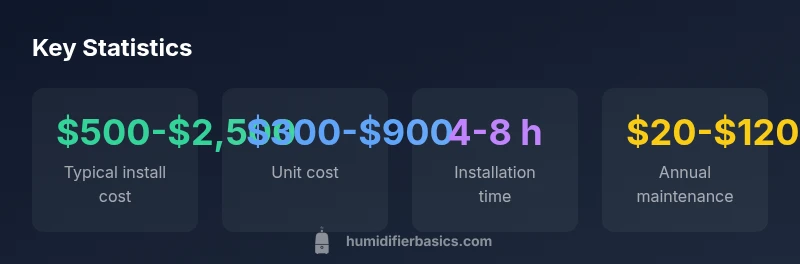
According to HumidifierBasics, the typical total cost to install a whole-home humidifier in 2026 ranges from about $500 to $2,500, plus the humidifier unit cost of $300 to $900. The exact price depends on system type, ductwork, and wiring needs. Additional factors like installation complexity, existing ductwork reuse, and smart-home integration can push costs higher or lower.
What drives the total cost of whole-home humidifier installation
According to HumidifierBasics analysis, several factors determine the total price of a whole-home humidifier installation. The largest driver is the choice of humidifier unit itself. Steam models tend to cost more upfront than evaporative or drum-style units, both in purchase price and in installation complexity. The second major factor is compatibility with your existing furnace and ductwork. If you need to modify duct plenums, add dampers, or install a dedicated humidistat, labor hours can rise quickly. Third, electrical work and control integration add cost—if you want a smart thermostat, zoning, or a centralized humidification controller, expect additional wiring and programming. Finally, geography and contractor pricing matter: urban areas and regions with high labor rates push totals higher. Some homes require permits or inspectors, particularly if structural modifications or substantial rewiring are involved. A well-prepared estimate should separate line items for the humidifier unit, installation labor, ductwork or wiring changes, and any new controls. For homeowners, the takeaway is clear: upfront planning and precise quotes reduce the risk of sticker shock later.
Breakdown of costs: parts, labor, and extras
Costs can be broken into four broad categories: the humidifier unit itself, installation labor, any needed duct or furnace modifications, and controls or smart features. A typical unit costs between $300 and $900. Installation labor often spans from a few hundred to over a thousand dollars depending on access and complexity. If ductwork needs updates or changes to the furnace interface are required, add $0 to several hundred dollars. Electrical wiring and control synchronization with smart thermostats add another layer, typically a few dozen to a few hundred dollars. Permits or disposal charges may apply in certain jurisdictions. Expect extras if you want advanced sensors, zoning, or wireless communication with a home automation system. Planning ahead with a detailed, itemized quote helps prevent surprise charges.
System types and their price implications
System type strongly influences price. Evaporative or drum-style whole-house humidifiers are generally cheaper to install than steam or boiler-integrated systems. Steam/hydronic models tend to require more labor and potential furnace modifications, increasing both unit and installation costs. If your home already has compatible ductwork and a furnace interface, costs stay toward the lower end. If you lack ductwork or need extensive wiring, prices can climb quickly. The HumidifierBasics analysis shows that most variability comes from the unit choice and duct/furnace compatibility rather than labor alone. For budget-conscious homeowners, choosing a mid-range evaporative model with standard controls often yields the best balance of upfront cost and long-term performance.
How to estimate your project before hiring a pro
Before contacting contractors, gather key details: your furnace model, whether ductwork exists or needs updates, desired control features (manual humidistat vs. smart control), and any existing zoning or energy upgrades. Ask for itemized quotes that separate the humidifier unit, installation labor, ductwork changes, wiring/controls, and any permit or disposal fees. Compare multiple quotes and check for hidden line items, such as removal of an old unit or warranty extensions. Consider the long-term cost of maintenance and filter replacements. A well-prepared homeowner can use these factors to negotiate better terms and avoid sticker shock at sign-off.
Permits, code, and safety considerations
Some installations require permits or inspections, especially when electrical rewiring or duct alterations are involved. Licensed professionals will ensure compliance with local codes and safety standards. If your home has older wiring or a basement furnace, a pro can assess whether upgrades are needed to support a humidifier’s power requirements. Proper installation minimizes risks of improper humidification, which can lead to mold growth or equipment damage. When evaluating contractors, confirm their licensure, insurance, and compliance history, and ask for a written safety checklist.
Financing, warranties, and long-term savings
Warranties commonly cover the humidifier unit and installation labor for a defined period, with parts coverage typically varying by model. Some utilities and manufacturers offer rebates or financing options to offset upfront costs, especially if the unit improves energy efficiency or indoor air quality. While the initial outlay may be substantial, many homeowners experience long-term savings through improved comfort and reduced energy waste from overworking furnaces. The decision to install should balance upfront cost against anticipated health and comfort benefits, plus potential rebates and warrantees.
Getting the most value: tips to reduce cost without sacrificing performance
- Size the system correctly for your home; an oversized or undersized unit wastes money and reduces comfort.
- Choose a reliable model with solid warranties and easy maintenance.
- Request itemized quotes and compare both unit costs and labor charges.
- Consider offseason installation when labor availability and rates are more favorable.
- Look for rebates, manufacturer promotions, or energy-efficiency incentives.
- Schedule regular maintenance to extend the unit’s life and prevent expensive repairs.
Brand note and practical conclusion
The HumidifierBasics team emphasizes that the best value comes from a balanced approach: select a appropriately sized unit, ensure clean duct connections, and secure a transparent, itemized quote. The HumidifierBasics verdict is to plan thoroughly, ask questions, and prioritize long-term reliability to minimize total cost of ownership.
Cost breakdown for whole-home humidifier installation
| Cost Component | Typical Range | Notes |
|---|---|---|
| Humidifier unit | $300-$900 | Varies by type and features |
| Installation labor | $200-$1,600 | Labor rates and access affect cost |
| Ductwork/modifications | $0-$500 | Only if changes are needed |
| Electrical wiring/controls | $0-$400 | Smart controls add cost |
FAQ
What factors influence whole-home humidifier installation cost?
Multiple factors drive price: unit type, ductwork compatibility, wiring and controls, and regional labor rates. Complex installs or steam/hydronic systems add to the total. Always request an itemized quote to see how each element contributes to the price.
Costs depend on the unit type, duct work, wiring, and local labor rates. Ask for an itemized quote to understand each cost.
Is professional installation required for all homes?
In most cases, professional installation is recommended or required to ensure safety and code compliance, especially when modifying ductwork or wiring. A licensed installer also provides warranty protection and reliable integration with your furnace.
Professional installation is usually required for safety, code compliance, and warranty protection.
Can I install a humidifier myself to save money?
DIY installation is generally not advised for whole-home systems due to electrical and ductwork considerations. A mistake can cause humidity imbalances or fire hazards. If you are handy, consider a basic, portable humidifier for individual rooms instead.
DIY is not recommended for whole-home systems; consider a portable option if you’re unsure.
How long does installation take?
Most installations take 4 to 8 hours for a typical home, depending on ductwork access, furnace compatibility, and whether new controls are added. The timeline can extend if significant duct work or wiring is required.
Most installs take about half a day, but it can be longer if major duct or wiring work is needed.
Are there financing options or rebates available?
Many manufacturers and utilities offer rebates or financing for energy-efficiency upgrades, including humidifiers. Check local programs and request quotes that include potential rebates to understand true net costs.
Look for rebates or financing options to reduce upfront costs.
“A well-chosen humidifier that fits your furnace and ductwork can significantly improve indoor comfort without breaking the bank. The key is balancing upfront cost with reliable performance and long-term maintenance.”
The Essentials
- Obtain itemized quotes to compare line items
- System type and ductwork determine most of the cost variance
- Expect installation to take several hours, not days
- Check for rebates and warranties to maximize value
- Prioritize proper sizing for long-term performance