Stuffy Nose Guide: Humidifier vs Dehumidifier
A practical, evidence-based comparison of humidifiers and dehumidifiers for nasal comfort. Learn when to use each device, how to set target humidity, safe usage tips, and maintenance to relieve a stuffy nose without creating moisture problems.


According to HumidifierBasics, when air is dry a humidifier is the safer first move for a stuffy nose, helping nasal passages stay moist. A dehumidifier becomes important in spaces with persistent dampness to stop mold and condensation from aggravating congestion. The best approach is to maintain a comfortable humidity range (roughly 30–50% RH) and switch devices if you see signs of excess moisture or dryness.
Why this choice matters for nasal comfort
Humidity levels directly influence nasal passages, sinuses, and overall comfort. A stuffy nose often worsens in dry indoor air because mucus membranes dry out, mucus becomes thicker, and mucociliary clearance slows. Conversely, too much humidity invites mold, dust mites, and condensation that can trigger congestion or worsen allergies. For many households, the decision between a humidifier and a dehumidifier is not about one device solving everything; it is about sustaining a stable humidity range that supports nasal health. The HumidifierBasics Team notes that the relationship between air moisture and nasal comfort is practical: moderate humidity tends to ease congestion without inviting damp conditions. In dry apartments or homes with heating, a humidifier is usually the safer starting point; in spaces with ongoing dampness or visible mold, a dehumidifier helps establish a healthier baseline. This article uses a practical lens to help homeowners determine which device to deploy first, and how to monitor humidity to avoid tradeoffs.
When nasal humidity helps: the role of a humidifier
A humidifier adds moisture to dry air, which can soothe irritated nasal passages, reduce crusting, and improve sleep quality. This section covers why dry air is a common culprit in nighttime congestion, how humidifiers work (cool mist, warm mist, and ultrasonic variants), and practical guidelines for selecting a model that fits room size. It also discusses water quality, mineral dust, and how to clean safely to prevent mineral buildup that can irritate airways. While humidifiers are not a cure for every nasal condition, they provide tangible relief in dry climates, drafty homes, or during winter heating cycles. The key is avoiding over-humidification, which can promote mold growth and damp conditions that ultimately worsen congestion.
When humidity is a problem: the case for a dehumidifier
Dehumidifiers reduce indoor moisture to prevent dampness, musty odors, and visible mold—common triggers for congestion and allergy symptoms. This section explains how elevated humidity (typically above 50–60%) can worsen nasal irritation by encouraging mold, dust mites, and microbial growth. A dehumidifier is especially beneficial in basements, bathrooms, or rooms with poor ventilation where condensation persists after activities like showering. It’s not about eliminating humidity entirely but about keeping RH in a comfortable range that supports nasal health. The HumidifierBasics Team emphasizes balanced humidity because excessive dryness can irritate mucous membranes, while excessive moisture can foster mold and airborne irritants.
How to choose between them: practical criteria
Choosing between a humidifier and a dehumidifier hinges on a few core criteria: target indoor humidity (aim for about 30–50% RH as a general target), room size, ventilation, and signs of moisture problems. For nasal comfort, prioritize a humidifier in dry spaces and use a dehumidifier where dampness and mold are evident. Consider the unit’s energy use, noise level, and maintenance needs (filters, descaling, and water type). Distilled water is recommended for humidifiers to reduce mineral dust, while dehumidifiers benefit from properly sized drainage options. Also assess safety: keep devices away from sleeping areas if noise is disruptive and ensure cords and outlets are dry during operation. Ongoing monitoring with a hygrometer helps maintain the most comfortable balance.
Practical setup: placement, timing, and maintenance
Placement matters: situate humidifiers away from walls and furniture to prevent condensation, and position dehumidifiers where humidity tends to collect, such as corners of basements or bathrooms. Use timers or humidity-sensing features to avoid running devices continuously. Regular cleaning is essential for both types of devices: wash tanks weekly, replace filters as recommended, and use distilled water for humidifiers to minimize mineral buildup. Always follow manufacturer guidelines for safe operation, including turning off devices before refilling, avoiding hot-water units near sleeping areas, and ensuring cords are secured away from children or pets.
Real-world scenarios and practical recommendations
Scenario A: Dry apartment in winter. Start with a compact humidifier in the bedroom to ease a stuffy nose and improve sleep quality. Use a hygrometer to keep RH around 40–45%. Scenario B: Damp basement or humid playroom. A dehumidifier helps reduce humidity to around 40–50% to curb mold growth and condensation. Scenario C: Mixed climate home with occasional damp spots. Use a combination approach: humidify dry spaces while correcting persistent dampness in problem areas. Always monitor humidity and adjust as seasons change.
Maintenance, safety, and nasal health
Keep devices clean and free of mold spores, replace filters as directed, and use distilled water for humidifiers to minimize mineral residues. Regularly inspect for leaks, spills, or frost. Safety-wise, keep devices unplugged during cleaning and ensure they are out of reach of children and pets when in operation. Balanced humidity improves nasal comfort without creating moisture-related risks. The HumidifierBasics Team recommends yearly audits of room humidity, device performance, and localized needs to tailor your approach over time.
Authoritative sources and guidance
For comprehensive humidity guidance, consult public health and environmental sources to understand how RH affects health and indoor air quality. The CDC and EPA provide general guidelines on humidity management and mold prevention, while NIH institutions discuss respiratory comfort related to air moisture. These sources help ground practical decisions with evidence-based context and emphasize safe, balanced humidity control. HumidifierBasics analysis also highlights alignment with typical indoor humidity ranges that support nasal health while minimizing moisture-related risks.
Comparison
| Feature | Humidifier | Dehumidifier |
|---|---|---|
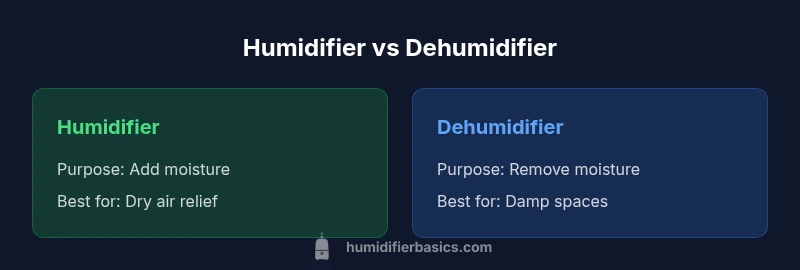
| Main purpose | Add moisture to air to relieve dryness | Remove excess moisture to prevent dampness and mold |
| Ideal humidity range | Raise RH toward ~40-50% | Lower RH toward ~30-50% |
| Best for nasal comfort | Moistens dry air to ease congestion | Controls damp environments to reduce mold-related congestion |
| Maintenance | Regular cleaning; water quality matters | Regular cleaning and drainage; filter checks if applicable |
| Cost range | $60-$160 | $80-$250 |
| Noise | Low to moderate | Low to moderate |
| Best for | Dry apartments, winter seasons | Basements, damp spaces |
What's Good
- Supports nasal moisture and comfort in dry indoor air
- Can reduce irritation and improve sleep in dry climates
- Portable options target problem rooms
- Improves overall perceived air quality when humidity is balanced
Negatives
- Over-humidification can encourage mold or condensation
- Requires regular cleaning and maintenance
- Mineral dust from tap water can be dispersed without distilled water
- Not a cure-all for all respiratory conditions
Humidifier is generally better for nasal comfort in dry environments; dehumidifier is essential for damp spaces to prevent mold and condensation.
Choose a humidifier first if dry air irritates the nose. If you notice persistent dampness, musty odors, or visible mold, switch to a dehumidifier and maintain RH in the 30–50% range.
FAQ
Should I use a humidifier or dehumidifier if I have a stuffy nose?
If your nose feels dry and irritated, start with a humidifier to restore moisture. If you notice persistent dampness, condensation, or mold, switch to a dehumidifier to reduce indoor moisture and protect nasal pathways.
If the nose is dry, humidify the room; if the space is damp or moldy, dehumidify and check humidity levels.
Can I use both devices in the same room?
Yes. In mixed climates, you can alternate or balance devices by monitoring humidity with a hygrometer. Keep RH roughly between 30% and 50% and adjust as seasons change.
You can use both, but monitor humidity to avoid conflicting effects.
What humidity level is ideal to relieve nasal congestion?
Aim for an indoor relative humidity around 30–50%. This range typically supports nasal comfort without promoting mold growth when combined with good ventilation.
Keep humidity in the 30 to 50% range for nasal comfort.
Are warm-mist humidifiers safer than cool-mist for nasal health?
Both can be effective; warm-mist units may pose burn risks in households with kids or pets, while cool-mist units are safer but may require more frequent cleaning to prevent mineral buildup.
Warm mist can burn, cool mist is safer but needs regular cleaning.
How often should I clean these devices?
Clean weekly, empty and dry tanks between uses, and descale mineral buildup as needed. Regular filter changes (if your model uses filters) help maintain air quality and device efficiency.
Clean weekly and follow the manufacturer’s filter schedule.
Can humidifiers spread mold if not cleaned?
Yes. Poor cleaning can harbor mold and bacteria, which can worsen nasal symptoms. Proper cleaning, using distilled water, and drying components after use reduces this risk.
Yes, clean regularly to prevent mold growth.
The Essentials
- Start with a humidifier in dry spaces to ease nasal congestion
- Switch to a dehumidifier in damp rooms to curb mold risk
- Aim for indoor humidity around 30-50% RH for nasal comfort
- Clean devices regularly and use distilled water to minimize minerals
- Place units away from sleeping areas to minimize sleep disruption