Vocal Cord Humidifier: A Practical Voice Health Guide
Discover how a vocal cord humidifier supports voice health by maintaining optimal indoor humidity. Learn setup, maintenance, and safety tips for cleaner voice and throat comfort with practical HumidifierBasics guidance.


Definition: A vocal cord humidifier refers to a humidity strategy aimed at keeping indoor air humidity at a level that supports vocal health and throat comfort. It is not a medical device, but a strategy to prevent dryness in the vocal tract. For most spaces, target roughly 40–60% relative humidity, with distilled water and regular cleaning to avoid mineral deposits.
Why vocal cord health benefits from proper humidity
Humidity isn't just about comfort—it directly influences how smoothly your vocal cords move and how hydrated your throat feels during long speaking or singing sessions. According to HumidifierBasics, keeping indoor relative humidity (RH) within a moderate range reduces dryness that can irritate the vocal tract. A vocal cord humidifier isn’t a single gadget; it’s a practical approach to improve air quality around your voice.
In homes with central heating or air conditioning, air tends to be drier in winter. Dry air pulls moisture from your mucous membranes, increasing friction during phonation and making your voice fatigue faster. When humidity is too high, there’s a risk of mold growth and dust accumulation, which can irritate airways. The goal is balance: enough moisture to support lubrication without creating damp conditions that foster mold. This balance benefits singers, teachers, call-center workers, and anyone who relies on clear speech.
To implement this, consider both environmental measures (ventilation, air exchanges) and a practical humidification routine. Small increases in RH can have outsized effects on throat comfort, sleep quality, and daytime vocal stamina. In practice, many users notice smoother daily speech, less throat clearing, and fewer episodes of dryness after a long day. This article will guide you through a vocal cord humidifier approach that fits your space and routine, with safety reminders and maintenance habits.
What is a vocal cord humidifier
The term vocal cord humidifier describes a strategy rather than a single device. It refers to creating and maintaining ambient humidity in the room where you use your voice—whether a home studio, office, or living area—so the vocal tract remains lubricated. There isn’t one universal product called a vocal cord humidifier; instead, you’ll rely on standard humidification devices (ultrasonic, evaporative, or warm-mist) used correctly. The key idea is to support the mucosal lining of the throat and vocal folds by placing humidity within a safe range. Hygrometers help you verify RH levels, and regular cleaning prevents mineral deposits from entering the breath stream. For voice professionals, minimal dryness translates to steadier tone and less effort during performance.
Important caveats: a vocal cord humidifier is not a substitute for medical treatment for throat infections or chronic voice disorders. If you notice persistent hoarseness or pain, consult a clinician. Always avoid direct mist aimed at the face; provide indirect humidity that circulates in the room. This approach aligns with HumidifierBasics guidance that emphasizes consistent, safe humidity management rather than relying on a single gadget.
How humidity affects the voice and throat
Humidity modulates the thin protective mucous layer that lines the vocal tract. Dry air increases friction against the vocal cords, causing fatigue, scratchiness, and more throat clearing. Moderate humidity keeps mucus flow steady, reduces drying, and can improve vocal endurance during long days of talking, singing lessons, or teaching. Conversely, overly humid environments can promote mold, mildew, and dust mite problems that irritate airways and trigger coughing.
Voice professionals often report improved resonance when RH sits in a comfortable range. Humidity also influences throat temperature and mucus viscosity, factors that can affect tremor in pitch or voice projection. For most people, aiming for a target RH between 40% and 60% provides a balance between comfort, lubrication, and air quality. If you live in a high-allergen area or have pets, maintain vigilance for damp spots and musty odors, which signal the need to adjust or dehumidify.
Types of humidifiers suitable for vocal health
When choosing a humidifier for vocal health, consider both device design and how it distributes moisture.
- Ultrasonic humidifiers: Quiet, energy-efficient, and capable of producing fine mist. They’re popular for bedrooms and small studios, but mineral deposits can become visible if you use hard water.
- Evaporative humidifiers: Use a wick or filter to evaporate water; they tend to self-regulate humidity and are less likely to oversaturate a room.
- Warm-mist (steam) humidifiers: Produce heated mist, which can be soothing but uses more energy and requires careful cleaning to prevent mineral buildup.
For vocal health, prioritize devices with built-in humidity sensors, easy cleaning access, and compatibility with distilled water to reduce mineral deposits. Regardless of type, avoid directing mist toward your face and keep the unit at a safe distance from beds and seating to prevent oversaturation. This approach aligns with best practices from HumidifierBasics that emphasize safe humidity management and routine maintenance.
Setting up a vocal cord-friendly humidifier
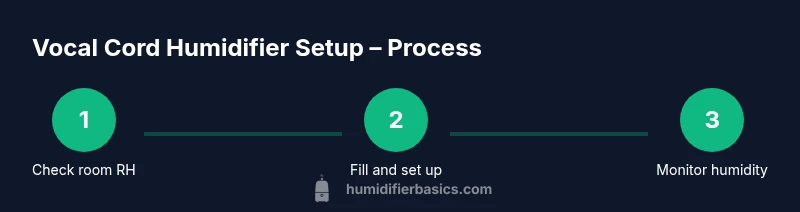
Proper setup matters as much as the device itself. Start by choosing a room where you spend the most time using your voice. Place the humidifier on a stable surface at least 3 feet away from bedding and direct seating, and ensure air can circulate around the device without obstruction.
Set the target humidity to a comfortable range, generally 40–60% RH, and use a hygrometer to monitor levels. Fill with distilled water to minimize mineral deposits, and perform a quick wipe-down of the reservoir and any removable parts daily. If your room has a stubborn dry spot near a wall, slightly reposition the unit to improve air distribution. These setup steps help create a consistent environment for voice use and align with practical guidance from HumidifierBasics.
Maintenance and safety to prevent mold and mineral buildup
Regular cleaning is essential to prevent mold and mineral deposits that can irritate airways. Empty the reservoir daily, rinse with clean water, and wipe down all surfaces that contact water. Do a deeper clean weekly using a mild, non-abrasive cleaner recommended by the manufacturer, and rinse thoroughly before reuse.
Use distilled water or demineralized water to minimize mineral buildup. If you notice white dust around the device, you likely have mineral deposits—consider switching to distilled water and cleaning more often. Store units dry when not in use for extended periods. These routines are critical for protecting vocal health and overall air quality in the space.
Practical tips for everyday use and common pitfalls
- Start with a moderate target RH and adjust based on how your voice feels in different sessions.
- Keep the room ventilated to prevent stagnation and mildew risk.
- Use a single humidifier in a room rather than multiple devices to reduce risk of uneven humidity.
- Regularly check the airflow path to avoid direct sprays toward seating areas.
- If you have pets or allergies, monitor for odor or damp spots and adjust settings as needed.
Choosing the right model for your space
Room size, noise level, energy use, and ease of cleaning should drive your decision. For small home studios or bedrooms, a quiet ultrasonic model with a built-in hygrometer typically fits well. For larger spaces, an evaporative or warm-mist model with a larger reservoir may be more appropriate but requires more maintenance.
Consider a unit with a timer, auto-shutoff, and remote humidity sensors for convenience. Read product reviews focusing on ease of cleaning and reliability. Above all, ensure the device aligns with your space, voice-use patterns, and safety considerations, then integrate it into a regular routine advised by HumidifierBasics to protect your vocal health.
Tools & Materials
- Humidifier device(Choose appropriate output for room size and noise tolerance)
- Distilled water(Reduces mineral deposits and white dust in the room)
- Hygrometer or built-in humidity sensor(Monitor RH to stay within 40–60%)
- Water treatment or mineral cartridge (optional)(If using hard water, optional cartridge can help reduce minerals)
- Soft cloth for cleaning(Daily wipe-down; never use abrasive scrubbers)
- Soft brush or cotton swabs(Reach nooks in reservoir and small crevices)
Steps
Estimated time: 20-40 minutes
- 1
Assess room and humidity needs
Identify the primary space where you vocalize or practice and check current RH with a hygrometer. If RH is consistently below 40% or above 60%, plan to adjust with a humidifier strategy and consider ventilation improvements. Why: Knowing the baseline prevents over- or under-humidification and sets a clear target for your setup.
Tip: Use a portable hygrometer to track RH over 24 hours to see daily fluctuations. - 2
Choose the right humidifier type
Select ultrasonic, evaporative, or warm-mist based on room size, noise tolerance, and cleaning effort. For voice work, prefer units with easy-access reservoirs and integrated humidity sensors. Avoid models that spray directly at seating areas. Why: The right type balances moisture output with maintenance needs.
Tip: Prioritize devices with auto-shutoff and a visible humidity gauge. - 3
Prepare water and fill reservoir
Rinse the reservoir with clean water before filling. Use distilled water to minimize mineral buildup, and ensure the fill line is respected. Replace a misting de-icer if the unit has one to prevent mineral flake from entering the air. Why: Clean water reduces deposits and keeps the air clearer for your voice.
Tip: Never add essential oils to a humidifier; they can irritate airways. - 4
Set humidity target and test distribution
Set RH to a comfortable 40–60% range, checking with your hygrometer. Allow 1–2 hours for the room to reach a stable level, then recheck and adjust as needed. Ensure air can circulate, avoiding dead corners where moisture can stagnate. Why: Stable humidity supports consistent vocal comfort.
Tip: If the space heats or cools, recheck RH after 30 minutes. - 5
Run and monitor usage
Operate the unit during vocal sessions or overnight if needed, but avoid continuous all-day operation in a small sealed space. Use a timer or smart outlet if possible to prevent over-humidification. Why: Controlled operation prevents mold risk and throat irritation from excess moisture.
Tip: Use a separate schedule for weekdays vs weekends if practice times vary. - 6
Maintain daily and clean weekly
Empty the reservoir daily, rinse with clean water, and wipe surfaces. Do a deeper weekly cleaning with a mild cleaner and scrub brushes to remove mineral buildup. Rinse and dry completely before reusing. Why: Regular cleaning keeps air healthier and your device reliable.
Tip: Keep a simple cleaning log to track when you last sanitized. - 7
Assess vocal comfort and adjust
After a few days, note if your throat feels more comfortable and if your voice holds steadier. Tweak humidity or device placement if dryness or dampness recurs. Always prioritize comfort over rigid targets. Why: Your body’s signals guide optimal RH for voice health.
Tip: If you notice new allergy symptoms or mold odors, revisit airflow and cleaning.
FAQ
What is a vocal cord humidifier, and how is it different from a regular humidifier?
A vocal cord humidifier is a humidity strategy used to support voice health by maintaining ambient humidity in the room where you speak or sing. It relies on standard humidifiers—not a single, specialized device. The goal is comfortable humidity that protects the vocal tract while avoiding excessive moisture that can harbor mold.
It's a humidity strategy, not a separate gadget. Use a regular humidifier properly to keep the air comfortable for your voice.
What humidity range is best for vocal health?
Most voice health guidance suggests a target RH between 40% and 60%. Adjust within this window to find what feels best for your voice, room, and climate. Use a hygrometer to stay within range.
Aim for about 40 to 60 percent humidity and adjust based on how your voice feels.
Can humidifiers cause mold or mineral buildup?
Yes, if not cleaned regularly, mineral deposits or mold can develop. Use distilled water, clean weekly, and ensure good room airflow to minimize risks.
Mold and mineral buildup can happen without cleaning—clean often and use distilled water.
Is this safe for bedrooms and children?
Yes, with careful placement and humidity control. Keep RH in the recommended range and avoid direct mist on beds or children's faces. Monitor for any signs of moisture-related issues.
Generally safe in bedrooms when humidity is controlled and the mist isn’t aimed at faces or beds.
How often should I clean my humidifier?
Empty and rinse daily, wipe surfaces, and perform a deeper cleaning weekly. This helps prevent mineral deposits and mold that can irritate the airways and affect the voice.
Clean weekly and rinse daily to keep it safe and effective.
Watch Video
The Essentials
- Maintain RH in a safe 40–60% range for vocal comfort
- Choose the humidifier type that matches room size and maintenance willingness
- Regular cleaning prevents mineral buildup and mold risk
- Place devices thoughtfully and monitor voice quality for adjustments