Sound Machine vs Humidifier: Practical Sleep Comparison
An analytical, side-by-side guide that compares a sound machine and a humidifier, focusing on sleep quality, room climate, maintenance, costs, and setup for homeowners and renters.


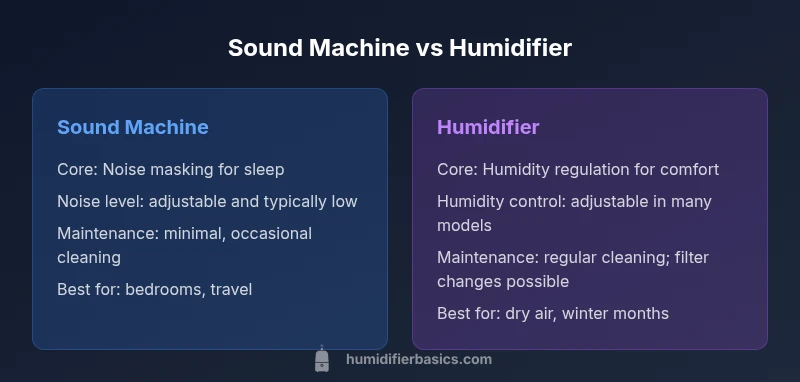
According to HumidifierBasics, a sound machine and a humidifier serve different sleep-support roles. A sound machine masks disruptive noises to ease sleep onset, while a humidifier maintains comfortable humidity for breathability. In most bedrooms, separate devices yield better performance and maintenance clarity. If space or budget are tight, a combined device can work, but expect trade-offs in noise control and humidity regulation.
Understanding the core differences between sound machine and humidifier
The combined phrase of a sound machine and humidifier often appears in bedroom setup discussions because many people seek both noise masking and air-moisture comfort in one sleep environment. In practice, these two devices address distinct physiological needs: the sound machine shapes the acoustic landscape of a room, while the humidifier shapes the moisture content in the air. The HumidifierBasics team notes that recognizing these core roles helps homeowners prioritize purchases based on the primary sleep bottleneck—noise disruption or dryness in the air. When used thoughtfully together, they can complement each other to improve comfort, reduce congestion, and promote deeper sleep, especially in dry winter months and noisy urban bedrooms.
- For noise-sensitive sleepers, a sound machine can reduce wakeups caused by sudden sounds.
- For dry air, a humidifier can alleviate throat irritation and nasal dryness that worsen overnight discomfort.
- The balance point for most rooms is to address the dominant sleep barrier first, then consider the secondary device if needed.
In short, the sound machine and humidifier are tools that serve different but complementary purposes; understanding their distinct benefits helps you optimize your sleep environment without overspending on features you don’t need.
How a sound machine works and its limitations
A sound machine generates consistent noise—white, pink, or brown noise, depending on the model—to mask irregular sounds that might wake you during the night. The core benefit is predictability: a steady audio backdrop can shorten sleep onset and reduce sensitivity to sporadic noises from traffic, household activity, or a snoring partner. However, a sound machine does not change the physical properties of the room, nor does it address moisture, temperature, or air quality. Sound masking is most effective when the noise is at a stable, moderate level and when it blends with the room’s natural acoustics. Users should experiment with volume, tone, and loop length to avoid repetitive patterns that become distracting over time.
The HumidifierBasics guidance emphasizes that, while excellent for sleep ambiance, sound machines should be used with consideration for listeners who prefer quieter sleep environments or those who share rooms with light sleepers. For people with sensitivity to synthetic sounds, consider devices that offer nature sounds or customizable playlists to reduce monotony.
How a humidifier works and its limitations
Humidifiers regulate indoor moisture levels by releasing water vapor into the air, helping to relieve dry throat, nasal passages, and skin irritation that can disrupt sleep. They come in several types, including ultrasonic, evaporative, and warm-mist varieties, each with its own pros and maintenance profile. The humidifier’s primary reward is comfort—breathability and easier nasal breathing—especially in low-humidity climates. Yet, humidifiers do not alter the room’s audio environment, and they require regular maintenance to prevent mineral buildup and microbial growth. Mineral deposits can speckle surfaces and reduce efficiency, while water quality directly influences output and odor. The HumidifierBasics team advises owners to prioritize regular cleaning, use distilled or demineralized water when possible, and switch off any humidifier models that produce persistent odors or excessive humidity.
For people who suffer from congestion or throat irritation in winter, a humidifier can be a practical, low-maintenance addition to a bedroom setup. But remember that humidity alone isn’t a sleep panacea; it should be paired with a stable noise environment to maximize comfort and rest.
When to use one device vs two
If your sleep environment faces a dominant issue—either noise disturbance or dry air—start with the corresponding device. For many households, addressing noise first yields the quickest improvements in sleep onset and continuity, especially in urban apartments or homes with thin walls. If dryness remains a problem after mitigating noise, adding a humidifier can help with nasal passage comfort and throat hydration. Conversely, if the room is quiet but you wake due to dryness or throat irritation, a humidifier may suffice. The most effective approach is often a phased one: optimize one device, then reassess. In rooms with both challenges, a two-device setup can be the best approach, provided you manage humidity levels and noise exposure carefully to avoid overloading the space with moisture or sound.
Renters and homeowners should assess outlet access, space constraints, and acoustic preferences before deciding. The HumidifierBasics guidelines encourage testing different configurations and documenting what works best for your sleep routine.
Maintenance, cleaning, and long-term care
Maintenance is the unsung factor behind long-term device performance. Sound machines generally demand minimal upkeep—basic cleaning of surfaces and periodic battery or power cord checks if portable. Humidifiers require more frequent attention: daily emptying of the tank, regular rinsing, and periodic descaling to prevent mineral buildup. If yours uses a filter, replacement schedules depend on usage and water quality. Using distilled water reduces mineral deposits and extends time between cleanings. Always follow the manufacturer’s cleaning directions and dry units completely before storing.
A consistent cleaning routine not only prolongs device life but also reduces the risk of mold or bacteria that can degrade air quality or alter the user’s sensory experience. The HumidifierBasics team stresses that a simple weekly wipe-down can prevent most common issues and preserve both devices’ noise and moisture performance over time.
Noise levels and room acoustics: impact on sleep
Sound masking effectiveness hinges on both the device’s output and the room’s acoustics. A higher-pitched tone may feel irritating in small, echo-prone bedrooms, while a deeper noise background can blend with ambient sounds and feel less intrusive. For many people, a gentle, constant sound is preferable to intermittent bursts. Humidifiers do not introduce a significant audio burden, but some models emit mechanical buzz at certain speeds. If you share a room with a partner, agree on a single sound profile that doesn’t disturb either party. The best practice is to test several sound textures at night and observe how your sleep quality changes over a week, adjusting as needed.
Brand guidance from HumidifierBasics highlights that the perceived noise impact is subjective; what helps one sleeper may distract another. Consider a model with a “white noise” or “nature sounds” option and ensure the unit remains clear of soft furnishings that could dampen or amplify sounds.
Costs, energy use, and value proposition
Price and energy efficiency are practical yet often overlooked factors in decision-making. Sound machines span a broad price spectrum, typically lower upfront costs, and limited ongoing expenses beyond replacement batteries or occasional recharging. Humidifiers tend to cost more upfront and incur ongoing costs for water quality, potential filters, and maintenance supplies. In many markets, sound machines range roughly $20–$120, while humidifiers commonly fall within $30–$180. Energy use is generally modest for both categories, but humidifiers that run at higher humidity settings or operate continuously can consume more power. The value proposition depends on how much you value humidity comfort versus noise masking, particularly in winter months when dryness commonly affects sleep. The HumidifierBasics research finds that long-term reliability often correlates with ease of maintenance and water quality management.
For homeowners who want to optimize costs, consider starting with a single device that addresses the most pressing sleep barrier and expand later if necessary.
Practical setup tips for renters and homeowners
Space constraints and apartment layouts influence device placement. For sound masking, place a compact model on a nightstand or shelf, directed toward the bed but not directly against walls to avoid excessive reverberation. A humidifier should sit on a stable surface away from walls and electronics, with the water tank easy to access for refills and cleaning. In small bedrooms, you may achieve better results with a compact humidifier and a portable sound machine rather than a larger, heavier setup. Those who rent may prefer devices with non-permanent mounting options and clearly labeled power switches to avoid inadvertent damage to walls or fixtures. The goal is to minimize clutter while maximizing sleep benefits.
HumidifierBasics guidance emphasizes safe electrical practices: don’t overfill tanks, unplug devices when not in use, and regularly inspect cords for wear. For renters, choose devices that can be easily moved between rooms without sacrificing performance.
How to combine devices effectively (when you do both)
If you choose to use both a sound machine and a humidifier, synchronize their operation to avoid conflicting signals and excessive moisture. Set the sound machine to a steady, low-volume baseline and adjust the humidifier to maintain comfortable humidity without creating condensation on windows or walls. Use a dedicated outlet for each device to simplify shutdowns at night and during air quality changes. Create a simple routine: run the humidifier during the night to stabilize humidity first, then layer in the sound machine for a consistent noise backdrop. If you notice fog, dampness on surfaces, or a musty smell, reassess humidity targets and perform a quick cleaning cycle. HumidifierBasics recommends privacy and safety checks: ensure the devices are out of reach of children and pets and check for any signs of overflow or leakage after long periods of use.
Quick buying guide: what to prioritize
When shopping for a sound machine, prioritize adjustable noise profiles, timer options, and a compact footprint for travel. For humidifiers, focus on evaporation type, an easy-to-clean design, a visible water level indicator, and simple maintenance schedules. Check for auto-shutoff when the water runs low and ensure the unit has a clean, unobtrusive odor. For both devices, prioritize models with straightforward cleaning instructions and readily available replacement parts. The HumidifierBasics team suggests selecting products with clear labeling for water quality and safety to minimize long-term maintenance headaches.
Common mistakes and how to avoid them
One common mistake is overestimating the benefits of a single device. A sound machine cannot fix humidity issues, and a humidifier cannot reliably mask all ambient noise. Another pitfall is neglecting cleaning and water quality, which can degrade both devices’ performance and air quality. Avoid placing devices too close to bedding, walls, or electronics; proximity can cause condensation, moisture damage, or interference with other devices. Finally, avoid assuming that a higher price always equates to better sleep results—look for features aligned with your specific sleep barriers and room characteristics. The HumidifierBasics approach emphasizes testing, maintaining a clean setup, and adjusting settings based on personal comfort and sleep outcomes.
Comparison
| Feature | Sound Machine | Humidifier |
|---|---|---|
| Core purpose | Noise masking for sleep | Humidity regulation for comfort |
| Noise/ACOUSTIC profile | Adjustable tones; generally quiet | Low hum; some models more noticeable |
| Humidity output / range indication | N/A | Humidity output; adjustable in many models |
| Maintenance frequency | Minimal cleaning; occasional battery/power checks | Regular tank cleaning; possible filter changes |
| Power source | Electrical plug (or battery in portable models) | Electrical plug |
| Typical price range | $20-$120 | $30-$180 |
| Best for | Bedrooms, travel, noise-sensitive sleepers | Dry air seasons, nasal comfort, winter months |
What's Good
- Low ongoing costs and simple operation for sound machines
- Direct humidity relief with humidifiers
- Small footprint options for apartments
- Easy to test in different room setups
- Separating devices clarifies maintenance responsibilities
Negatives
- Two devices require more space and power outlets
- Humidity control can risk over-humidification if not monitored
- Maintenance is more hands-on for humidifiers
- Noise masking alone may not address air quality or congestion
Separate devices generally win for balanced sleep support
The HumidifierBasics team recommends prioritizing the device that addresses your primary sleep barrier first. If noise is the main issue, a dedicated sound machine tends to be most effective; if dryness is a constant problem, a humidifier delivers tangible comfort. For many households, using both yields the best results, provided you manage humidity and noise levels carefully.
FAQ
What is the main purpose of a sound machine?
A sound machine provides a steady auditory backdrop that masks unpredictable noises, helping you fall asleep faster and stay asleep longer. It is not a humidity device and should be used to address noise disruption as a primary sleep barrier.
A sound machine creates a steady background sound to cover up disruptive noises, which can help you fall asleep and stay asleep. It doesn't alter humidity or air quality.
Can a humidifier help with sleep?
Yes. A humidifier can improve comfort by maintaining a pleasant moisture level in the room, which reduces throat and nasal dryness that can wake you at night. Use it with caution to avoid over-humidification and mold growth.
Yes, a humidifier can make sleep easier by keeping air from getting too dry, but you should monitor humidity to avoid excess moisture.
Are there devices that combine both features?
Some models market a combination of sound and humidity features, but these are less common and may compromise performance in one area. If you choose a combo, test thoroughly to ensure both functions meet your needs.
There are a few combo devices, but they often trade off some performance in sound masking or humidity. Test before relying on one.
What maintenance is required for humidifiers?
Regular cleaning and descaling are essential, especially if you use mineral-rich water. Replace filters as recommended by the manufacturer and use distilled water when possible to minimize mineral buildup.
Clean your humidifier often, descale when needed, and replace filters as advised. Distilled water helps prevent mineral buildup.
What should I consider when buying each device?
Consider room size, noise tolerance, humidity targets, power access, and maintenance willingness. Look for adjustable options, ease of cleaning, and reliability to ensure long-term sleep benefits.
Think about your room size, how loud you can tolerate noise, and how dry the air gets. Pick devices that are easy to clean and maintain.
The Essentials
- Identify your primary sleep barrier first: noise or dryness
- Consider separate devices for optimal performance
- Regular cleaning boosts both devices’ effectiveness
- Test room setup, then adjust for comfort and sleep quality
- Budget-aware buyers should weigh initial cost against long-term maintenance