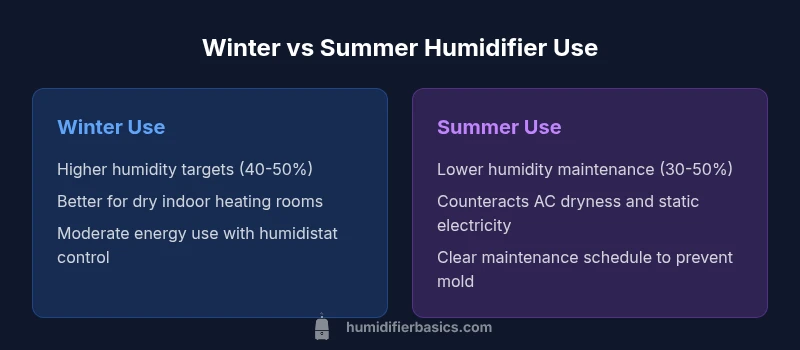
Winter vs Summer Humidifier Use: Practical Guide for Homes
Is a humidifier best for winter or summer? This practical comparison explains seasonal needs, setup tips, and maintenance to improve indoor air quality year-round.


Is a humidifier best for winter or summer? The short answer is: use a humidifier year-round, with season-specific tweaks. In winter, humidifiers address dry indoor air caused by heating; in summer, they counteract AC‑induced dryness and improve perceived comfort. The key is choosing a unit with adjustable humidity and easy cleaning to adapt to changing conditions.
Understanding Seasonal Humidity Needs
Humidity changes with the seasons, and home occupants notice the effects in different ways. Is humidifier for winter or summer? The simple answer is that you can benefit from a humidifier year-round, but the goals and settings shift. In winter, indoor air becomes drier due to heating systems, pulling humidity levels down and causing dry skin, irritated sinuses, and wood furniture that cracks. In summer, air-conditioning and ventilation can lower humidity further, producing stuffy air and dry noses. According to HumidifierBasics, the smartest approach is to think in terms of target relative humidity (RH) and room-specific needs rather than season alone. This article guides you through balancing moisture year-round, selecting the right type, and fine-tuning settings for winter dryness and summer comfort. By the end, you’ll know how to optimize air quality in any climate.
wordCount”:180},
Comparison
| Feature | Winter Use | Summer Use |
|---|---|---|
| Humidity Target (RH%) | 40-50% | 30-50% |
| Ideal Room Types | Dry-heated rooms and bedrooms | AC-heavy living areas and nurseries |
| Power Consumption | Moderate when running continuously | Lower when humidity is stable but depends on unit |
| Maintenance Frequency | Higher in winter for cleaning to prevent mold | Moderate; check water quality periodically |
| Best For | Dryness in heated homes | Humidity comfort during warm months |
| Limitations | Over-humidification risk with poor ventilation | Mineral dust with hard water if not filtered |
What's Good
- Helps prevent dry skin and irritated airways year-round
- Protects wood furniture and houseplants from overly dry air
- Can improve sleep quality and general comfort
- Supports better indoor air quality when paired with ventilation
Negatives
- Risk of mold growth if over-humidified or poorly ventilated
- Requires regular cleaning and water quality management; otherwise bacteria risk
Year-round humidification is generally recommended with season-specific tweaks.
In most homes, using a humidifier year-round with adjustable humidity is the practical approach. Winter dryness requires higher moisture, while summer demands gentler levels. A unit with a humidistat and easy cleaning keeps performance consistent across seasons.
FAQ
Is a humidifier necessary year-round, or only in winter?
For most homes, year-round humidification is beneficial. Winter dryness caused by heating reduces RH and can irritate skin and nasal passages; summer air conditioning can also lower humidity and cause discomfort. The key is adjustable controls and regular maintenance so you don’t overshoot humidity targets.
Most homes benefit from humidity control all year, with seasonal tweaks to keep air comfortable and healthy.
Can I use a humidifier in summer to counteract air conditioning dryness?
Yes. In summer, a humidifier can ease dryness caused by AC and help maintain comfortable RH. Use a lower target range and monitor humidity to prevent excess moisture, which can promote mold. A humidistat helps keep air balanced.
Absolutely—just keep an eye on the humidity level to avoid overdoing it.
What is the ideal humidity range for homes across seasons?
A comfortable, general range is roughly 30-50% RH. In very dry winters, you might aim closer to 40-50%; in humid climates, you may stay nearer 30-40% indoors to reduce condensation. Use a hygrometer to verify actual levels in different rooms.
Aim for about 30-50% humidity, then adjust based on room-specific conditions.
What type of humidifier is best for winter dryness?
Ultrasonic and evaporative humidifiers with built-in humidistats are flexible for winter. Warm-mist units offer perceived warmth and can feel soothing in cold rooms, but they consume more energy and require careful cleaning. The best choice depends on room size, noise tolerance, and care routines.
Winter-friendly options include ultrasonic or evaporative units with humidity control.
How can I prevent mold and bacteria growth in a humidifier?
Clean the device regularly according to the manufacturer’s directions, use distilled or demineralized water to minimize mineral buildup, and empty the reservoir daily when not in use. Regular filter changes (if applicable) also help keep air safe.
Clean, dry, and use proper water to keep it safe and healthy.
The Essentials
- Set a year-round humidity plan with adjustable humidity
- Choose a humidifier with a built-in humidistat and easy cleaning
- Monitor humidity with a hygrometer to avoid over-humidification
- Clean and change filters regularly to maintain air quality
- Tailor settings to winter dryness and summer comfort