What Humidifier Scents Are Safe for Cats: A Practical Guide
Explore which humidifier scents are safe for cats, why essential oils are risky, and practical, scent-free approaches to keep your home comfortable without compromising pet safety.


There are no generally recognized safe essential-oil scents for cats in humidifiers. Oils such as tea tree, eucalyptus, pine, and lavender can be toxic to felines even in small amounts. To protect your cat, use fragrance-free humidification and rely on ventilation, air purifiers, or room-wide scent options away from pets. If fragrance is unavoidable, ensure it is not delivered directly from the humidifier toward the cat and consider non-oil approaches.
Understanding what humidifier scents are safe for cats
According to HumidifierBasics, pet safety should guide every humidification decision, especially when cats are present in the home. The central question for many households is: what humidifier scents are safe for cats? The blunt reality is that most added fragrances in humidifiers are not proven safe for felines. Cats have heightened sensitivity to volatile organic compounds and certain essential oils, and what might be a pleasant scent for humans can be hazardous for pets. In practice, many cats experience irritations or worse from scented humidifiers, so the safest default is fragrance-free humidification. The HumidifierBasics team emphasizes that this is not just about odor; it’s about preserving respiratory comfort and preventing scent-triggered stress in cats. During the decision process, homeowners should consider not only taste in scent but the unique sniffing and breathing patterns of cats. A practical starting point is to evaluate whether any scent is truly necessary in a room where a cat spends time, and if so, minimize exposure and maximize ventilation.
Oils to Avoid: Toxicity and Symptoms
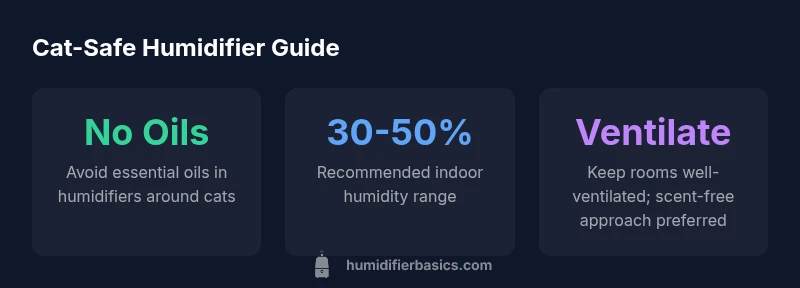
Essential oils are widely used in diffusers for humans, but they pose clear risks when used with cats. Oils such as tea tree (melaleuca), eucalyptus, pine, pine oil, peppermint, wintergreen, cinnamon, and lavender have been implicated in feline toxicosis, even in small amounts. Ingested or inhaled oils can cause respiratory distress, coughing, drooling, lethargy, vomiting, or tremors. Cats also groom themselves after walking through scented residues and can ingest toxins indirectly. If you suspect exposure, contact a veterinarian promptly. Avoid adding any essential oils to humidifiers or near cats altogether. Instead, consider fragrance-free humidification and rely on non-oil methods to maintain a pleasant indoor environment.
Safe Fragrance Alternatives and Best-Practice Approaches
If you want a scented environment without risking your cat, turn to fragrance-free humidity and non-oil strategies. Use a high-quality air purifier, ensure good ventilation, and keep windows open when weather allows. For scenting spaces without oils, options include non-oil desensitizing approaches like fresh air, clean bedding, or naturally smelling materials that do not release volatile oils when humidified. When fragrance is essential for certain rooms, place the humidifier in rooms your cat does not frequent, ensure doors are closed, and never rely on the humidifier as a scent diffuser. The overall principle is to separate pet habitats from any fragrance sources and to avoid placing cat access near scented devices. The goal is to maintain comfort and air quality without introducing chemical exposures that cats might encounter.
Humidity and Cat Comfort: A Practical Range
Maintaining proper humidity helps pets by reducing dry skin and nasal irritation, but excessive humidity can invite mold and dust mite problems, which worsen respiratory issues for some cats. The commonly recommended indoor range is roughly 30-50% relative humidity, with adjustments based on climate, housing, and your cat’s health. If your home is consistently above 50%, consider dehumidification or improved ventilation rather than boosting humidity levels further. Conversely, very dry climates may require humidification during heating seasons, but fragrance-free operation is advised. Humidifier cleanliness is essential; unclean devices can release mold spores or bacteria that harm both humans and pets. Humidity control should be paired with regular monitoring using a reliable hygrometer and routine cleaning to prevent mold growth and ensure safe air quality for your cat.
Setup Checklist for Cat Owners
- Use distilled or demineralized water only to minimize mineral buildup and white dust that can irritate a cat’s lungs.
- Run fragrance-free humidifiers and avoid essential oils in any humidification setup.
- Place humidifiers away from cat pathways and use a tall, solid surface to reduce pet access.
- Employ a hygrometer to maintain 30-50% RH and check humidity at different times of day.
- Clean the device weekly and thoroughly rinse water reservoirs to prevent microbial growth.
- If fragrance is necessary for human comfort, consider room-level scenting outside the cat’s living areas or using non-fragrance-based strategies.
Common Myths vs Reality
Myth: Cats hate fragrance and will avoid scented rooms. Reality: Cats can suffer from irritants and respiratory distress; fragrance can alter breathing and trigger coughing or wheeze. Myth: If oils are safe for humans, they’re safe for cats. Reality: Many essential oils are toxic to cats even in small quantities, so avoid diffusers near pets. Myth: A humidifier with fragrance is better for humidity. Reality: Humidity control is about balance and air quality, not scent delivery. The safest route is fragrance-free humidification and attention to humidity levels, particularly in households with cats.
Comparison of humidifier scent practices and cat safety
| Practice | Cat Risk Level | Notes |
|---|---|---|
| Essential oils in humidifier | high | Toxic to cats; avoid entirely |
| Fragrance additives near humidifier | medium | Irritation possible; keep away from pets |
| Plain water humidification (no fragrance) | low | Safe for cats; maintains humidity |
| Scented humidifier labeled pet-safe | low to medium | Only if explicitly labeled pet-safe by manufacturer and used as directed |
| High humidity long-term (>60%) | medium | Can promote mold and dust mites; manage humidity |
FAQ
Are essential oils safe to use in humidifiers around cats?
No. Most essential oils are toxic to cats and can cause respiratory distress, drooling, vomiting, or lethargy. It is best to avoid using essential oils in humidifiers when a cat is present and opt for fragrance-free humidification instead.
Essential oils in humidifiers are not safe for cats; stick to fragrance-free humidification and check with a vet if exposure occurs.
Can I use scented products in rooms away from my cat?
If you must scent a space, do so away from where the cat spends time and ensure excellent ventilation. It’s safer to use air purifiers or other non-oil methods rather than diffusing fragrance near pets.
Scent away from pets and ensure good airflow; otherwise avoid fragrances near cats.
What humidity level should I maintain for homes with cats?
Aim for a target range of about 30-50% relative humidity. This helps prevent dry skin and respiratory irritation without encouraging mold growth. Use a hygrometer to monitor and adjust as needed.
Keep humidity around 30-50% and monitor it with a hygrometer.
Are there any cat-safe scents I can use in a humidifier?
There are no widely accepted, cat-safe essential oil scents for humidifiers. The safest approach is fragrance-free humidification and non-oil scenting strategies if needed.
There aren't proven cat-safe humidifier scents; fragrance-free is the safest option.
What should I do if my cat shows distress after exposure to scented humidification?
Remove the source of fragrance, increase ventilation, and contact a veterinarian if symptoms like coughing, wheezing, drooling, or vomiting occur. Early veterinary advice is important for cats showing signs of distress.
If your cat shows distress, remove the scent source and seek veterinary help.
Is it ever acceptable to use a humidifier near a cat to improve comfort?
If a humidifier is necessary for comfort, keep it fragrance-free, use distilled water, monitor humidity, and ensure the cat cannot reach the device. Fragrance should be avoided entirely in close proximity to pets.
Keep it fragrance-free and out of reach; monitor humidity closely.
“Fragrance-free humidification is the safest default for homes with cats. If you must introduce scent, consult pet-safety guidance first and avoid essential oils.”
The Essentials
- Avoid essential oils in humidifiers around cats
- Maintain fragrance-free humidity whenever possible
- Keep the humidifier out of the cat’s direct path
- Aim for a 30-50% indoor humidity range for pets
- Regularly clean and maintain your humidifier to prevent contaminants