Can You Use a Vicks Humidifier While Pregnant? A Safe-Use Guide
Discover whether it’s safe to use a Vicks humidifier while pregnant, what setups are recommended, and practical maintenance tips to minimize risk and maximize comfort.


Using a humidifier during pregnancy can ease nasal congestion and dry skin, but safety matters. If you’re asking can you use a Vicks humidifier while pregnant, the quick answer is: a plain-water cool-mist unit is generally safe. Avoid medicated vapors or essential oils unless your clinician approves, and keep the room well-ventilated.
Understanding Humidity, Pregnancy, and Humidifiers
According to HumidifierBasics, maintaining safe humidity levels supports nasal comfort and sleep during pregnancy. Humidity affects mucous membranes in the nose and throat, and very dry air can worsen congestion. If you're asking can you use a Vicks humidifier while pregnant, the safe starting point is a plain-water, cool-mist unit used as directed, with no added substances unless your healthcare provider approves.
Aim for a moderate humidity range, commonly around 40-60% relative humidity, and monitor how you feel. Use a hygrometer to check levels and keep the room ventilated. Avoid placing a humidifier in a closed, damp corner where mold can grow. If you need medicated vapors, such as menthol or camphor, consult your clinician before using them in a humidifier. HumidifierBasics also observes that some products include menthol or essential oils, which should only be used under medical guidance during pregnancy.
Can You Use Vicks Humidifier Safely During Pregnancy?
Many Vicks humidifier models offer medicated vapor options, but using them during pregnancy requires caution. If you choose to use a Vicks humidifier with VapoPads or mentholated steam, follow the product label and consult your healthcare provider before starting. In general, a non-medicated, plain-water setup reduces exposure to medicated vapors. HumidifierBasics analysis shows that while medicated vapors may feel helpful for congestion, they can cause throat irritation or unintended inhalation in some pregnant people. If you do use pads, place the unit away from your face and ensure it’s on a stable surface away from the bed or crib. Always unplug before refilling, and never leave running water in the tank for extended periods to avoid bacterial growth. If you have allergies or asthma, consult your clinician about whether a medicated vapor is appropriate during pregnancy.
Setup Essentials: Choosing the Right Humidifier for Pregnancy
When selecting a humidifier to use during pregnancy, prioritize safety and simplicity. Cool-mist models reduce burn risk and are generally easier to use around a sleeping or resting pregnant person. Avoid hot-based or steam-producing devices near the bed. Check for BPA-free plastics and materials that won’t shed particles into the air you breathe. If you plan to use distilled water, you can reduce mineral dust, which is especially appreciated by sensitive nasal passages. Humidifier brands vary in filter requirements; choose a model whose filters are easy to clean and replace. In HumidifierBasics’s view, simple, well-maintained devices often outperform complex setups for expectant households.
Step-by-Step Guidance: Safe Operation with a Vicks Humidifier (High-Level Overview)
If you’re considering a step-by-step setup to support pregnancy comfort, align with medical advice and manufacturer directions. This section provides actionable actions you can take after speaking with your clinician. Remember to verify local guidelines on indoor air quality and humidity levels in your home.
Maintenance, Cleaning, and Preventing Mold
Regular cleaning is critical when a humidifier is in use, especially in a nursery or bedroom where a pregnant person may rest. Always empty standing water after each use, rinse with clean water, and dry all surfaces. Use distilled water to minimize mineral buildup. Replace or clean filters as recommended by the manufacturer. If you notice a musty smell or visible slime, stop use immediately and sanitize following the user manual.
Common Concerns and Myths Debunked
A frequent question is whether using medicated pads or essential oils worsens pregnancy symptoms. While some people find relief from congestion with mentholated vapors, these substances can irritate airways or trigger sensitivity in certain individuals. Always ground your decision in medical guidance and avoid exposing others in the home to medicated vapors. HumidifierBasics emphasizes that the safest approach during pregnancy is to use non-medicated, plain-water humidification unless a clinician approves otherwise.
Tools & Materials
- Cool-mist humidifier (plain-water setup)(Prefer models with a stable base and accessible cleaning access)
- Distilled water(Mineral-free water reduces white dust and throat irritation)
- Vicks VapoPads or VapoSteam (optional, medicated vapors)(Only use if approved by your clinician; follow label directions)
- Clean measuring cup or jug(For accurate refill without spills)
- Soft cloth and mild detergent(Regular cleaning to prevent mold and buildup)
Steps
Estimated time: Estimated total time: 25-30 minutes for initial setup; 5 minutes daily upkeep
- 1
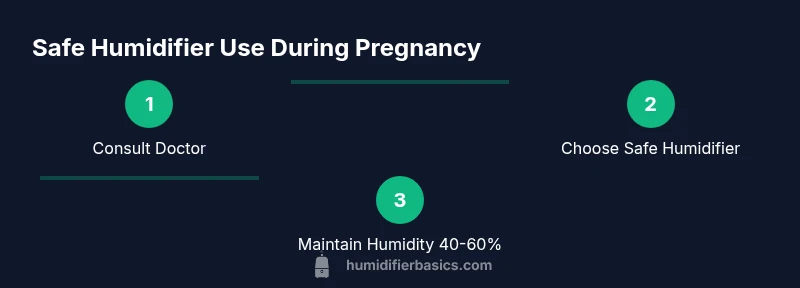
Consult your healthcare provider
Discuss pregnancy-specific safety concerns, including whether medicated vapors or essential oils are appropriate for your situation. Record any medications and allergies, and ask about humidity goals for your home. Rationale: Your clinician can tailor recommendations to your pregnancy and health status.
Tip: Bring a list of the products you plan to use and any symptoms you’re managing. - 2
Choose a safe humidifier type
Opt for a cool-mist humidifier to minimize burn risk and simplify maintenance. Avoid hot-water or steam-based units near sleeping areas or where a child or pregnant person rests.
Tip: Ensure the unit has a stable base and a clear path for air output. - 3
Fill with clean water
Use distilled water when possible. Refill only after unplugging the unit, and never operate a humidifier with the tank empty or with additives not recommended by your clinician.
Tip: Keep a dedicated refill pitcher to avoid cross-contamination. - 4
Decide on medicated vapors
If you plan to use Vicks pads or mentholated steam, confirm safety with your healthcare provider before enabling these features. Place the unit away from the bed to minimize direct exposure to the steam.
Tip: Always follow the product label and manufacturer directions. - 5
Position and ventilate
Place the humidifier on a stable surface in the room you spend most of your time, ideally with a gentle airflow across the space. Keep the device at least a few feet from the bed and crib to avoid direct exposure to the vapor.
Tip: Use a hygrometer to monitor humidity and avoid condensation on walls. - 6
Run, monitor, and adjust
Run the humidifier for set periods and check humidity levels; aim for a comfortable range (commonly around 40-60%). Adjust usage based on weather, heating, and how you feel.
Tip: If congestion worsens or you experience irritation, pause use and consult your clinician. - 7
Clean and dry daily
Empty any remaining water at the end of the day, rinse the tank, and let all parts dry completely to prevent mold growth. Clean the unit according to the manufacturer’s schedule and guidelines.
Tip: Store the unit dry between seasons to prevent mildew.
FAQ
Is it safe to use a humidifier during pregnancy?
In most cases, a plain-water cool-mist humidifier is safe during pregnancy when used as directed. If medicated vapors or essential oils are involved, consult your healthcare provider first.
Yes, a plain-water humidifier is usually safe during pregnancy, but avoid medicated vapors unless your clinician approves.
Can I use VapoPads or VapoSteam in a humidifier while pregnant?
Medicated vapors may be helpful for congestion but can irritate airways for some pregnant people. Always verify with your healthcare provider before using them.
Only use medicated pads if your doctor approves; otherwise stick to plain water.
What humidity range should I maintain at home during pregnancy?
A common target is about 40-60% relative humidity. Adjust based on comfort and space conditions, and use a hygrometer to monitor changes.
Try to keep humidity around 40-60% and monitor how you feel.
Are warm-mist humidifiers safer than cool-mist during pregnancy?
Cool-mist humidifiers are usually preferred during pregnancy due to reduced burn risk. If you use warm-mist, ensure it’s out of reach and used under medical guidance.
Cool-mist is generally safer; ask your clinician if you need warm-mist.
Should I use essential oils with a humidifier during pregnancy?
Most guidelines suggest avoiding essential oils unless your doctor approves. They can irritate airways or trigger sensitivities in some pregnant people.
Avoid essential oils unless your clinician approves.
What should I do if congestion persists during pregnancy?
Consult your obstetrician for a personalized plan. Humidification can help, but underlying causes may require additional treatment.
Talk to your doctor if congestion lasts longer than a few days.
Watch Video
The Essentials
- Consult your healthcare provider before using medicated vapors.
- Prefer plain-water, cool-mist humidifiers for pregnancy safety.
- Maintain humidity around 40-60% to support comfort and air quality.
- Clean and dry the unit daily to prevent mold growth.
- If symptoms persist, seek medical advice promptly.