When to Change Canopy Humidifier Filter: A Practical Guide
Learn how to tell when to change your canopy humidifier filter, with practical maintenance steps, replacement intervals, and tips to extend filter life. HumidifierBasics provides expert guidance for homeowners and renters.


Replace or clean the canopy humidifier filter when you notice reduced mist, unusual odor, discolored water, or visible buildup. In typical homes, expect a refresh every 1–3 months of heavy use, or 3–4 months with light use. According to HumidifierBasics, matching your schedule to water quality and daily usage keeps performance high.
The role of canopy humidifier filters
According to HumidifierBasics, canopy humidifier filters are the frontline defense against mineral dust, microbes, and mineral buildup. They trap minerals from tap water and prevent them from circulating in the air. Over time, minerals accumulate on the filter, reducing airflow and dampening the mist. This not only lowers perceived humidity but can also create an environment where mold and bacteria thrive if the unit isn't serviced regularly. Understanding when to change canopy humidifier filter is essential for maintaining air quality, energy efficiency, and overall comfort in your home. A consistent replacement schedule, aligned with your usage patterns and water type, keeps your humidifier performing at its best. In this guide, we break down practical cues, testing methods, and a simple routine you can adopt to avoid guesswork.
Signs you need a filter change
Look for reduced mist output, longer warm-up times, and visible buildup on the filter. A musty odor or mineral dust around the humidifier are strong indicators that the filter is no longer performing as designed. Water textures can change as minerals accumulate, causing cloudiness or white residue on nearby surfaces. If you notice these signs, replace the canopy filter promptly to avoid strains on the motor and to restore healthy humidity levels. Regular monitoring helps homeowners and renters maintain air quality and comfort without guessing when to replace. The goal is to maintain at least a stable humidity level while preventing the growth of mold or bacteria in the reservoir.
How to determine your replacement interval
Your replacement interval depends on how often you use the unit, the water you use (tap vs. distilled), and the specific canopy model. In general, heavy everyday use warrants more frequent changes than occasional use. Water hardness is a major factor; harder water deposits minerals faster, clogging filters sooner. Keep a simple maintenance log noting when you replaced the filter and the approximate daily run time. If you run the humidifier in a shared space for many hours, plan for shorter intervals and more frequent checks. If you use distilled water, you may extend the interval between changes. There is no universal timetable, so tailor the schedule to your household conditions.
Cleaning vs replacing: what's right for you?
Cleaning the filter housing and reseating it correctly can extend filter life in some cases, but it does not restore the filtration media to original performance. If you notice persistent residue, embed odors, or reduced airflow after cleaning, it is time to replace. Use a mild soap solution and a soft brush to remove mineral deposits from the housing; rinse thoroughly and dry before installing a new filter. A regular cleaning cadence reduces mineral buildup and helps you identify when replacement is truly needed.
Factors that speed up filter wear
Mineral-rich water, high indoor humidity, and frequent cycling of the unit cause the filter to work harder, leading to faster saturation. Filters with pre-filters catch larger particles and extend life, but they must be cleaned or replaced as per manufacturer guidance. If you operate the unit in a space with more than a standard occupancy, you may see faster filter wear due to higher moisture flux. Keeping rooms within recommended humidity ranges (30-50%) reduces filter stress and keeps the unit operating efficiently.
How water quality affects filter life
Tap water with high mineral content deposits minerals that load the filter quickly. Using distilled or demineralized water reduces mineral buildup and can prolong filter life. Some canopy filters indicate replacement timing based on water hardness; check your model's guidelines. Lower mineral content means less frequent replacement and less cleaning, which eases routine maintenance while preserving air quality.
Maintenance schedule and best practices
Create a simple calendar reminder for filter replacement every 1–3 months for heavy use, and every 3–4 months for light use. Keep a water-quality note; if you switch to distilled water, you may adjust the interval. Always use manufacturer-approved filters and replace seals if they show wear. Store replacement filters in a clean, dry place to avoid moisture damage. Document results and adjust as needed.
Authority sources
For further guidance, consult authoritative resources on indoor air quality and humidifiers to support best practices. See the sources linked below for details and safety considerations from government and health organizations.
Tools & Materials
- Replacement canopy humidifier filter(Ensure it matches canopy model and size)
- Soft brush(For gentle cleaning of housing)
- Cleaning cloth or microfiber towel(To wipe housing and seals)
- White vinegar or mild soap(For mineral buildup, use sparingly)
- Tray or bowl(To catch drips during replacement)
- Disposable gloves(Optional for hygiene)
Steps
Estimated time: 15-25 minutes
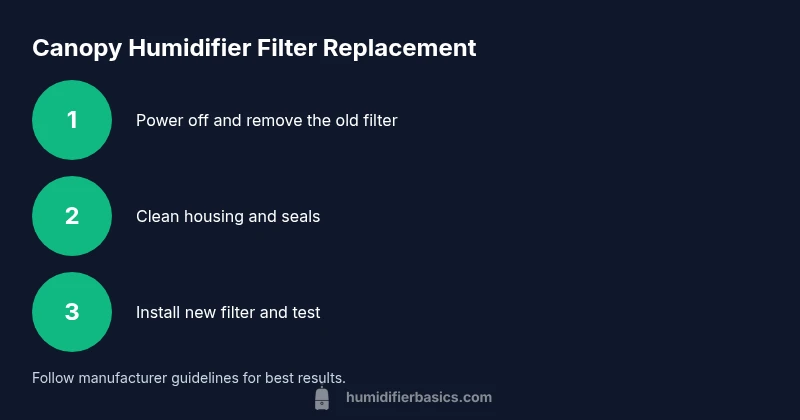
- 1
Power off and unplug the unit
Ensure the humidifier is completely turned off and disconnected from power before handling the filter or housing. This protects you from shocks and prevents unintended misting during maintenance.
Tip: Always unplug first, then move to a dry work area. - 2
Remove the old filter and housing cover
Carefully open the canopy housing and slide out the old filter. Check for any stubborn mineral deposits around the gasket.
Tip: Keep the filter in a labeled bag to avoid cross-contamination. - 3
Clean the housing and gasket
Wipe the interior with a damp cloth and mild soap, then rinse and dry. Inspect the gasket for cracks or wear that could cause leaks.
Tip: Avoid soaking electronic components; use a dry microfiber for the last pass. - 4
Install the new filter and reseal
Insert the replacement filter ensuring the arrows align with airflow. Reattach the housing cover securely and confirm a snug seal.
Tip: Check the airflow direction arrows on the filter before seating. - 5
Run a test cycle and observe
Plug in the unit, fill as directed, and run a short mist cycle to check for leaks and proper operation. Listen for abnormal sounds or odor.
Tip: If mist output is weak, reseat the filter and clean the housing again.
FAQ
How often should I change canopy humidifier filters?
Replacement timing varies with usage and water quality. Most households replace every 1–3 months during heavy use and less often with light use.
Most people change every one to three months depending on how often you run it and the water you use.
Can I reuse a canopy humidifier filter?
No. Reused filters lose effectiveness and can harbor mold and bacteria. Always replace with a manufacturer-approved filter.
No, you should replace with a new filter.
What else affects filter life besides usage?
Water hardness and mineral content, frequency of cleaning, and how often you run the unit all influence filter life.
Water hardness and how often you clean it affect filter life.
Should I clean the unit instead of replacing the filter?
Cleaning helps extend filter life, but filters will eventually reach end-of-life. Follow the manufacturer's guidance for both.
Cleaning helps but you still need to replace when needed.
What signs indicate a filter change is overdue?
Weak or uneven mist, strange odor, visible mineral buildup, or increased humidity readings suggest replacement is needed.
If mist drops or you notice odor or mineral buildup, replace.
Are there safety concerns with DIY filter changes?
Unplug the unit, use approved filters, and avoid touching electrical components. If unsure, consult the manufacturer.
Unplug and use approved parts; consult the manual if unsure.
Watch Video
The Essentials
- Inspect regularly for wear and buildup
- Use the correct replacement filter for your canopy model
- Keep a maintenance log for predictable intervals
- Prefer distilled water to extend filter life
- Follow a set replacement rhythm for best air quality