Humidifier for Rent: A Practical Guide for Homeowners
A data-driven guide for homeowners and renters considering a humidifier for rent. Learn terms, costs, safety, maintenance, and how to choose a rental provider with practical checklists and expert insights.


Renting a humidifier is a practical option for short-term needs, trial runs in a new home, or avoiding upfront purchase costs. This guide outlines typical rental terms, potential monthly costs, safety considerations, and what to check before you sign. For homeowners and renters, understanding the rental landscape helps you balance comfort, air quality, and budget.
Rental landscape for humidifiers
According to HumidifierBasics, the demand for renting humidifiers has grown as households seek flexible solutions for seasonal dryness, temporary humidity spikes during winter, or during transitions between residences. The option to rent provides immediate air quality relief without the upfront purchase cost, storage concerns, or maintenance responsibilities associated with ownership. For many renters, a rental arrangement also simplifies insurance questions and avoids depreciating assets when moving. In practice, you’ll find terms that vary by provider, but most plans cover delivery, basic setup, and a maintenance window during the rental period. When you see the phrase humidifier for rent in listings, it’s a signal to compare terms like duration, included parts (filters, descaling aids), and who handles servicing. This section breaks down what to expect and how to evaluate offers against your specific needs.
Renters should consider factors like room size, existing humidity levels, and whether the unit uses cool mist or warm mist technology. Humidifier for rent options typically emphasize ease of use, safe operating certifications, and clear return policies. The HumidifierBasics team notes that practical decisions hinge on whether you’ll need year-round humidity support or only occasional relief. If you’re in a smaller apartment, smaller units may suffice; larger rooms may require a high-capacity model or multiple units. Reading rental contracts carefully helps you avoid surprises related to deposits, late fees, or mandatory service visits. A well-chosen rental plan aligns with your climate, space, and daily routine, while preserving clean air and minimizing energy waste.
How rental terms typically work
Most humidifier rental agreements segment terms into three pillars: duration, included components, and service responsibilities. Duration often ranges from short-term (1-4 weeks) to long-term (3-12 months) with renewal options. Typical components include the humidifier unit, standard filters, a simple water line or reservoir, and occasionally a descaling kit. Service responsibilities vary: some providers handle delivery, setup, and troubleshooting, while others require you to manage routine cleaning and filter changes. Deposit requirements are common and can be a portion of the monthly rate or a one-time fee. It’s crucial to verify who bears liability for damage, what conditions trigger costs, and whether the agreement allows early termination. The HumidifierBasics analysis emphasizes reading the fine print on cancellation policies, delivery windows, and any penalties for missing scheduled maintenance. For renters, understanding these terms helps you plan for seasonal humidity needs without committing to ownership.
Costs to expect and how they’re calculated
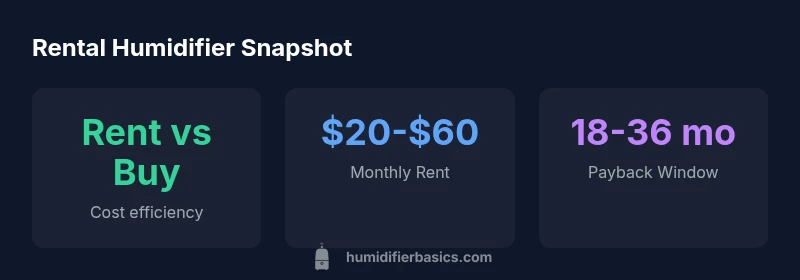
Budgeting for a humidifier rental means looking beyond the base monthly rate. Many providers add delivery, setup, and retrieval fees, which can markedly influence the total monthly cost. In practice, a typical monthly rent can range from $20 to $60, depending on unit size, features, and service level. Some plans charge per-kilowatt-hour usage, though most rely on a flat monthly rate. You may also encounter one-time deposits, cleaning fees, or costs for filter replacements. The HumidifierBasics team recommends asking for a transparent breakdown: base rent, delivery/setup, maintenance visits, filter costs, and any penalties for early termination. If you anticipate prolonged dry periods, compare rent-to-buy scenarios to determine if locking in ownership would be more economical in the long run. Compare multiple providers to identify inclusive packs that maximize value while minimizing out-of-pocket surprises.
Safety and maintenance responsibilities when renting
Safety is paramount when renting a humidifier. Ensure the model is certified for residential use and suited to your room size. The rental terms should spell out who is responsible for cleaning the reservoir, descaling, and replacing filters. Typical maintenance tasks include weekly cleaning with mild soap, replacing filters every 1-3 months, and checking mineral buildup from hard water. If you rent with a unit that uses ultrasonic technology, be mindful of mineral dust and consider using distilled water to minimize deposits. The HumidifierBasics guidance highlights documenting maintenance tasks and keeping a log, which makes returns smoother and helps diagnose issues quickly during service visits. Always place units away from walls and ensure proper clearance for airflow. Regular checks reduce the risk of mold growth and maintain air quality over the rental period.
Room size, humidity targets, and selecting the right rental model
Before choosing a rental unit, assess the intended space and target humidity range. Most residential setups aim for a relative humidity of 40-60% to balance comfort and mold risk. Use a hygrometer to monitor conditions and avoid over-humidification, which can cause condensation and dampness. For renters, matching the unit’s output to the room size is vital: underpowered units struggle to reach target levels, while oversized units waste energy and dry out the air unevenly. The HumidifierBasics analysis suggests paying attention to the unit’s CADR (clean air delivery rate) or equivalent coverage rating, and to check whether the provider offers several sizes or scalable solutions. In some cases, a second smaller unit placed strategically may be more efficient than a single large unit in a cramped space.
How to evaluate rental providers and warranty offerings
When evaluating rental providers, prioritize safety certifications, clear service commitments, and transparent pricing. Request details on what happens if the device malfunctions, whether a replacement is provided, and whether you can switch models mid-term without penalties. A robust rental program offers a preventive maintenance schedule, responsive customer support, and straightforward warranty coverage that excludes only standard wear. The HumidifierBasics Team recommends reading reviews that mention item condition on delivery, ease of returns, and communication responsiveness. If a provider offers a “swap guarantee” or flexible upgrade path, you’ll maximize value during variable humidity seasons. This section helps homeowners and renters choose a partner who aligns with their reliability expectations and budget.
Short-term rental vs. long-term rental: a decision framework
A practical decision framework compares cost, convenience, and long-term needs. Short-term rentals work well for guests, seasonal humidity spikes, or move-in readiness when you don’t want to buy. Long-term rentals provide ongoing humidity control without ownership responsibilities but may require longer lock-in terms. Create a simple matrix listing monthly costs, maintenance duties, and the flexibility to end or extend early. The HumidifierBasics guidance emphasizes tailoring the choice to your climate and living situation. For people who expect rapid moves or frequent relocations, renting often makes more sense, while settled households may benefit from buying a unit that offers customization and potential energy savings over time.
Practical rental checklists and red flags
Before finalizing a humidifier rental, use a checklist to ensure coverage and avoid common pitfalls. Key items include: delivery and setup timing, included accessories, maintenance responsibility, and terms for returning or replacing the unit. Red flags include vague policy language, high early termination penalties, or fees that aren’t disclosed up front. Confirm whether the unit’s output suits your space, whether replacement filters are readily available, and if there’s a clear procedure for reporting issues. HumidifierBasics recommends documenting the pre-existing condition of the unit, the delivery checklist, and keeping all communications in writing. This minimizes disputes and speeds up service if problems arise.
Authority sources and continued learning
For readers who want to dive deeper, consult authoritative sources on indoor humidity and occupant safety. The HumidifierBasics team has compiled a list of well-regarded references to guide best practices, including government and university resources. This section intentionally provides direct access to credible, non-promotional information to support informed decisions about humidifier use, rental terms, and maintenance.
Rental scenarios and typical terms
| Rental Scenario | What it covers | Typical term |
|---|---|---|
| Short-term rental | Good for one-off needs or trial in a new home | 1-4 weeks |
| Medium-term rental | Flexible coverage during seasonal humidity spikes | 1-3 months |
| Long-term rental | Ongoing humidity management without ownership | 3-12 months |
FAQ
What does humidity target mean for rental humidifiers?
Indoor humidity is typically recommended around 40-60% relative humidity, depending on climate and season. A rental unit should allow you to monitor and adjust this range while staying within the provider’s maintenance guidelines.
Most rental models let you aim for comfortable humidity between 40 and 60 percent, with simple controls to adjust the level as needed.
Are rental humidifiers safe for pets and children?
Choose units with certified safety features and avoid hot-mist models around curious pets and kids. Regular cleaning, using distilled water, and following the manufacturer’s safety guidelines reduce risks.
Yes, as long as you pick a safe model and keep it clean, rental humidifiers can be kid- and pet-friendly.
How long can I rent a humidifier for?
Most providers offer flexible terms from 1 month up to 12 months, with renewal options. Short-term leases are common for guests or move-ins, while longer leases suit seasonal needs.
Most rentals run from a month to a year, with options to renew if you still need humidity support.
Who is responsible for maintenance and filters in a rental?
Responsibility varies by contract. Some providers handle maintenance and filters; others require you to perform routine cleaning and filter changes with provided guidance.
Check your contract to know who cleans and changes filters and who handles service calls.
Can I cancel a humidifier rental early without penalties?
Early termination policies differ. Look for no-penalty exit clauses or prorated refunds, and confirm any fees before signing.
Cancellation terms vary—look for flexible options or clear refunds before you commit.
Is renting cheaper than buying in the long run?
It depends on usage and duration. Renting can be cheaper for short-term needs, while buying may pay off for extended use with maintenance considerations.
Renting often saves upfront costs; buying might be cheaper over many months or years depending on usage.
“Renting a humidifier can be a smart interim solution when you need quick relief from dry air without a large upfront investment. Always verify maintenance responsibilities with your provider.”
The Essentials
- Renting a humidifier can bridge short-term needs without upfront investment
- Compare monthly costs and terms carefully
- Check safety and maintenance responsibilities
- Factor delivery and return logistics into budget
- Consider long-term rent vs buy options for cost efficiency