Humidifier for Heat Pump: A Practical Guide to Balanced Humidity
Learn how to pair a humidifier with your heat pump to maintain comfortable indoor humidity. This guide covers sizing, placement, water quality, maintenance, and safety for homeowners and renters.


You will learn how to select, install, and maintain a humidifier for a heat pump to keep indoor humidity comfortable and safe. The guide covers sizing, placement, water quality, and routine maintenance, with practical tips you can apply in real homes.
Why a humidifier matters for heat pumps
Heat pumps provide efficient heating and cooling, but they can dry indoor air, especially in winter and in dry climates. When humidity drops, occupants feel uncomfortable, wood floors and furniture may crack, and skin or nasal passages can become irritated. A dedicated humidifier for heat pump setups helps maintain a comfortable humidity range without overworking the system. According to HumidifierBasics, balancing humidity is a practical way to improve comfort and protect home finishes while keeping energy use reasonable. By pairing a properly sized unit with your heat pump system, you can reduce drafts, minimize static electricity, and support healthier indoor air. This section lays the groundwork for making informed choices about humidifiers that work well with heat pumps, including how to think about room size, airflow, and seasonal needs.
How humidity affects heat pump performance and indoor air quality
Humidity directly influences how a heat pump feels in daily life. When air is too dry, occupants notice dry skin and irritated throats; when humidity is too high, condensation and mold risk increase and surfaces can feel damp. A humidifier for heat pump setups helps you maintain a steady, comfortable climate so the system doesn't overcompensate with temperature changes. The HumidifierBasics analysis shows that thoughtful humidity management can improve perceived comfort and contribute to longer system life by reducing stress on the compressor and coils, while supporting better indoor air quality. This section explains why humidity matters, what factors influence it in real homes, and how to approach humidity management with practical checks and simple tools.
Humidifier types and their fit with heat pumps
There are several common humidifier types to consider with a heat pump: ultrasonic, evaporative, and warm-mist (steam) models. Ultrasonic units are quiet and produce a fine mist, but may require more frequent cleaning to prevent mineral dust. Evaporative humidifiers use a wick filter and tend to self-regulate as humidity rises, reducing the risk of over-humidification. Warm-mist units generate steam but use more energy and have higher burn or spill risks, so they require careful placement and handling. For homes with centralized heat pumps, a well-chosen ultrasonic or evaporative humidifier with an integrated humidistat and auto shutoff generally provides reliable performance without overwhelming the system with moisture. The HumidifierBasics guidance emphasizes choosing a model that allows precise humidity control and safe operation near an air handler or living spaces.
Sizing and placement: choosing the right unit
Sizing a humidifier for a heat pump setup means matching the unit’s output to your space, climate, and how your heat pump cycles. Look for a model with adjustable output and an accurate humidistat, and verify compatibility with your home’s air flow patterns. Placement matters: position the humidifier away from direct air outlets that could blow mist onto electronics or walls, and near a return air pathway if possible to promote even distribution. Avoid placing the device on carpet or on surfaces that can be damaged by moisture. Use a stable base and a tray to catch incidental spills. Following these guidelines helps prevent over-humidification and protects your walls, furniture, and electronics. HumidifierBasics notes that a correctly sized unit, used with a humidity monitor, often yields the most comfortable and energy-efficient results in heat pump environments.
Water quality, hygiene, and mineral buildup
Water quality matters for any humidifier, especially when used in a home with a heat pump. Distilled or demineralized water minimizes mineral buildup in the reservoir and on internal components, which helps maintain performance and reduces white dust on surfaces. Empty and rinse the reservoir daily if the unit runs frequently, and clean with a mild vinegar solution or a manufacturer-approved descaler on a regular schedule to prevent mineral deposits. Always rinse thoroughly after cleaning to avoid introducing cleaning residues into the air. Using clean water and adhering to a routine cleaning cycle supports better air quality and system reliability. The HumidifierBasics guidance reinforces that hygiene is as important as sizing when integrating a humidifier with a heat pump.
Installation basics and placement best practices
Before installing a humidifier for a heat pump setup, verify compatibility with your HVAC system and read the manufacturer’s installation instructions carefully. If you’re installing a unit that ties into a water line or near the furnace, shut off power and water supply before starting. Mount the unit securely away from heat sources and direct sunlight, and ensure any drainage or overflow path is clear. Keep electrical outlets protected from moisture and use a drip tray or pan where needed. If you’re unsure about electrical or plumbing connections, consult a licensed technician. Proper installation minimizes leaks, electrical hazards, and performance problems, helping you achieve steady, comfortable humidity.
In practice, plan for accessible service access and a straightforward maintenance routine to maximize lifespan and reliability. The HumidifierBasics team recommends keeping a simple checklist for installation and testing, then revisiting it seasonally to adjust for changes in climate or living patterns.
Maintenance routines to extend life and efficiency
A predictable maintenance schedule keeps a humidifier working well with a heat pump. Daily, empty and rinse the reservoir if the unit runs continuously, and refill with clean water. Weekly, wipe down the interior with a mild cleaning solution and rinse thoroughly. Monthly, inspect filters (if applicable) and replace or clean them according to the manufacturer’s guidelines. Periodic deep cleaning with a vinegar solution helps prevent mineral buildup and microbial growth. Keep an eye on seals and gaskets for signs of wear, and replace components as recommended. Consistent maintenance reduces the risk of mold, mineral dust, and equipment fatigue, which supports safer indoor air and more reliable heat pump operation. The HumidifierBasics team emphasizes that a simple, repeatable routine is the best defense against performance issues and unexpected downtime.
Troubleshooting common issues and quick fixes
If you notice low humidity despite running the unit, check that the humidifier is producing mist and that the room air is circulating. Verify the humidistat setting and confirm there are no closed vents or blocked returns. If you detect strange odors, clean the reservoir and inner surfaces, and ensure the water is fresh. A persistent leak usually indicates a faulty seal or connection—shut off power and water supply and inspect the area. For noisy operation, inspect the fan or movement mechanisms and ensure the unit is level and unobstructed. Regular checks and timely cleaning prevent recurring problems and help you maintain a stable climate when using a humidifier with a heat pump. The HumidifierBasics team recommends addressing issues early to protect your investment and indoor air quality.
Authority and practical next steps
For homeowners and renters seeking credible guidance, authoritative sources can provide deeper context on humidity management and indoor air quality. The EPA’s IAQ resources explain best practices for humidification and cleaning, while health and safety organizations highlight mold prevention and safe operation. See the sources section for direct links to these materials. The HumidifierBasics team recommends using a compatible humidifier for heat pump systems with a built-in humidistat, regular cleaning, and careful monitoring of humidity levels to maintain a comfortable and safe home environment.
Tools & Materials
- Humidifier suitable for heat pump setup(Choose a model with an integrated humidistat and auto shutoff)
- Humidistat or hygrometer(For ongoing humidity monitoring in the space)
- Distilled or demineralized water(Minimize mineral buildup and dust from mineral content)
- Soft cloth or small brush(For cleaning reservoir and components)
- Mild cleaning solution or vinegar(Used for mineral deposits/scale removal)
- Towel or tray(Catch spills during maintenance)
Steps
Estimated time: 2-5 hours (depending on installation complexity and system compatibility)
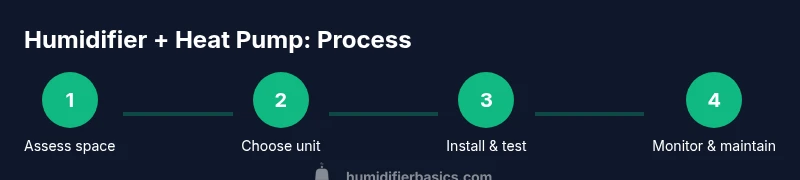
- 1
Assess room and system
Evaluate the room size, airflow, and whether your heat pump already handles humidity; identify the best humidifier type and placement.
Tip: Document baseline humidity with a hygrometer before starting. - 2
Choose a compatible humidifier
Select a model designed for integration with HVAC systems and heat pumps, with adjustable output and a humidistat.
Tip: Avoid units that require constant manual adjustment; automation helps keep stable levels. - 3
Install safely and precisely
Mount or place the humidifier per manufacturer instructions, away from heat sources, and near a return air path if possible.
Tip: Turn off power and water supply before installation; check for leaks after first test run. - 4
Connect water supply (if needed)
If your unit uses a water line, connect it securely and ensure any drainage is directed to a safe location.
Tip: Use a dedicated shutoff valve to simplify future maintenance. - 5
Calibrate humidity controls
Set the humidistat to a comfortable level and test humidity distribution with a room hygrometer.
Tip: Aim for even humidity across the living area; reposition if you see damp or dry spots. - 6
Run a test cycle
Operate the system for a few hours and monitor mist output and air movement.
Tip: Check for condensation on walls or windows and adjust placement or output if needed. - 7
Establish a maintenance routine
Create a simple schedule for weekly cleaning, monthly inspections, and seasonal checks.
Tip: Keep a maintenance log to track cleaning dates and replacement parts. - 8
Monitor and adjust seasonally
As seasons change, revisit humidity targets and tweak output to maintain comfort without over-humidification.
Tip: In very dry climates, you may need more frequent monitoring during heating season. - 9
Document and learn
Note what settings and placements work best in your home and refine your routine over time.
Tip: Small tweaks can yield big gains in comfort and energy use.
FAQ
Will a humidifier be necessary for a heat pump in my home?
Not everyone needs a humidifier, but many homes with dry winters and heat pump systems benefit from added moisture to improve comfort and protect furnishings.
A humidifier can help if your home feels dry in winter or if your floors and furniture seem dry.
What humidity range should I target?
Aim for a comfortable level determined with a hygrometer and manufacturer recommendations. Avoid high humidity that can encourage mold or condensation.
Use a hygrometer to find a comfortable level, and adjust as needed.
Can I install a humidifier myself if it mounts to the furnace?
Basic, self-contained humidifiers are often suitable for DIY installation, but units that tie into a furnace or water supply may require a licensed technician.
If you’re unsure about electrical or plumbing work, hire a pro.
Do humidifiers affect energy use?
A properly sized unit generally adds minimal energy use, especially if it’s energy efficient and controlled by an automatic humidistat.
Energy impact is low when you choose the right unit and use automatic control.
How often should I clean my humidifier?
Clean weekly, with a deeper clean monthly and a quick rinse between uses to prevent mineral build-up and mold.
Clean weekly and deep-clean monthly to stay safe and effective.
Is distilled water required for all humidifiers?
Distilled or demineralized water is strongly recommended to minimize mineral dust and scale on the device.
Distilled water helps prevent mineral deposits and keeps the unit running smoothly.
Watch Video
The Essentials
- Choose a humidifier type compatible with heat pumps and equipped with a humidistat
- Place and size carefully to avoid over-humidification
- Use distilled water and clean regularly to prevent mineral buildup
- Follow a consistent maintenance schedule for reliability
- Monitor humidity with a hygrometer for stable comfort