How to Humidify a Room: A Practical, Safe Guide
Learn how to safely humidify a room with practical steps, proper equipment, and maintenance tips to improve comfort and indoor air quality.


If you're wondering how to humidify a room, follow this practical approach for safe, steady moisture. Choose an appropriately sized humidifier, use clean water, and monitor humidity with a hygrometer. Target about 40–60% indoor humidity, keep water fresh, and clean the unit regularly to prevent mold, bacteria, and mineral dust from spreading.
Understanding Humidity and Health
Humidity describes the amount of water vapor in the air. In homes, maintaining a balanced indoor humidity level supports comfort, reduces irritation of the eyes and throat, and helps protect wood furniture and electronics from cracking or warping. The HumidifierBasics team emphasizes that most living spaces feel best when relative humidity sits in a moderate range, typically around 40–60%. When air is too dry, nasal passages and skin become irritated; when air is too humid, mold and dust mites can proliferate. By understanding this balance, you can plan the right humidification strategy for your space. According to HumidifierBasics, consistent, moderate humidity correlates with fewer respiratory symptoms and better overall air quality. A simple hygrometer can help you track progress without guesswork, enabling you to adjust output as seasons shift or occupancy changes.
How Humidifiers Work: Types and Mechanisms
Humidifiers add moisture to the air, but there are several ways they do this. Cool-mist models evaporate water through a filter or wick; ultrasonic units vibrate water to create a fine mist; and warm-mist (steam) devices boil water to release sterile vapor. Each type has trade-offs: evaporative units are self-regulating to an extent, ultrasonic devices are quiet and efficient but can distribute minerals unless you use distilled water, and warm-mist units may use more energy but can feel more comfortable in dry winter environments. The key is matching the device to room size and typical climate while avoiding over-humidification.
Room Sizing and Humidifier Selection
Choosing the right size humidifier is critical for effectiveness and safety. A room that’s too large for the unit won’t reach the target humidity, while a unit that’s too powerful can oversaturate the space. Start by calculating or estimating the room’s volume (length × width × height in feet or meters). For small bedrooms (100–250 sq ft), a compact cool-mist or evaporative unit often suffices; for larger living rooms (300–600 sq ft) you’ll want a mid-sized console model or a multi-room capable humidifier. If you frequently change rooms or have high ceilings, consider a higher-capacity unit and plan to monitor humidity with a hygrometer. The HumidifierBasics guidelines suggest aiming for stable, gradual humidity changes rather than quick spikes to prevent condensation and mold growth.
Water Quality: Distilled vs Tap Water
Water quality directly affects condensation and mineral dust in the air. Tap water can leave mineral residues or white dust on surfaces, especially with hard water. Using distilled or demineralized water minimizes mineral deposits in the tank and reduces dust particles that can become airborne. If distilled water isn’t available, use filtered water and clean the tank more frequently to remove mineral buildup. Regularly inspecting the humidifier’s reservoir seals helps prevent leaks that can promote mold growth. The choice between distilled vs tap water will influence maintenance frequency and air cleanliness over time.
Placement and Ventilation
Where you place the humidifier matters as much as how you use it. Position the device on a sturdy, water-resistant surface away from direct drafts, windows, and heat sources. Direct airflow can cause localized damp spots, while corners can trap moisture and encourage mold on walls. Keep the unit at least a few inches away from walls or furniture to allow even distribution. If possible, maintain some cross-ventilation to balance humidity levels, especially in small rooms. Good placement helps the mist circulate without saturating fabrics or electronics.
Daily Use: Operating Procedures
Before turning on the unit, fill it with clean water and plug into a grounded outlet. Set the target humidity to within 40–60% and adjust as needed based on real-time readings from your hygrometer. Run the humidifier in short bursts during active hours rather than leaving it on high continuously; this reduces the chance of over-humidification and helps you observe how quickly the room responds. If you notice condensation on windows, slow the output or relocate the unit. Regular monitoring is essential for consistent comfort and safety.
Water Management and Cleaning Routine
Change or refill water daily if you’re using a unit in a high-traffic area or if your water quality is questionable. Rinse the tank at least every day to prevent bacterial or algal growth and use a mild cleaning solution or white vinegar to remove mineral scale weekly. Empty the tank and dry all surfaces before reassembling. Replace filters as recommended by the manufacturer and inspect seals for leaks. A simple wipe-down after each use can extend the life of your humidifier and maintain air quality.
Safety Considerations to Avoid Mold and Dust
Mold thrives in stagnant moisture and can spread quickly when humidity remains high. To minimize risk, keep indoor humidity in the recommended 40–60% range, ensure the room has some airflow, and avoid placing the humidifier directly on carpeting where spills could saturate the floor. If you notice musty odors or visible mold around the device, discontinue use and clean the space. Avoid adding essential oils to humidifiers unless the unit’s instructions explicitly allow it, as some oils can irritate lungs and degrade internal components.
Troubleshooting Common Issues
If humidity remains low despite running the unit, check water level, filter condition, and whether the device is adequately sized for the room. A clogged filter or mineral buildup can impede performance. If you observe excessive condensation on walls or windows, reduce output and verify that the room is properly ventilated. Nozzle clogs or fan failures may require a quick dishwasher-safe cleaning or service. When in doubt, consult the user manual and perform a cautious reset to factory settings.
Energy Use, Costs, and Efficiency
Humidifiers typically use modest energy, but the cost depends on the size and model. To maximize efficiency, run the unit only as needed and keep doors closed to minimize moisture loss. Consider models with energy-saving features or schedules to reduce idle time. By maintaining a consistent humidity level, you may avoid overworking the appliance and reduce wear over time.
Common Mistakes and How to Avoid Them
Avoid over-humidifying by relying solely on feels or room appearance. Use a hygrometer and keep the target range steady. Don’t ignore mineral buildup or dirty tanks, as these create air quality risks. Don’t run the humidifier in unventilated spaces for extended periods, and never use water with added fragrances in devices not designed for them. Lastly, don’t buy the cheapest model if you have a large room; choose a unit that matches the space and provides easy maintenance.
Authoritative Sources and Further Reading
For authoritative guidance on indoor humidity and humidification best practices, review these sources:
- https://www.epa.gov/indoor-air-quality-iaq/humidity
- https://www.mayoclinic.org/healthy-lifestyle/adult-health/in-depth/humidifier/art-20046484
- https://www.health.harvard.edu/staying-healthy/humidifiers-and-humidification
Tools & Materials
- Humidifier(Choose based on room size; consider a model with adjustable output and easy cleaning.)
- Water source (distilled or filtered)(Distilled water minimizes mineral deposits and airborne dust.)
- Hygrometer(Place away from direct airflow; read humidity every 4–8 hours.)
- Measuring cup(Useful for precise water amounts when testing spray output.)
- Soft cloth or brush(For gentle cleaning of the tank and nozzle.)
- Mild cleaning solution or white vinegar(Used for mineral scale removal; follow device instructions.)
- Replacement filters(Replace as recommended by the manufacturer.)
- Towels or tray(Catch spills and protect surfaces during maintenance.)
Steps
Estimated time: 60-90 minutes
- 1
Assess current humidity
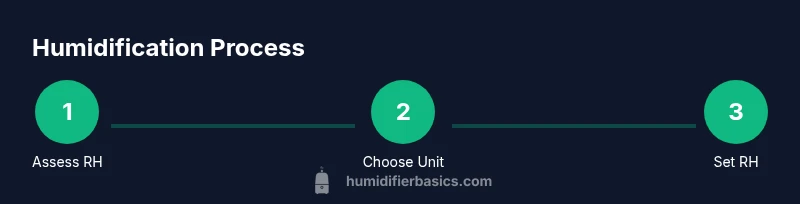
Place a hygrometer in the room and check current RH. If it falls outside the 40–60% range, plan adjustments before running a humidifier.
Tip: Record initial RH to compare against after usage. - 2
Select the right humidifier
Choose based on room size, noise tolerance, and ease of cleaning. For bedrooms, a quiet cool-mist unit is often ideal.
Tip: Larger rooms may benefit from multi-room or console units. - 3
Place the device properly
Set the humidifier on a stable, water-resistant surface away from walls and electronics. Ensure clearance for mist to disperse.
Tip: Avoid placing on carpet to prevent moisture damage. - 4
Fill with clean water
Rinse and fill the reservoir with distilled or filtered water. Check seals for leaks before use.
Tip: Never use water from a questionable source. - 5
Power on and set target RH
Turn on the unit and set RH to 40–60%. Start at mid-range (50%) and adjust based on readings.
Tip: If you see condensation, reduce output slightly. - 6
Monitor and adjust
Check RH every few hours and recalibrate output as needed. Avoid long continuous runs at high output.
Tip: Use a timer or auto-shutoff feature to prevent over-humidification. - 7
Refill and refresh water
Top up water as needed to maintain steady humidity. Empty and dry the tank if you won’t use the unit for an extended period.
Tip: Daily refills help ensure water quality and air cleanliness. - 8
Clean the tank regularly
Rinse daily and perform a thorough clean weekly with a vinegar solution or mild soap.
Tip: Never skip cleaning after visible mineral buildup. - 9
Use appropriate water quality
Prefer distilled water to reduce mineral dust; avoid adding fragrances unless the unit supports it.
Tip: Check manufacturer guidance on additives. - 10
Watch for condensation
If windows or walls sweat, reduce output or fan in the room to maintain balance.
Tip: Condensation indicates RH may be too high for the space. - 11
Turn off when not needed
Power down when leaving the room for extended periods to conserve energy and prevent over-humidification.
Tip: Unplug during heavy rains or when humidity is naturally high. - 12
Maintain a maintenance schedule
Create a routine for weekly cleaning and monthly checks, including filter replacement if applicable.
Tip: Document maintenance to track humidity stability over time.
FAQ
What is the ideal humidity range for a room?
Aim for 40–60% relative humidity to balance comfort and mold risk. Values consistently above 60% can promote mold, while below 40% may irritate airways and skin.
Keep humidity between forty and sixty percent for comfort and mold prevention.
Can I use tap water in my humidifier?
Tap water is acceptable in many cases but can leave mineral residue and airborne dust. Distilled water minimizes mineral buildup and should be preferred if available.
Tap water can work, but distilled water reduces mineral dust and buildup.
How often should I clean a humidifier?
Rinse the tank daily and perform a thorough cleaning weekly. Regular cleaning prevents bacteria and mold growth and extends the device life.
Clean the tank daily and do a deep clean weekly.
What if I see white dust around the room?
White dust usually comes from mineral deposits. Switch to distilled water and clean the unit and surfaces regularly to reduce particles.
White dust indicates minerals; use distilled water and clean often.
Is it safe to use essential oils in a humidifier?
Many humidifiers aren’t designed for oils and can be damaged or distribute irritants. Check the manual; avoid oils unless explicitly supported by the model.
Only use essential oils if your model explicitly supports them.
Do humidifiers save energy?
Humidifiers typically use modest energy, but efficiency depends on capacity and usage patterns. Use auto-shutoff and operate only as needed.
They use a small amount of energy; run as needed and rely on monitoring.
Watch Video
The Essentials
- Set humidity to 40–60% for comfort and mold prevention.
- Size and placement matter to prevent over-humidification.
- Use distilled water and clean the unit regularly.
- Monitor with a hygrometer and adjust as needed.
- Follow a maintenance schedule to maximize safety and effectiveness.