Hard Water in Humidifier: Troubleshooting Guide
Learn urgent steps to diagnose and fix hard water buildup in humidifiers, prevent mineral scale, protect your device, and maintain clean, healthy air at home.


Hard water minerals are the most likely culprit behind white dust, reduced output, and musty smells. Start with a quick wipe-down and rinse, then descale the tank with a mild vinegar solution, followed by thorough final rinses. To prevent recurrence, switch to distilled water and perform regular maintenance.
Understanding hard water in humidifier
Hard water in humidifier systems introduces minerals that dissolve into the mist. This mineral load, especially calcium and magnesium, can create visible white dust on furniture, scale inside the reservoir, and clogged vents that reduce output. According to HumidifierBasics, homeowners in mineral-rich regions often underestimate how quickly mineral content builds up, leading to more frequent cleanings and shorter device life. In addition, the minerals can provide a substrate for microbial growth if water sits in the tank. Start with a careful visual check, then plan a descaling routine to restore performance and extend the life of your humidifier.
- Mineral content from hard water deposits on surfaces and inside components
- White dust and cloudy mist indicating mineral carryover
- Scale buildup that reduces airflow and efficiency
- Potential for microbial growth if water sits unused for extended periods
If you notice these signs, you’re not alone—this is a common issue in many homes with hard tap water.
Symptoms and what they mean
When hard water is left to linger in a humidifier, mineral deposits form on the reservoir, evaporator plate, and NOzzles. Expect white dust on nearby furniture and windows, a milder mist, or a rattling/whining sound from clogged passages. A cloudy or discolored water reservoir is another red flag, as is a persistent musty odor near the unit. These symptoms point to mineral buildup rather than a purely mechanical fault and should prompt cleaning and water-quality adjustments.
This is your signal to switch from tap water to a safer option and to initiate a descaling routine.
Quick checks you can do right away
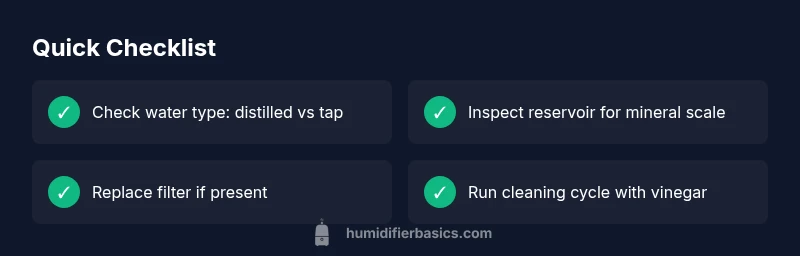
- Confirm water type: is tap water high in minerals? Consider distilled water for testing.
- Inspect the reservoir for visible scale or sediment.
- Check the evaporator plate or wick/filter for mineral buildup.
- Ensure there are no blockages in the output vents and that the unit is upright and level.
- Note any unusual odors or changes in humidity; these can indicate contamination or stagnant water.
If you find mineral crust or reduced mist after these checks, proceed with a descaling schedule and water-quality changes.
Descale with vinegar: a safe, effective method
This descaling method uses a mild vinegar solution to break mineral bonds without harsh chemicals. Start by unplugging the unit and removing the water tank. Soak the tank and any removable parts in a 1:1 vinegar-to-water solution for 20–30 minutes, then scrub with a soft brush. Rinse thoroughly with clean water several times to remove all vinegar traces and scale particles. Let parts air-dry before reassembly. Never mix vinegar with bleach or other cleaners, and ensure good ventilation during the process.
- Use plain white vinegar, not flavored or heated varieties
- Rinse thoroughly to remove all acidic residue
- Allow components to dry completely before use
- If scale persists, repeat the soak or switch to citric acid as an alternative
Citric acid as an alternative descaler
Citric acid is a gentler descaler that can effectively dissolve mineral buildup with less odor than vinegar. Dissolve 1–2 tablespoons of citric acid in warm water per liter of tank volume, soak for 15–25 minutes, then scrub and rinse well. Citric acid is compatible with many humidifier models, but always consult the manual before use. Dry components completely before reassembling to prevent mold growth during storage.
- Citric acid is available as an inexpensive descaler
- Short soak times reduce odor and exposure
- Rinse until the solution tests neutral on your senses
- Check model-specific recommendations in your user guide
Prevention: long-term strategies for hard water
The best defense against mineral buildup is prevention. Whenever possible, use distilled water in your humidifier, and keep the unit away from heat sources that can accelerate mineral precipitation. Schedule a monthly cleaning routine that includes a thorough rinse and inspection of filters or wicks. Consider installing a small inline water filter if your model supports it, or using a portable humidifier that is easy to maintain. Store the unit dry when not in use to discourage mold growth.
- Distilled water dramatically reduces mineral deposition
- Regular cleaning prevents scale from becoming a stubborn layer
- Filters and wicks should be replaced per manufacturer instructions
- Proper storage reduces microbial growth risk
Choosing water and filters: what to buy and when to replace
If your model uses a replaceable filter, choose one rated for mineral reduction (look for specifications like “low mineral content” or compatible with hard water). For non-filtered units, prioritize distilled or demineralized water. Keep spare filters handy and replace them on schedule to maintain air quality. Periodic maintenance includes checking seals, gaskets, and the evaporator plate for wear. If you notice persistent mineral buildup even with distilled water, consult the manufacturer’s guidelines for alternative solutions.
- Use mineral-reducing or distilled-water compatible filters
- Replace filters on the recommended cadence
- Inspect seals and gaskets for wear that could cause leaks
- Consider a more corrosion-resistant model if buildup continues
Safety and maintenance reminders
Always unplug the humidifier before cleaning. Use gloves when handling descaling solutions and avoid mixing cleaners. Work in a ventilated area to minimize inhalation of fumes. Do not submerge electrical components; follow the manual for disassembly instructions. After cleaning, run a rinse cycle to remove any lingering liquid and dry all parts before storage. Regular maintenance reduces the risk of mineral buildup and extends device life.
- Unplug before any maintenance
- Never mix cleaners (especially bleach and vinegar)
- Ventilate the area during descaling
- Dry all parts completely to prevent mold growth
When to replace parts or the humidifier
If mineral deposits recur despite proper cleaning and using distilled water, the unit may be nearing the end of its life. Evaporator plates and seals can corrode over time, lowering efficiency and increasing the risk of leaks. Consider replacing worn parts or upgrading to a model designed for high-mineral areas. A persistent off-odor, unusual noises, or performance drops after routine maintenance are strong signals to seek professional service or replacement.
- Look for signs of corrosion or cracking in components
- If output remains low after cleaning, evaluate replacement
- Consult a professional if uncertain about part integrity
Steps
Estimated time: 30-60 minutes
- 1
Power down and prepare the unit
Unplug the humidifier and remove all removable parts. Empty any standing water. Gather cleaning supplies and your manual for model-specific instructions. This initial safety check prevents accidental shocks and ensures effective cleaning.
Tip: Keep a dedicated cleaning tray to catch spills and avoid moisture on nearby electronics. - 2
Disassemble and inspect
Take off the reservoir, evaporator plate, and any filters. Look for scale or crust on the tank walls and around the outlet. A quick visual scan helps you tailor your cleaning approach.
Tip: Don’t force parts apart; refer to the manual to avoid damage. - 3
Descale with vinegar or citric acid
Choose your descaler. For vinegar, mix 1:1 with warm water and soak 20–30 minutes. For citric acid, dissolve 1–2 tablespoons per liter and soak. Scrub gently with a soft brush to remove scale.
Tip: Rinse thoroughly until there is no odor or visible residue. - 4
Rinse and dry
Rinse all parts multiple times with clean water. Wipe surfaces dry and air-dry components before reassembly. Ensure no moisture remains in joints where growth could occur.
Tip: Tamper-proof seals must be dry before reassembly to prevent leaks. - 5
Reassemble and test
Put the unit back together and fill with distilled water for a test run. Observe mist output and listen for unusual sounds. If it runs smoothly, you’ve completed a successful cleaning.
Tip: Start with a short test run to confirm proper function. - 6
Establish a maintenance plan
Set a reminder to clean monthly and replace filters as recommended. Use distilled water to minimize future buildup and keep a log of maintenance activities for reference.
Tip: Consistency is the key to preventing mineral buildup.
Diagnosis: Humidifier produces weak mist or visible mineral dust after cleaning
Possible Causes
- highMineral buildup from hard water
- mediumClogged or dirty filters
- lowStagnant water leading to microbial growth
Fixes
- easyDescale with vinegar, rinse thoroughly, and dry components
- easyClean or replace filters according to the manual
- mediumSanitize with a manufacturer-approved cleaner and ensure complete rinse
FAQ
What causes white dust when using a humidifier?
White dust is typically mineral deposits from hard water. It indicates mineral buildup that can affect performance, but it is not usually harmful. Descale the unit and switch to distilled water to reduce future deposits.
White dust comes from minerals in the water; descale and switch to distilled water to reduce it.
Can I use vinegar to descale my humidifier?
Yes, vinegar is a common, safe descaler for many humidifiers. Use a 1:1 vinegar-to-water solution, soak, scrub, and rinse thoroughly. Do not mix with bleach or other cleaners.
Yes—you can use a vinegar solution, soak and rinse well, and avoid mixing cleaners.
Is distilled water necessary for all humidifiers?
Distilled water minimizes mineral buildup and is highly recommended for humidifiers, especially in areas with hard water. Some models tolerate tap water, but cleaning will be more frequent.
Distilled water is best for reducing mineral buildup and keeping your humidifier clean.
How often should I clean my humidifier to prevent mineral buildup?
A monthly cleaning schedule is a strong starting point, with more frequent cleanings if you have very hard water. Always follow the manufacturer’s guidelines.
Clean about once a month, or more often if your water is very mineral-rich.
What if my humidifier won’t start after cleaning?
Check that all parts are dry, the power switch is on, and there are no leaks. If it still won’t start, consult the user manual or contact support for model-specific troubleshooting.
If it won’t start after cleaning, check power and dryness, then consult the manual if needed.
Watch Video
The Essentials
- Descale promptly to stop mineral buildup
- Switch to distilled water to prevent recurrence
- Regular maintenance extends humidifier life
- Choose filters and parts compatible with hard water