CPAP Dry Mouth: Troubleshooting with Humidifiers
Practical, urgent guidance to fix CPAP dry mouth even when using a humidifier. Quick checks, diagnostics, and step-by-step fixes to restore comfort and sleep quality.


Most CPAP users who still have dry mouth despite a humidifier are likely leaking air through the mouth or a poor mask seal. Start by improving mask fit, using a chin strap, and ensuring a heated humidifier setting is comfortable. If mouth breathing continues, try nasal pillows with a higher humidity, and consult your clinician if symptoms persist.
Understanding CPAP Dry Mouth with Humidification
Dry mouth during CPAP therapy, even when a humidifier is running, is a common complaint that can derail sleep and adherence. The moisture you need comes from the humidifier, but if air escapes through the mouth or the mask leaks, the moisture bypasses your oral cavity. Several interacting factors influence dryness: mask type and fit, humidity level and mode (heated vs. passover), water quality, and whether nasal congestion or mouth breathing is forcing air out of the mouth. According to HumidifierBasics, persistent dry mouth on CPAP often signals mouth breathing or a leaky seal rather than insufficient humidity. Understanding these factors helps you triage quickly and avoid over-tightening the system. By systematically evaluating fit, seal, humidity, and nasal comfort, you can restore comfort without reducing therapy effectiveness.
Quick fixes you can try tonight
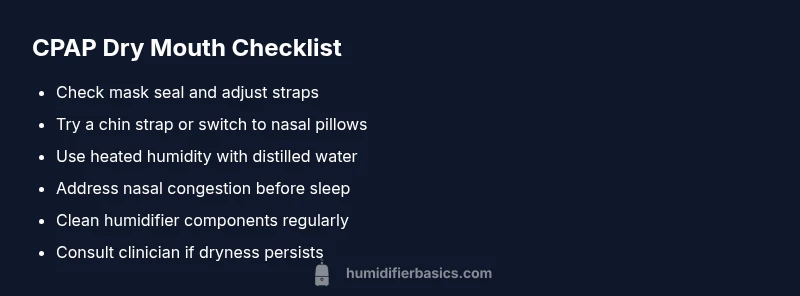
If you wake up with dryness, start with simple tweaks that address the most common causes. First, verify the mask is the right size and type for your face and that straps aren’t overtightening. Second, set the heated humidifier to a comfortable level and ensure the water chamber is clean and filled with distilled water. Third, consider using a chin strap if mouth breathing persists. Finally, ensure your sleep environment is conducive to moisture retention—keep room temperature moderate and avoid fans aimed directly at your face. These changes often reduce dry mouth within a few nights and improve overall mask comfort.
Check mask fit and airflow leaks
Mask fit and airflow leaks are the leading culprits behind CPAP dry mouth. A leaky seal can cause air to escape through the mouth, drying the oral cavity despite humidity. Start by inspecting the mask seal around the nose and mouth. Tighten straps gradually in small increments while ensuring comfort and avoiding excessive pressure points. If you still detect air leaks, try adjusting mask height or replacing worn components such as cushions. For some users, a different mask style (e.g., nasal pillows or a full-face mask) fits better and reduces mouth leakage.
Humidifier settings and water quality
Humidity helps, but only if it reaches your airway efficiently. Use a heated humidifier and set it to a comfortable level, avoiding extremes that can dry out or irritate nasal passages. Water quality matters too—distilled water minimizes mineral buildup and ensures consistent humidity delivery. Regular cleaning of the humidifier chamber prevents mold or bacteria that could irritate the airway and worsen dryness. If condensation occurs in the mask or tubing (rainout), reduce humidity or adjust the tube temperature setting. If symptoms persist, consider temporarily reducing humidity to avoid over-humidification during the night and readjusting after a few nights.
Address mouth breathing and nasal passages
Many users breathe through the mouth at night, defeating the humidity delivering to the oral cavity. Address nasal congestion first with saline sprays or limited-use nasal strips if appropriate. A dry throat can also be caused by mouth breathing; switching to a different mask type (nasal pillows or a full-face mask) may reduce mouth leakage. Ensure your CPAP pressure settings are appropriate for your prescription, and discuss a trial period with your clinician if mouth breathing remains an issue.
Alternatives for persistent dry mouth
If mouth breathing remains a problem after adjustments, consider larger structural changes: a different mask system (nasal pillows or a full-face mask optimized for your facial shape), or a higher-flow humidity strategy under professional guidance. Some users benefit from alternating mask types on different nights to discover what reduces dryness most effectively. Prolonged dryness can also be a sign of airway irritation or dehydration; maintain hydration during the day and consult a sleep clinician if dryness persists beyond a couple of weeks.
Safety considerations and professional guidance
Always follow device manufacturer instructions when adjusting humidity, water type, or mask components. Never operate a CPAP without water in the chamber or with a damaged seal. If you notice skin irritation, persistent nasal dryness, or teeth discomfort, seek medical advice promptly to rule out underlying conditions. When in doubt, schedule a quick check-in with a sleep therapist or clinician specializing in CPAP therapy to review masks, pressure settings, and humidity levels.
Prevention and long-term care
Prevention matters as much as fixes. Establish a nightly routine that includes cleaning and drying the water chamber, using distilled water, and inspecting cushions and straps for wear every two weeks. Keep humidity within a comfortable range and avoid abrupt changes in settings. Document what works and what doesn’t, so your clinician can fine-tune your prescription during follow-up visits. Consistency reduces dry mouth and improves therapy adherence. HumidifierBasics emphasizes that small, consistent adjustments yield the best long-term results.
Steps
Estimated time: 60-90 minutes
- 1
Assess mask fit and seal
Inspect the cushion for wear and adjust straps evenly. Ensure there are no gaps around the nose and cheeks. Refit as needed to minimize leaks that allow air to escape through the mouth.
Tip: Small adjustments can significantly reduce leaks without causing discomfort. - 2
Try a chin strap or alternative mask
If mouth breathing persists, add a chin strap or switch to a nasal pillows/full-face mask that better suits your facial structure. Re-check seal after any changes.
Tip: Chin straps can be effective but should not be overly tight. - 3
Optimize humidifier settings
Set the heated humidifier to a comfortable level and ensure the water chamber is clean. Use distilled water to reduce mineral buildup, which can affect humidity output.
Tip: Avoid excessive humidity that can cause rainout or nasal irritation. - 4
Check nasal passages and congestion
Address nasal congestion with saline spray or nasal strips if appropriate. Reduce mouth breathing by promoting nasal breathing when sleeping.
Tip: Clear nasal passages before bed for best results. - 5
Experiment with mask type
If dryness persists after adjustments, trial a different mask style (nasal pillows vs. full-face) to find the best fit for reducing mouth leakage.
Tip: Maintain a sleep diary noting which mask works best. - 6
Consult a clinician if needed
If dryness continues despite steps, consult a sleep clinician to re-evaluate pressure settings and mask choice. Do not ignore persistent dryness that affects sleep quality.
Tip: Professional guidance ensures safe, effective CPAP therapy.
Diagnosis: CPAP user experiences dry mouth despite using a humidifier
Possible Causes
- highMouth breathing with mask leak
- mediumInsufficient humidity or incorrect humidity mode
- mediumMask type not suited to user's face (rim leak)
Fixes
- easyCheck mask fit, adjust straps, and use a chin strap if needed
- easyIncrease heated humidity level and verify water quality
- easySwitch to nasal pillows or a different mask type to reduce mouth leakage
- easyEnsure distilled water and clean humidifier regularly
FAQ
Why do I still have dry mouth with CPAP even when the humidifier is on?
Dry mouth typically results from mouth breathing or mask leaks that bypass the humidifier. Improving mask seal, trying a chin strap or changing to a more suitable mask type can reduce mouth leakage and restore moisture delivery.
Dry mouth with CPAP usually means air is escaping through your mouth or your mask isn’t sealing well. Fixing the seal or trying a different mask often solves the issue.
Can increasing humidity cause condensation in the hose or mask?
Yes, excessive humidity can cause rainout. If you notice condensation, lower the humidity or adjust the tubing temperature setting. Small, gradual changes work best.
Too much humidity can make condensation form in the tube. Reduce the humidity a notch and see if comfort improves.
Is a chin strap safe to use with CPAP?
Chin straps are generally safe when fitted correctly and can reduce mouth breathing. Ensure it’s snug but not constricting and stop use if you experience discomfort or skin irritation.
Chin straps can help keep the mouth closed, but use them gently and monitor for any discomfort.
When should I see a clinician about CPAP dry mouth?
If dryness persists for more than a couple of weeks despite adjustments, consult a sleep clinician. Persistent dryness may indicate fitting or pressure issues that need professional assessment.
If dryness lasts despite changes, it’s time to get a clinician to review your setup.
Would changing mask types help with mouth breathing?
Switching to nasal pillows or a properly fitting full-face mask can reduce mouth leakage for many users. Work with a clinician to choose the best option.
Trying a different mask can be very effective if mouth breathing is the main issue.
Watch Video
The Essentials
- Check mask fit and leaks first
- Tune humidity gradually to comfort
- Consider mask type changes for mouth breathing
- Use distilled water and clean components routinely
- Consult a clinician for persistent dryness