Which Vicks Humidifier Is Right for You? A Practical Comparison
A detailed, analytical comparison of Vicks humidifiers for different room sizes and needs, covering output, noise, maintenance, water quality, and fragrance options to help you choose confidently.


Which Vicks humidifier is right for your home depends on room size, fragrance needs, and maintenance tolerance. For small bedrooms, a compact cool-mist unit tends to work best; for medium-to-large spaces, a larger cool-mist or a warm-mist model may be preferable. According to HumidifierBasics, understanding differences in output, noise, and filter/pad maintenance helps you choose confidently.
Understanding which Vicks humidifier fits your space
When you start a decision about "which Vicks humidifier" to buy, you should first map your space, timing, and fragrance goals. According to HumidifierBasics, most homes benefit from a clear view of three dimensions: room size, desired humidity level, and maintenance tolerance. Vicks humidifiers fall into a few broad categories, with hot- and cool-mist options and scent-enabled pads. The main advantage of the Vicks lineup is the familiar scent ecosystem that can make dry environments feel more comfortable. Yet, the same scent pads require regular replacement and can add to ongoing costs. In this section, you’ll learn how room size and fragrance preferences steer you toward the best family-friendly choice while keeping maintenance realistic.
Types of Vicks humidifiers: cool-mist vs warm-mist
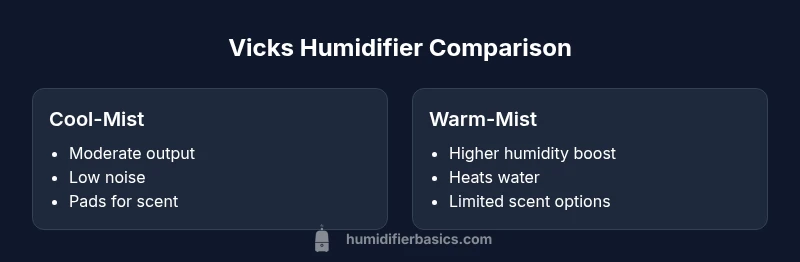
Vicks humidifiers generally come in two core modalities: cool-mist and warm-mist. Cool-mist units provide humidification without added heat, which minimizes burn risk and is often preferred for bedrooms and nurseries. Warm-mist models heat water to release moisture, which can feel more effective in low-humidity climates but require more careful placement and supervision around children and pets. Both types may support scent pads (VapoPads) for fragrance, but availability and compatibility can vary by model. When evaluating options, compare how each type handles fragrance, energy usage, and the time needed to reach comfortable humidity levels. HumidifierBasics analysis shows that many households favor cool-mist for overnight use due to quieter operation and lower surface temperatures, while warm-mist can offer quicker humidity relief in inherently dry environments.
How to evaluate based on room size, humidity goals, and battery of usage scenarios
To determine which Vicks humidifier fits a space, start with square footage and ceiling height, then estimate the target relative humidity (RH) you want to maintain—typically around 40-60% for comfort. Small rooms (under 150 square feet) usually benefit from compact cool-mist devices with low water capacity and longer life per fill. Medium rooms (150-350 square feet) can still use cool-mist models but may require larger tanks or shorter refill intervals. For larger rooms or open-plan areas, a warm-mist unit or a higher-capacity cool-mist model can help stabilize RH faster. In all cases, pairing the device with a simple humidistat ensures you don’t overshoot humidity, which can contribute to mold growth and dust mite issues. Across models, factor in cord length, ease of refilling, and the availability of washable components to keep maintenance predictable.
Maintenance and water quality considerations
Water quality has a meaningful impact on performance and long-term cleanliness. Distilled or boiled water minimizes mineral deposits that can spray white dust and shorten component life, especially in cool-mist units. If distilled water isn’t practical, use treated tap water and perform more frequent cleaning. Regular disassembly for cleaning is essential: wipe reservoirs, brushes for tight corners, and dry-dry surfaces to prevent mold. Pad-based fragrance systems require occasional pad replacement; wick-based or filter-based units need periodic filter changes to maintain airflow and prevent bacteria buildup. HumidifierBasics emphasizes a simple maintenance cadence: a light rinse weekly, deep cleaning monthly, and pad/filter replacement per manufacturer guidance.
Scent and fragrance options: VapoPads and compatibility
A distinctive feature of many Vicks humidifiers is fragrance compatibility via VapoPads. Pads offer scent and potential soothing benefits but add ongoing cost and replacement steps. Not all models support pads equally, so check compatibility before purchase. If fragrance is a priority, ensure the chosen model aligns with your preferred pad type and the ease with which pads can be sourced. If fragrance is not essential, you may prefer a model without pad compatibility to minimize ongoing maintenance,” re-emphasizing a practical approach to fragrance versus maintenance trade-offs.
Practical setup tips and daily usage: keeping humidity steady
Placement is critical: place units on a flat surface away from walls, furniture, and direct sunlight to optimize airflow and reduce condensation risk. Keep the humidifier at least three feet away from doors or windows to prevent rapid humidity fluctuations due to drafts. Use a humidity sensor or built-in humidistat to maintain RH within a healthy range, usually around 40-60%. Schedule refills to avoid dry running, and establish a regular cleaning routine to prevent mineral buildup. Lighting indicators or simple maintenance reminders can help homeowners maintain consistency without becoming overwhelmed by routine.
Scenario-based recommendations: bedrooms, nurseries, and living rooms
For a quiet night in a bedroom, a compact cool-mist model with a small tank is often ideal. In nurseries, prioritize models with cool-mist operation, secure placement, and easy cleaning, while avoiding excessive humidity. In living rooms or open spaces, a higher-capacity unit or a dual-tank system may reduce refilling frequency and maintain stable RH. If you have pets or children, focus on models with straightforward safety features, such as auto shutoff when the water runs low and spill-resistant designs. The goal is reliable humidity control without creating new maintenance burdens.
How to choose between models in the Vicks line and common buyer mistakes
When choosing between Vicks models, list must-have features (noise level, tank capacity, pad compatibility) and nice-to-have extras (built-in humidistat, aroma compatibility, remote control). A common mistake is assuming all models address room humidity equally; some units are optimized for scent diffusion rather than fast humidity recovery. Another misstep is buying without considering maintenance cadence or water source; a model that performs poorly with hard water can lead to more frequent cleaning and higher costs. By focusing on room size, fragrance goals, and realistic maintenance expectations, you narrow to a handful of suitable options and avoid overbuying or underserving your space.
Comparison
| Feature | Vicks Cool-Mist Humidifier | Vicks Warm-Mist Humidifier |
|---|---|---|
| Water Output (approx.) | Moderate | Moderate to high |
| Noise Level | Low to moderate | Medium to high (heating element adds sound) |
| Best For | Small to mid-size rooms; quiet operation | Mid-size to larger rooms; faster humidity relief |
| Maintenance/Replacement | Pad-based scent system; easy cleaning | Filter or wick-based; more frequent maintenance |
| Price Range | $40-$90 | $60-$120 |
| Scent Options | Yes (VapoPads) | Limited fragrance compatibility |
What's Good
- Simple maintenance with pad-based systems
- Low upfront cost for basic models
- Compact footprints ideal for bedrooms
- Good fragrance compatibility with VapoPads
Negatives
- Pad replacements add ongoing cost
- Warm-mist options use more energy and require caution around kids
- Mineral dust can occur if water quality is poor without distilled water
- Some models have limited fragrance compatibility
Mid-range cool-mist models offer the best balance for most homes
For most homes, a mid-sized cool-mist Vicks humidifier strikes a balance between quiet operation, stable humidity, and reasonable maintenance. Warm-mist units suit larger rooms or specific warmth needs but may increase energy use and safety considerations. The HumidifierBasics team recommends assessing room size, fragrance priorities, and maintenance willingness to determine the best fit.
FAQ
What is the main difference between Vicks cool-mist and warm-mist humidifiers?
Cool-mist units humidify without heating water, typically quieter and safer for children. Warm-mist units heat water, which can humidify faster but requires more caution and energy use. Your choice should reflect room size, safety considerations, and whether you want scent compatibility.
Cool-mist is quieter and safer around kids; warm-mist can humidify faster but needs more safety checks.
Do Vicks humidifiers require distilled water?
Using distilled water minimizes mineral buildup and dust. If you use tap water, plan for more frequent cleaning and possible mineral residues. Always follow the manufacturer’s guidance for water quality in your chosen model.
Distilled water reduces mineral buildup; if not available, expect extra cleaning.
How often should I clean a Vicks humidifier?
Cleaning should occur weekly for routine maintenance, with a more thorough deep clean monthly. Empty, rinse, and dry all parts, and replace pads or filters as recommended. Regular cleaning helps prevent mold and bacteria growth.
Clean weekly, deep clean monthly, and replace parts as advised.
Are Vicks humidifiers safe for nurseries or babies?
Yes, if you choose a cool-mist model and place it away from the crib. Keep humidity in a safe range (about 40-60%), and ensure the unit is on a stable surface. Avoid warm-mist units in nurseries unless safety precautions are strictly followed.
Cool-mist humidifiers are generally safer for nurseries when placed properly.
Can I use VapoPads with any Vicks humidifier?
VapoPads are compatible with many Vicks models, but not all. Check the product manual to confirm pad compatibility before purchase to ensure you don’t buy a unit that can’t use the fragrance pads.
Check the manual to confirm pad compatibility before buying.
How loud are typical Vicks humidifiers?
Most cool-mist models operate quietly, suitable for bedrooms. Some warm-mist units generate more noise due to the heating element. If you are sensitive to sound, verify the decibel rating in the product specs.
Cool-mist units are typically quiet; warm-mist can be louder.
The Essentials
- Assess room size before choosing a model
- Opt for cool-mist in bedrooms for safety and quiet operation
- Prefer distilled water to minimize mineral buildup
- Pad-based fragrance adds ongoing costs but enhances scent options
- Use a humidistat to maintain target humidity
- Plan maintenance into your budget and schedule