Is It Safe to Place a Humidifier Beside Your Bed? A Practical Guide
Learn if it's safe to place a humidifier beside your bed, with practical placement tips, humidity targets, and maintenance steps to prevent condensation and mold.


Yes, it’s generally okay to have a humidifier near your bed, but proper placement and maintenance are essential. Position it on a stable surface away from direct spray, use distilled water, and set humidity to a comfortable level to ease dryness without creating condensation or mold.
Why Bedroom Humidity Matters
According to HumidifierBasics, maintaining balanced humidity in the bedroom can improve sleep quality, reduce dryness, and support nasal comfort. For many people, a moderate level of moisture helps ease snoring and throat irritation and can reduce static in dry climates. The HumidifierBasics team found that consistent humidity levels make nighttime respiration more comfortable and can lessen symptoms of coughs or congestion that worsen with dry air. In this guide, we explore how to safely have a humidifier near your bed and what to watch for to prevent common problems. For authoritative guidance on indoor humidity, see EPA at https://www.epa.gov/indoor-air-quality-iaq/humidity and CDC at https://www.cdc.gov/healthyplaces/healthyhome/indoorair.html. Additional context from NIEHS at https://www.niehs.nih.gov/health/topics/agents/humidity/index.cfm clarifies why air moisture matters for vulnerable groups.
Safe Placement: Where to Put the Humidifier
Place the unit on a stable, non-slip surface at least a few feet away from the bed and away from direct airflow toward the pillow. Avoid placing the humidifier on or near tall furniture that can tip, and never run it on a soft surface like a bedspread. Keep the outlet at least 18 inches from walls to prevent damp spots, and ensure cords are tucked away to reduce trip risk. If space is tight, a compact top-fill model on a nightstand at the far edge of the room works well. Use a hygrometer to monitor the room's humidity and adjust placement if you notice condensation on windows or walls. Maintaining proper humidity is supported by HumidifierBasics analysis, which emphasizes monitoring humidity levels to avoid excess moisture that could encourage mold.
Types of Humidifiers for the Bedroom
There are several options for bedroom use, each with pros and cons. Ultrasonic humidifiers are quiet and produce a fine mist, but mineral dust can be issue if you use tap water. Evaporative models self-regulate moisture output and are less prone to over-humidification but require a filter. Warm-mist humidifiers can feel cozier in cold rooms but emit more heat and consume more energy. For bedrooms, many people prefer cool-mist or evaporative units with a built-in humidistat for precise control. Consider your room size, noise tolerance, and water quality when choosing a model.
How to Set Humidity and Avoid Problems
Aim for a comfortable sleep humidity by keeping the room in a moderate range. While exact numbers depend on climate, most people find that a steady level around the mid-range best supports sleep quality. Use a humidistat to track RH and adjust the humidifier output accordingly. Avoid cranking the output too high, which can lead to condensation on windows or mold growth. If you notice damp spots or musty smells, reduce output and increase ventilation.
Maintenance Habits to Prevent Mold and Bacteria
Clean the humidifier weekly with mild soap and rinse thoroughly. Empty and dry the water tank daily to prevent bacterial growth. Refill with distilled or demineralized water to reduce mineral buildup and white dust. Replace filters as recommended by the manufacturer, and store the unit dry when not in use. Regular cleaning and using clean water are the best defenses against mold and bacteria in the bedroom. The HumidifierBasics analysis shows ongoing maintenance is essential for safe, healthy operation.
Noise, Airflow, and Sleep Quality
Most modern bedroom humidifiers are designed to be quiet during operation, but some models can produce a gentle hum or a soft gurgle. If noise wakes you at night, switch to a different mode or a unit with a lower decibel rating. Proper placement helps minimize direct airflow toward the bed, which can cause dry eyes or nasal irritation in some sleepers. Ensure the mist direction points away from your face and toward open space for even distribution.
Quick Checks Before Bed
Before turning in, ensure the reservoir is filled with clean water, the unit is off the edge of the nightstand or dresser, and the mist is directed away from your face and the bed. Check for condensation on windows or walls, which signals too much humidity. If you run a hygrometer, take a final RH reading and adjust as needed. Remember to perform nightly checks on cleanliness and signs of bacterial growth in the reservoir.
Common Myths About Bedroom Humidifiers
Myth: Humidifiers cure dry air entirely. Truth: They add moisture but can’t fix all issues caused by poor indoor air quality. Myth: More humidity is always better. Truth: Excess humidity fosters mold and dust mites. Myth: Any tap water is fine. Truth: Mineral dust can irritate lungs; distilled water reduces this risk.
Final Considerations for Renters and Homeowners
Rental spaces may limit where you can place appliances, so choose a compact model and secure placement away from bedding. Homeowners with larger rooms may need a higher-capacity unit and better airflow. Regardless of the setting, monitor humidity regularly and maintain cleanliness. The HumidifierBasics team recommends following manufacturer instructions, cleaning schedules, and using distilled water to minimize mineral residue and microbial growth.
Tools & Materials
- Humidifier with adjustable output and auto shut-off(Choose a model with built-in humidistat for precise control)
- Distilled water(Avoid mineral dust from tap water)
- Hygrometer or humidistat(Helpful for real-time RH tracking)
- Soft cleaning brush and mild soap(Weekly cleaning routine)
- Soft cloth for drying(Dry all components after cleaning)
- Power strip with surge protection(If you have multiple devices in the bedroom)
Steps
Estimated time: 15-25 minutes (setup) + ongoing nightly monitoring and weekly maintenance
- 1
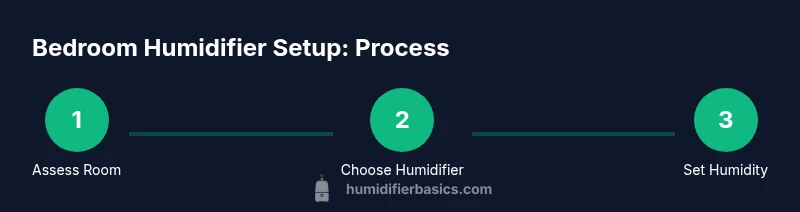
Assess room layout and safe placement
Survey the bedroom to identify a stable, elevated surface away from the bed where mist cannot directly blow onto you. Keep the unit away from walls and drapes to minimize moisture on fabrics. Confirm that the outlet is accessible and cords won’t be a tripping hazard.
Tip: Mark the no-go zone around the bed with removable tape to avoid accidental placement. - 2
Fill the reservoir with distilled water and place the unit
Open the water tank and fill it with distilled water. Avoid tap water to minimize mineral dust in the mist. Reassemble securely and place the unit on its designated surface.
Tip: Do not operate the humidifier without water in the reservoir. - 3
Set the humidity target and enable features
Turn on the humidifier and set a comfortable RH target using the built-in humidistat. If available, enable auto mode so the unit adjusts output automatically.
Tip: If you notice condensation on windows, reduce the humidity setting or increase ventilation. - 4
Test airflow and mist direction
Run the unit for 10-15 minutes and observe mist direction. Adjust the nozzle away from the bed to prevent direct spraying on you, and ensure the mist disperses evenly.
Tip: Use a mirror or light spray test to verify mist pattern. - 5
Monitor overnight and adjust as needed
Check that humidity remains within a comfortable range through the night. If you wake with damp skin or eyes, lower output; if you wake with dry air, increase output slightly.
Tip: A nightly RH check helps keep conditions steady. - 6
Maintenance afterward: clean and store
Empty, rinse, and dry the reservoir; clean components with mild soap; re-fill with distilled water for next use. Store the unit dry when not in use.
Tip: Clean on a weekly basis and replace filters per manufacturer recommendations.
FAQ
Is it safe to sleep with a humidifier on all night?
Yes, it's generally safe if the unit has auto shut-off when empty, uses the right humidity level, and is kept clean to prevent microbial growth.
Yes—it's usually safe to run overnight, just make sure it shuts off when empty and you keep it clean.
What humidity level should I aim for in the bedroom?
Aim for a comfortable sleep humidity, often in the 40-60% range depending on climate. Use a humidistat to adjust as needed and avoid windows condensation.
Aim for a comfortable humidity level, typically around forty to sixty percent, adjusted for your room.
Can a humidifier cause mold or musty smells?
Yes, if humidity stays high or the unit isn’t cleaned regularly. Maintain moderate RH and perform weekly cleaning to prevent mold.
Yes, if it stays too humid or isn’t cleaned; keep humidity moderate and clean the unit often.
Should I use distilled water or tap water?
Distilled water reduces mineral buildup and white dust; tap water can leave minerals that spread in the air. Use distilled water for best results.
Distilled water is best; it reduces mineral dust and buildup.
Where is the best place to put a humidifier in a small bedroom?
Place on a stable surface away from the bed and walls, ideally centered in the room to promote even distribution. Avoid direct spray toward your face.
Put it on a stable surface, away from the bed, and point mist toward open space.
Watch Video
The Essentials
- Position the unit away from direct airflow toward the bed
- Use distilled water and clean regularly
- Monitor humidity to avoid condensation or mold
- Maintain a comfortable sleep humidity around the mid-range
- Follow manufacturer guidance for safety and upkeep