Humidifier and Snoring: A Practical Guide
Discover how proper humidity affects snoring and how to use humidifiers safely to improve sleep. Practical setup, maintenance tips, and troubleshooting from HumidifierBasics.


By maintaining balanced indoor humidity, you can reduce nasal dryness and throat irritation that contribute to humidifier and snoring. This guide explains how to choose the right humidifier, set a safe humidity level (around 40-60%), and establish a simple nightly routine to support better sleep. According to HumidifierBasics, consistent humidity and clean equipment minimize snoring-related discomfort.
Understanding the humidity and snoring connection
For many sleepers, the air in the bedroom is the unseen player in snoring. When indoor air is too dry, nasal passages and throat tissues can become irritated, promoting airway vibration that leads to louder or more frequent snoring. Increasing ambient humidity to an optimal range helps keep mucus thin, reduces mouth breathing, and may soften nasal congestion that can worsen snoring. According to HumidifierBasics, maintaining a comfortable humidity range supports airway moisture without creating damp conditions that invite mold.
But humidity is not a cure-all. If snoring is caused by anatomy, sleep apnea, or nasal obstruction, a humidifier alone may have limited effect. The goal is to create a sleep-friendly microclimate that reduces dry mouth, throat irritation, and nasal dryness, which are common contributors to snoring. In practice, most households notice the biggest benefits when humidity sits in a balanced band rather than an ever-damp environment. Humidifier safety should guide every setup, ensuring devices stay clean and dry areas stay mold-free.
How humidity affects nasal passages and throat tissues
Dry air dries mucous membranes, reducing mucus production that normally helps trap irritants. When mucus thins, nasal resistance can increase, triggering mouth breathing and vibrating tissues during sleep. A modest increase in humidity can improve comfort for many snorers, especially in arid climates or during heating season. However, too much humidity can promote mold and dust mites, which themselves irritate airways. The key is a steady, moderate level that supports a clear airway without creating damp conditions. HumidifierBasics analysis shows that safe, stable humidity correlates with reduced nasal dryness and fewer throat irritations, which supports more restful sleep.
Choosing the right humidifier for snoring relief
Not all humidifiers are created equal. Ultrasonic units are quiet and efficient for bedrooms, evaporative models rely on a wick to saturate air, and warm-mist devices produce heated moisture that can help some sleepers. For snoring relief, prioritize ease of use, consistent output, and easy cleaning. A humidifier that’s hard to clean will accumulate mineral dust and bacteria, potentially worsening symptoms. In addition, consider models with a built-in humidistat to prevent over-humidification and to maintain a comfortable range. Remember to use clean water to minimize mineral dust that can irritate airways. HumidifierBasics recommends selecting a unit that fits your room size and your cleaning routine to sustain consistent humidity without excess moisture.
Types of humidifiers and their suitability for snoring
- Ultrasonic humidifiers: Very quiet and produce a fine mist. Ideal for bedrooms, but can spread mineral dust if tap water is used; use distilled water to minimize this.
- Evaporative humidifiers: Use a wick filter to add moisture and tend to self-limit output, making them easier to keep within a target range.
- Warm-mist (steam) humidifiers: Alleviate nasal congestion through warm moisture but require careful handling near sleeping areas to avoid burns and ensure proper cleaning. Humidifier safety is especially important for households with children.
- Do not assume “cool only” is best for snoring; the best choice depends on noise tolerance, maintenance willingness, and water quality. Hydration and nasal comfort often benefit from a well-chosen device and consistent cleaning routine.
Tip: If you have hard water, minerals can accumulate in any humidifier. Use distilled or purified water to reduce mineral deposits that can aggravate symptoms. HumidifierBasics analysis shows that lower mineral dust correlates with better sleep comfort for many users.
How to measure and set humidity for snoring relief
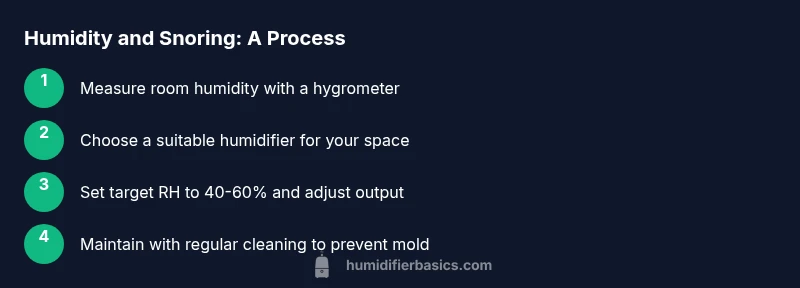
A simple hygrometer is your best friend for sleep humidity control. Place it in the bedroom, away from direct airflow from the humidifier, to get an accurate reading. Target a relative humidity in the safe range of roughly 40-60% for most bedrooms during sleep. If you notice condensation on windows or damp walls, back off output. Check humidity first thing in the morning, and adjust the unit to maintain a stable level overnight. Humidifier safety means you should avoid spikes in humidity that invite mold or dust mites. If moisture levels drift, re-check placement and output settings and rebalance as needed to sustain comfortable air.
Choosing placement and avoiding common pitfalls
Position the humidifier off to the side of the bed rather than directly beside it to prevent moisture from pooling on surfaces. Elevate the unit slightly so mist disperses evenly rather than blowing straight into your face. Ensure cords are out of walking paths and that the unit rests on a flat, moisture-resistant surface. Regular cleaning is essential to prevent mineral buildup and microbial growth, which can negate any potential snoring relief. A good rule of thumb is to run a light wipe-down at least weekly and to empty and dry the tank when not in use for extended periods.
Safe use and maintenance for long-term results
Use distilled or demineralized water to minimize mineral residue. Change the water daily if the unit isn’t designed for continuous use, and clean the tank and base weekly with a mild solution (vinegar or a manufacturer-recommended cleaner). If your device uses filters, replace them as directed by the manufacturer. Keep the surrounding area dry to prevent mold growth. A clean, well-maintained humidifier supports consistent humidity without adding irritants that could worsen snoring. The HumidifierBasics team emphasizes that maintenance is as important as setup for sustained benefits.
Common mistakes and how to avoid them
- Over-humidifying: This creates a damp environment conducive to mold and mildew. Use a hygrometer and target the 40-60% range.
- Ignoring water quality: Tap water can leave mineral dust; always prefer distilled water for sleeping spaces.
- Skipping regular cleaning: Bacteria and mold can thrive in stagnant water. Implement a weekly cleaning schedule.
- Placing the device too close to bedding: Direct moisture can irritate eyes and skin; opt for a safe distance.
Realistic expectations: can humidity cure snoring?
Humidity can alleviate dryness-related snoring factors, but it is not a cure-all. If snoring stems from throat anatomy, nasal obstruction, or sleep apnea, humidity may help but won’t eliminate the condition. Use humidification as part of a broader sleep health strategy, including nasal clearance routines and positional sleeping if recommended by a healthcare professional. The goal is to reduce dryness and associated irritation to improve comfort and sleep quality.
Practical tips and troubleshooting
- Use a hygrometer and keep humidity steady, not fluctuating wildly.
- If you notice increased mucus production or foggy windows, dial back the output.
- Clean the unit weekly and replace filters as needed to minimize irritants.
- Consider running the humidifier only during nighttime or during dry seasons to maintain a comfortable baseline.
Authority sources and further reading
- U.S. Environmental Protection Agency (EPA) Indoor Air Quality: https://www.epa.gov/indoor-air-quality
- National Institutes of Health (NIH) health information about humidification and nasal health: https://www.nih.gov
- Centers for Disease Control and Prevention (CDC) guidance on sleep and environment health: https://www.cdc.gov
Tools & Materials
- Humidifier device (ultrasonic, evaporative, or warm-mist)(Choose based on room size, noise tolerance, and cleaning routine.)
- Distilled or demineralized water(Reduces mineral dust and scale buildup.)
- Hygrometer or digital humidity sensor(Place in bedroom to monitor RH in the 40-60% range.)
- Soft cloth for cleaning(For weekly wipe-down and surface cleaning.)
- Small cleaning brush or sponge(Tackle tight corners in tanks and tubing.)
- Mild cleaning solution (white vinegar or manufacturer-approved descaler)(Optional, used for mineral buildup prevention.)
- Replacement filters (if applicable)(Follow manufacturer schedule for replacement.)
- Towel or tray to catch spills(Optional, helps protect surfaces during filling.)
Steps
Estimated time: 30-45 minutes
- 1
Check current humidity and set target
Place a hygrometer in the bedroom and note the current RH. Set a target range of approximately 40-60% and plan adjustments to your humidifier output to stay within that band overnight.
Tip: Choose a spot away from direct air flow to avoid skewed readings. - 2
Choose the right humidifier type
Evaluate room size, noise tolerance, and maintenance effort. Ultrasonic units are quiet, evaporative units self-regulate output, and warm-mist units offer soothing moisture but require careful handling.
Tip: If you have pets or children, prioritize easy cleaning and accessible water refill. - 3
Fill with clean water and assemble
Disassemble the tank, rinse, and fill with distilled water. Reassemble according to the manufacturer’s instructions and ensure all seals are secure before operation.
Tip: Avoid overfilling and never run the unit dry to protect the mechanism. - 4
Position the humidifier safely for sleep
Place the unit on a stable, elevated surface at least 1–2 feet away from the bed. Point the mist away from walls and electronics to prevent moisture buildup on surfaces.
Tip: Keep cords organized to prevent tripping and ensure good airflow around the unit. - 5
Run and monitor humidity overnight
Turn on the device before sleep and verify RH remains within 40-60%. If readings drift, adjust output or reposition the unit.
Tip: Check the hygrometer again after several hours to confirm stability. - 6
Clean and maintain regularly
Drain and dry the tank daily if needed; clean weekly with mild solution, focusing on the tank, base, and filters.
Tip: Always unplug before cleaning and follow the manufacturer’s maintenance schedule.
FAQ
Can a humidifier completely stop snoring?
No. Snoring has multiple causes, including anatomy and sleep disorders. A humidifier can reduce dryness-related triggers and improve comfort, but it isn’t a guaranteed cure for all types of snoring.
No—humidifiers can help with dryness-related snoring, but they don’t fix structural or medical causes.
Which humidifier is best for snoring relief?
Ultrasonic or evaporative humidifiers are common favorites for bedrooms due to their balance of quiet operation and effective moisture. Choose one that matches your room size and is easy to clean.
Ultrasonic or evaporative models are often best for snoring relief in bedrooms.
How often should I clean a humidifier?
Clean at least once a week and after extended non-use. If you have hard water, clean more frequently to prevent mineral buildup.
Clean it weekly and after long breaks in use to prevent bacteria growth.
Is tap water safe in humidifiers?
Tap water can leave mineral deposits and dust in the air. If possible, use distilled water and follow the manufacturer’s guidance on water quality.
Tap water can be used in a pinch, but distilled water reduces mineral particles in the mist.
Can humidity help with dry mouth at night?
Yes, keeping a comfortable humidity level can soothe dry mouth by reducing airway dryness and improving moisture in nasal passages.
Yes, staying in a comfortable humidity range can help with dry mouth during sleep.
Watch Video
The Essentials
- Maintain humidity 40-60% in the sleeping zone.
- Choose a humidifier type that fits room size and cleaning ability.
- Use distilled water and clean weekly to minimize mineral dust and microbes.
- Place the unit safely to avoid direct moisture on bedding or electronics.
- Humidity supports comfort but is not a cure for snoring—address other sleep health factors as needed.